
Which of the following is a characteristic to consider when selecting a satellite internet connection?
A customer built a computer for gaming, sourcing individual components and then assembling the system. The OS starts up, but within a few minutes the machine locks up. The customer brought the computer to a technician to diagnose the issue.
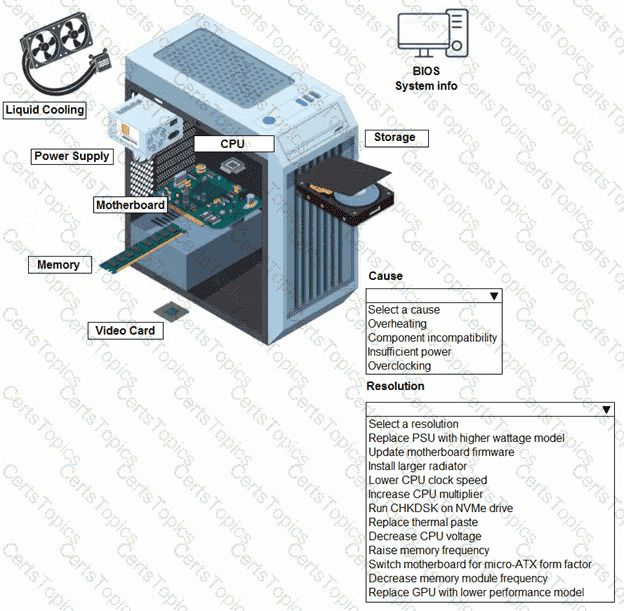
A technician investigates a faulty workstation that shuts down at random intervals. The technician starts the machine and hears an unusual grinding sound coming from inside the case. Which of the following would most likely cause the malfunction?
Which of the following virtualization concepts is suitable for a development team that requires a bare minimum platform to run web applications with the capability to dispose and redeploy as needed?
Copyright © 2021-2026 CertsTopics. All Rights Reserved

