Scenario 8: Tessa. Malik, and Michael are an audit team of independent and qualified experts in the field of security, compliance, and business planning and strategies. They are assigned to conduct a certification audit in Clastus, a large web design company. They have previously shown excellent work ethics, including impartiality and objectiveness, while conducting audits. This time, Clastus is positive that they will be one step ahead if they get certified against ISO/IEC 27001.
Tessa, the audit team leader, has expertise in auditing and a very successful background in IT-related issues, compliance, and governance. Malik has an organizational planning and risk management background. His expertise relies on the level of synthesis and analysis of an organization's security controls and its risk tolerance in accurately characterizing the risk level within an organization On the other hand, Michael is an expert in the practical security of controls assessment by following rigorous standardized programs.
After performing the required auditing activities, Tessa initiated an audit team meeting They analyzed one of Michael s findings to decide on the issue objectively and accurately. The issue Michael had encountered was a minor nonconformity in the organization's daily operations, which he believed was caused by one of the organization's IT technicians As such, Tessa met with the top management and told them who was responsible for the nonconformity after they inquired about the names of the persons responsible
To facilitate clarity and understanding, Tessa conducted the closing meeting on the last day of the audit. During this meeting, she presented the identified nonconformities to the Clastus management. However, Tessa received advice to avoid providing unnecessary evidence in the audit report for the Clastus certification audit, ensuring that the report remains concise and focused on the critical findings.
Based on the evidence examined, the audit team drafted the audit conclusions and decided that two areas of the organization must be audited before the certification can be granted. These decisions were later presented to the auditee, who did not accept the findings and proposed to provide additional information. Despite the auditee's comments, the auditors, having already decided on the certification recommendation, did not accept the additional information. The auditee's top management insisted that the audit conclusions did not represent reality, but the audit team remained firm in their decision.
Based on the scenario above, answer the following question:
Question:
The audit team did not accept Clastus's additional information because they had already made the certification recommendation. Is this acceptable?
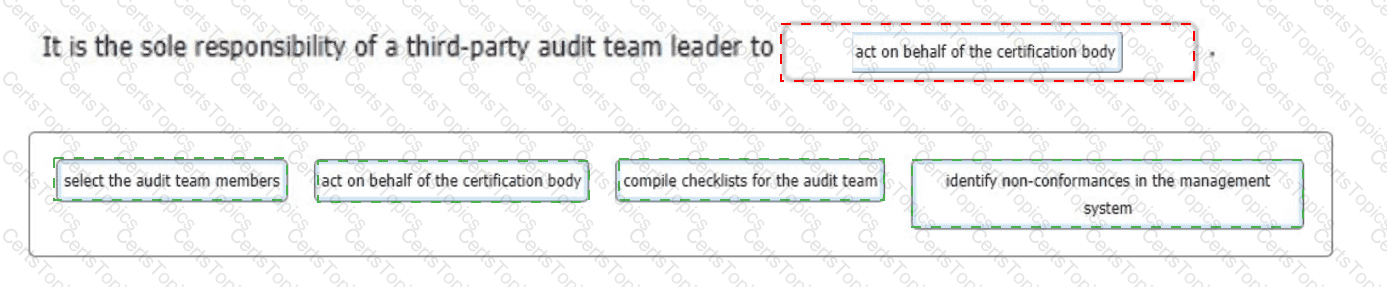
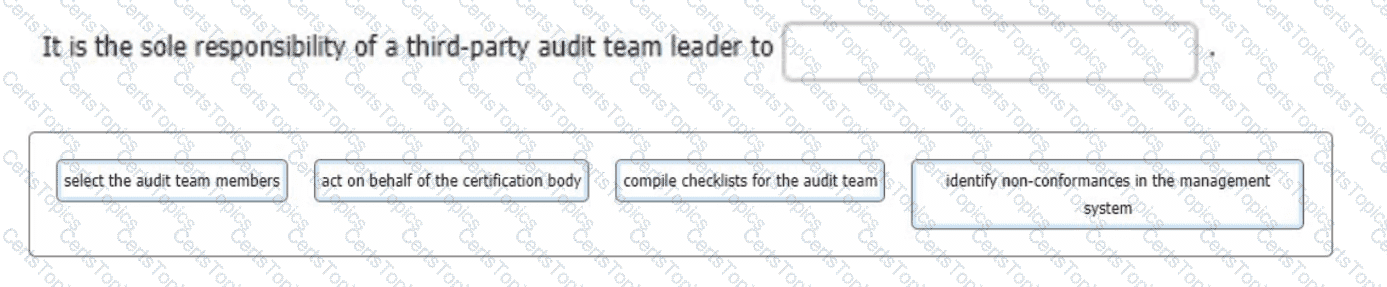
Select the words that best complete the sentence:
To complete the sentence with the best word(s), click on the blank section you want to complete so that it is highlighted in red, and then click on the applicable text from the options below. Alternatively, you may drag and drop the option to the appropriate blank section.
Scenario 7: Lawsy is a leading law firm with offices in New Jersey and New York City. It has over 50 attorneys offering sophisticated legal services to clients in business and commercial law, intellectual property, banking, and financial services. They believe they have a comfortable position in the market thanks to their commitment to implement information security best practices and remain up to date with technological developments.
Lawsy has implemented, evaluated, and conducted internal audits for an ISMS rigorously for two years now. Now, they have applied for ISO/IEC 27001 certification to ISMA, a well-known and trusted certification body.
During stage 1 audit, the audit team reviewed all the ISMS documents created during the implementation. They also reviewed and evaluated the records from management reviews and internal audits.
Lawsy submitted records of evidence that corrective actions on nonconformities were performed when necessary, so the audit team interviewed the internal auditor. The interview validated the adequacy and frequency of the internal audits by providing detailed insight into the internal audit plan and procedures.
The audit team continued with the verification of strategic documents, including the information security policy and risk evaluation criteria. During the information security policy review, the team noticed inconsistencies between the documented information describing governance framework (i.e., the information security policy) and the procedures.
Although the employees were allowed to take the laptops outside the workplace, Lawsy did not have procedures in place regarding the use of laptops in such cases. The policy only provided general information about the use of laptops. The company relied on employees' common knowledge to protect the confidentiality and integrity of information stored in the laptops. This issue was documented in the stage 1 audit report.
Upon completing stage 1 audit, the audit team leader prepared the audit plan, which addressed the audit objectives, scope, criteria, and procedures.
During stage 2 audit, the audit team interviewed the information security manager, who drafted the information security policy. He justified the Issue identified in stage 1 by stating that Lawsy conducts mandatory information security training and awareness sessions every three months.
Following the interview, the audit team examined 15 employee training records (out of 50) and concluded that Lawsy meets requirements of ISO/IEC 27001 related to training and awareness. To support this conclusion, they photocopied the examined employee training records.
Based on the scenario above, answer the following question:
Based on scenario 7, what should Lawsy do prior to the initiation of stage 2 audit?
Scenario 6: Sinvestment is an insurance company that offers home, commercial, and life insurance. The company was founded in North Carolina, but have recently expanded in other locations, including Europe and Africa.
Sinvestment is committed to complying with laws and regulations applicable to their industry and preventing any information security incident. They have implemented an ISMS based on ISO/IEC 27001 and have applied for ISO/IEC 27001 certification.
Two auditors were assigned by the certification body to conduct the audit. After signing a confidentiality agreement with Sinvestment. they started the audit activities. First, they reviewed the documentation required by the standard, including the declaration of the ISMS scope, information security policies, and internal audits reports. The review process was not easy because, although Sinvestment stated that they had a documentation procedure in place, not all documents had the same format.
Then, the audit team conducted several interviews with Sinvestment's top management to understand their role in the ISMS implementation. All activities of the stage 1 audit were performed remotely, except the review of documented information, which took place on-site, as requested by Sinvestment.
During this stage, the auditors found out that there was no documentation related to information security training and awareness program. When asked, Sinvestment's representatives stated that the company has provided information security training sessions to all employees. Stage 1 audit gave the audit team a general understanding of Sinvestment's operations and ISMS.
The stage 2 audit was conducted three weeks after stage 1 audit. The audit team observed that the marketing department (which was not included in the audit scope) had no procedures in place to control employees’ access rights. Since controlling employees' access rights is one of the ISO/IEC 27001 requirements and was included in the information security policy of the company, the issue was included in the audit report. In addition, during stage 2 audit, the audit team observed that Sinvestment did not record logs of user activities. The procedures of the company stated that "Logs recording user activities should be retained and regularly reviewed," yet the company did not present any evidence of the implementation of such procedure.
During all audit activities, the auditors used observation, interviews, documented information review, analysis, and technical verification to collect information and evidence. All the audit findings during stages 1 and 2 were analyzed and the audit team decided to issue a positive recommendation for certification.
Based on scenario 6, during stage 1 audit, the auditor found out that some documents regarding the ISMS had different format. What should the auditor do in this case?
Copyright © 2021-2026 CertsTopics. All Rights Reserved