
Summer Certification Sale 70% Discount Offer - Ends in 0d 00h 00m 00s - Coupon code: save70

Courses and Certificates Applied-Algebra Exam Dumps

WGU Applied Algebra FXO2 PFXP C957 Questions and Answers

Question 9

The graph shows the weekly profit in hundreds of dollars for a coffee shop. The horizontal axis represents the number of years since the coffee shop opened.
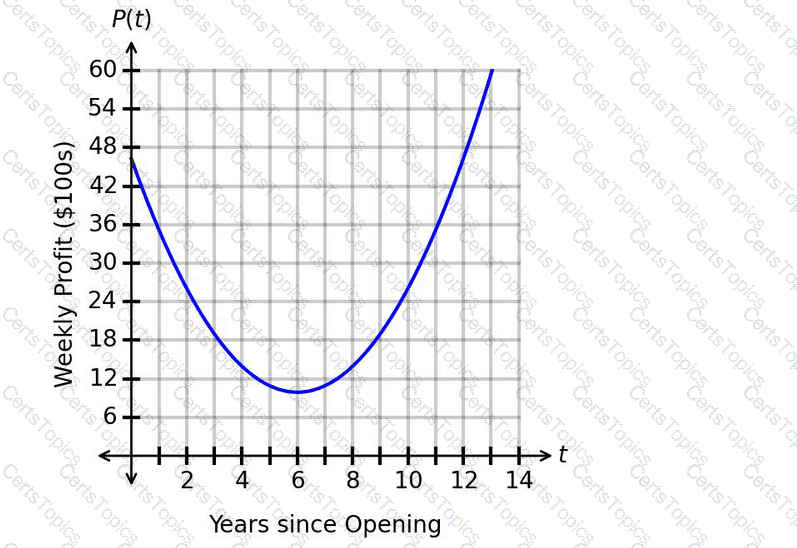
What is the correct interpretation of the minimum value?

Options:

A.

Approximately 6 years after opening, a minimum weekly profit of approximately $990was earned.

B.

Approximately 13 years after opening, a minimum weekly profit of approximately $990was earned.

C.

Approximately 6 years after opening, a minimum weekly profit of approximately $4,630was earned.

D.

Approximately 13 years after opening, a minimum weekly profit of approximately $4,630was earned.

Question 10

The number of registered voters in a district is modeled by a decreasing exponential function, where x represents the number of years since 2005 and f(x) represents the number of registered voters.
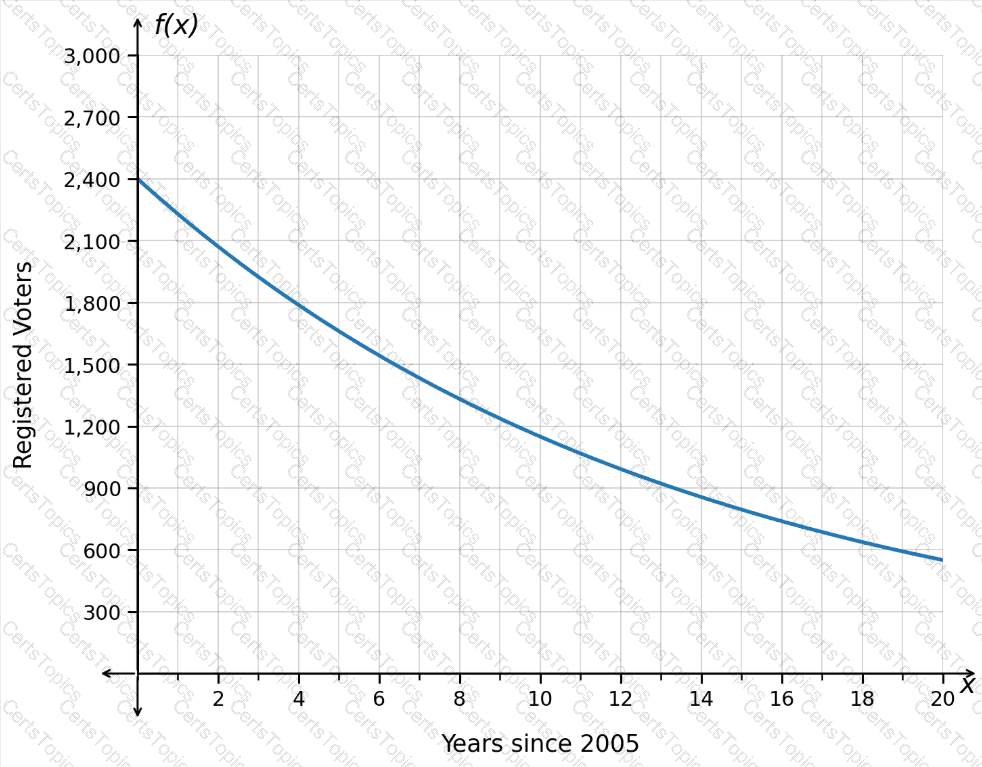
Which interval is associated with the slowest average decrease in the number of registered voters?

Options:

A.

2005 to 2008

B.

2007 to 2014

C.

2008 to 2023

D.

2015 to 2025

Question 11

The growth of an animal population is shown in the graph. The instantaneous rate of change at point Pis 3.74.
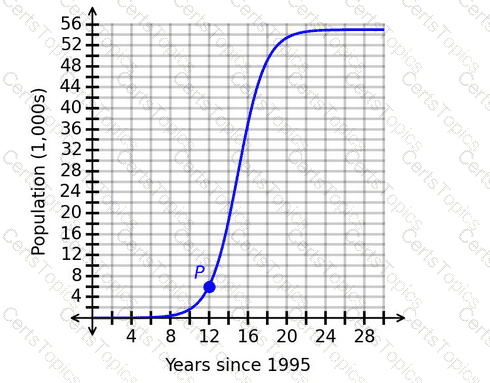
Which interpretation of the instantaneous rate of change is correct?

Options:

A.

In 2012, the population was increasing by 3.74 animals per year.

B.

In 2012, the population was increasing by 3,740 animals per year.

C.

In 2007, the population was increasing by 3,740 animals per year.

D.

In 2007, the population was increasing by 3.74 animals per year.

Question 12

The spread of two viruses within a single population is modeled using the functions in the graph.
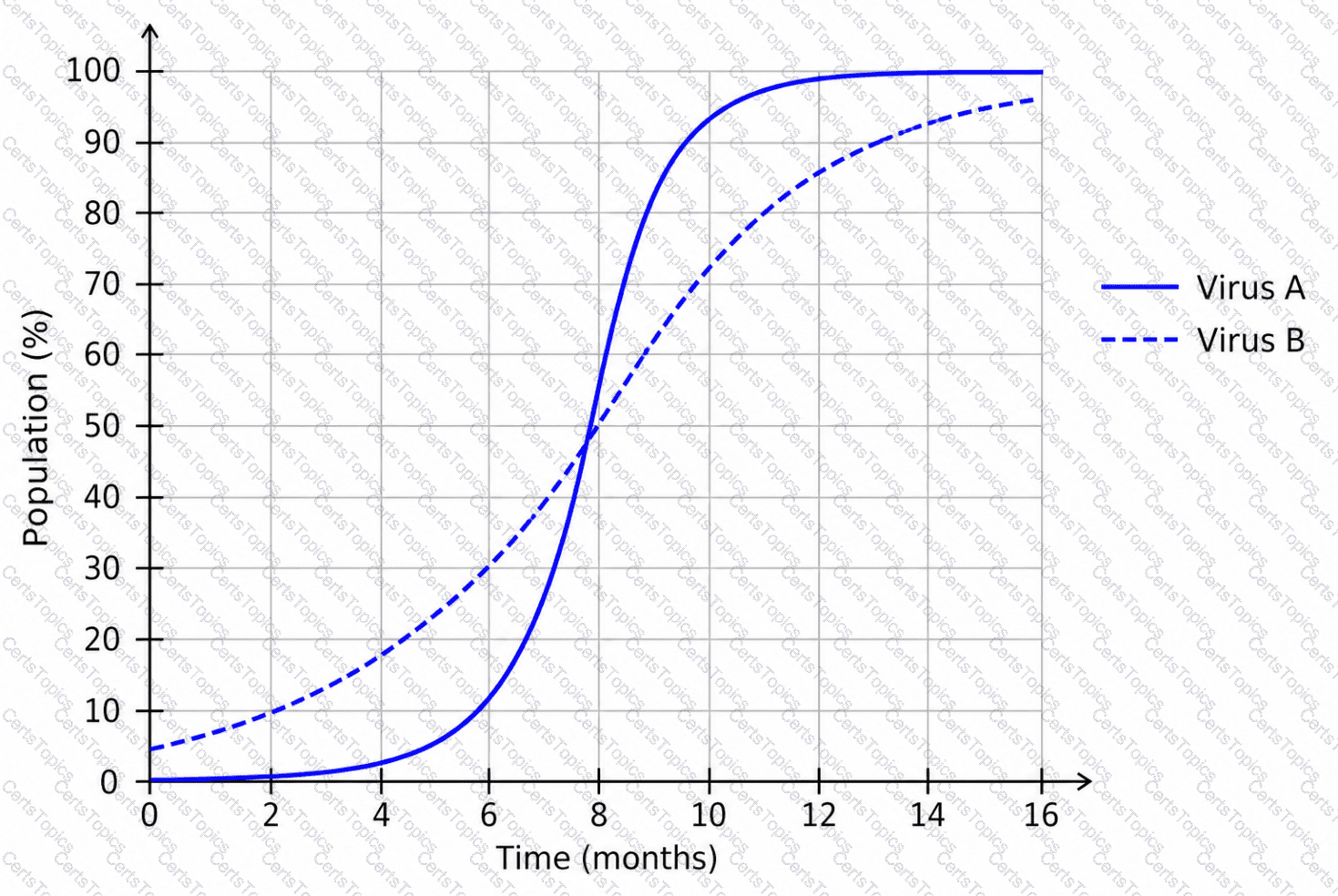
What is a correct conclusion based on the graph?

Options:

A.

Virus B affects 20%of the population before virus A does.

B.

Virus B affects 60%of the population before virus A does.

C.

Virus B affects 70%of the population before virus A does.

D.

Virus B affects 80%of the population before virus A does.
