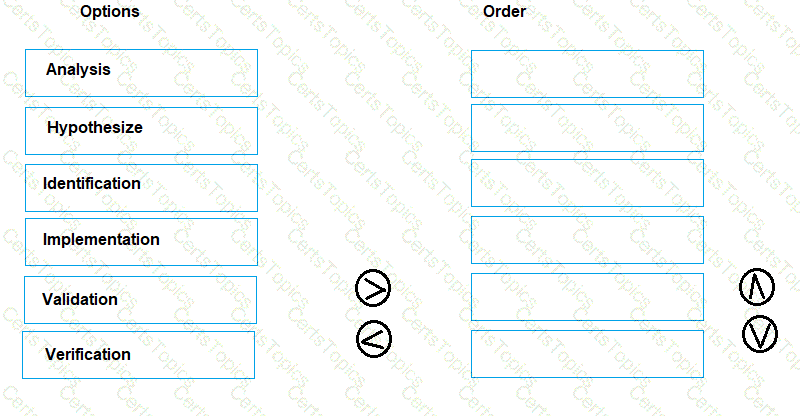
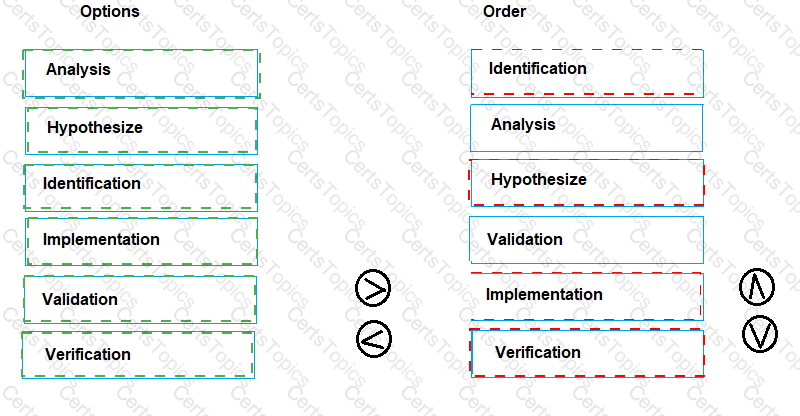
Identification → Analysis → Hypothesize → Validation → Implementation → Verification
The troubleshooting process begins with Identification , where the engineer clearly defines the symptoms, affected users or devices, scope, timing, and expected versus actual behavior. The next stage is Analysis , during which relevant configurations, logs, counters, topology information, packet captures, and recent changes are examined to narrow the potential cause.
Once sufficient evidence has been collected, the engineer Hypothesizes a probable root cause. That hypothesis should not immediately lead to configuration changes. It must first undergo Validation by performing controlled tests or collecting additional evidence that confirms or rejects the suspected cause. This hypothesis-driven approach prevents unnecessary or potentially disruptive changes.
After the root cause has been validated, Implementation follows. The corrective action is applied in a controlled manner, ideally with rollback considerations and minimal service impact. Finally, Verification confirms that the implemented solution actually restored the required functionality and that no secondary problems were introduced.
This distinction between validation and verification is important: validation confirms the diagnosis before the corrective action; verification confirms the result after the corrective action . HPE Aruba troubleshooting guidance similarly emphasizes systematic diagnosis, targeted testing, and post-change confirmation rather than immediately modifying configuration based on an untested assumption. Aruba Networks
Study Guide References: Structured Troubleshooting Methodology; Problem Identification; Root-Cause Analysis; Hypothesis Testing; Corrective Action; Post-Implementation Verification.