


Month End Sale 70% Discount Offer - Ends in 0d 00h 00m 00s - Coupon code: save70

DP-300 Exam Dumps : Administering Relational Databases on Microsoft Azure

PDF
DP-300 pdf
 Real Exam Questions and Answer
 Last Update: Jan 30, 2026
 Question and Answers: 366 With Explanation
 Compatible with all Devices
 Printable Format
 100% Pass Guaranteed
$28.5  $94.99
DP-300 exam
PDF + Testing Engine
DP-300 PDF + engine
 Both PDF & Practice Software
 Last Update: Jan 30, 2026
 Question and Answers: 366
 Discount Offer
 Download Free Demo
 24/7 Customer Support
$43.5  $144.99
Testing Engine
DP-300 Engine
 Desktop Based Application
 Last Update: Jan 30, 2026
 Question and Answers: 366
 Create Multiple Test Sets
 Questions Regularly Updated
  90 Days Free Updates
  Windows and Mac Compatible
$33  $109.99

Verified By IT Certified Experts

CertsTopics.com Certified Safe Files

Up-To-Date Exam Study Material

99.5% High Success Pass Rate

100% Accurate Answers

Instant Downloads

Exam Questions And Answers PDF

Try Demo Before You Buy

Certification Exams with Helpful Questions And Answers

What our customers are saying

Lebanon certstopics Lebanon
Wyatt
Jan 12, 2026
Regular practice tests made it clear how prepared I was for the Microsoft DP-300 exam.

Administering Relational Databases on Microsoft Azure Questions and Answers

Question 1

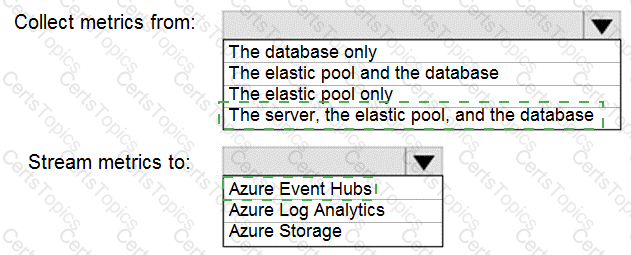
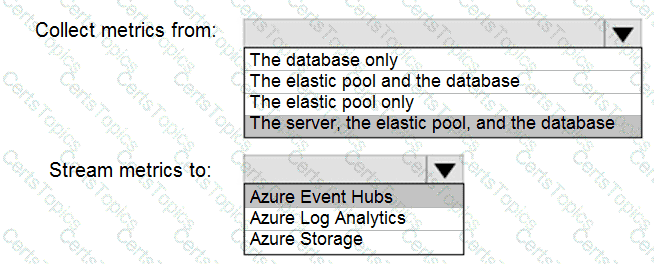
You need to recommend a service tier and a method to offload analytical workloads for the databases migrated from SVR1. The solution must meet the availability and business requirements.

What should you recommend? To answer, select the appropriate options in the answer area.

NOTE: Each correct selection is worth one point.

Options:

Buy Now
Question 2

Which windowing function should you use to perform the streaming aggregation of the sales data?

Options:

A.

Sliding

B.

Hopping

C.

Session

D.

Tumbling

Question 3

You need to implement the surrogate key for the retail store table. The solution must meet the sales transaction dataset requirements.

What should you create?

Options:

A.

a table that has a FOREIGN KEY constraint

B.

a table the has an IDENTITY property

C.

a user-defined SEQUENCE object

D.

a system-versioned temporal table