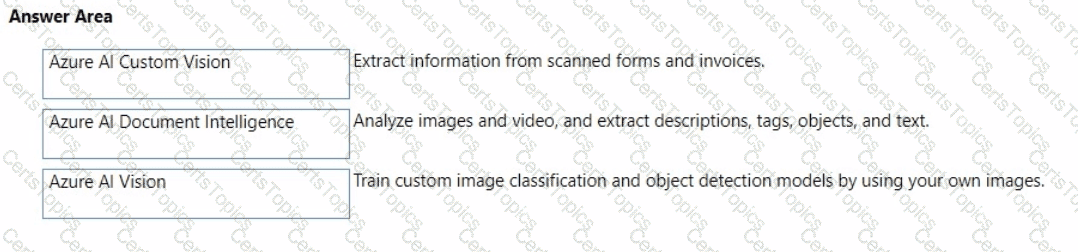
Match the computer vision service to the appropriate Al workload.
To answer, drag the appropriate service from the column on the left to its workload on the right. Each service may be used once, more than once, or not at all.
NOTE: Each correct match is worth one point.

You plan to develop a bot that will enable users to query a knowledge base by using natural language processing.
Which two services should you include in the solution? Each correct answer presents part of the solution.
NOTE: Each correct selection is worth one point.
You need to predict the population size of a specific species of animal in an area.
Which Azure Machine Learning type should you use?
You have the following dataset.

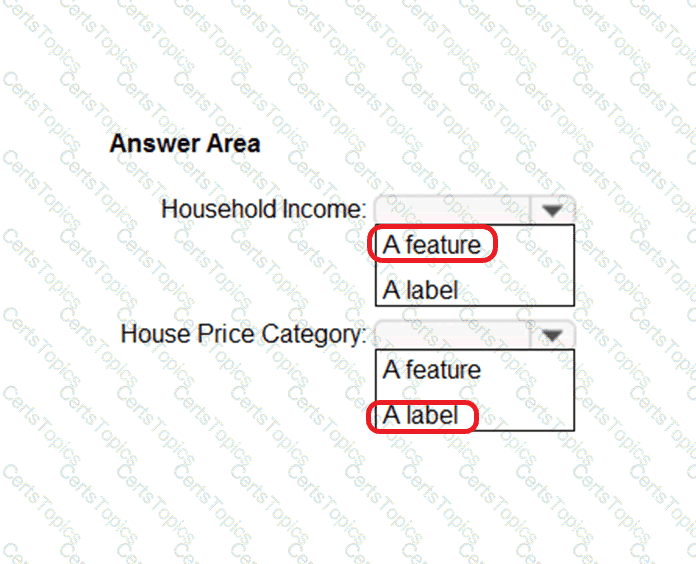
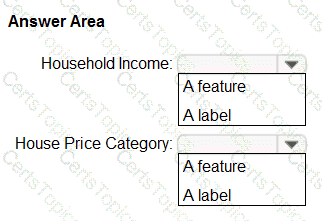
You plan to use the dataset to train a model that will predict the house price categories of houses.
What are Household Income and House Price Category? To answer, select the appropriate option in the answer area.
NOTE: Each correct selection is worth one point.
Copyright © 2021-2026 CertsTopics. All Rights Reserved