
Which three conditions are required for two FortiGate devices to form an OSPF adjacency? (Choose three answers)
Refer to the exhibit.

The port1 interface configuration on FortiGate and partial session information for ICMP traffic are shown.
Which two things happen to the session information if a routing change occurs that affects this session? (Choose two answers)
Refer to the exhibit.
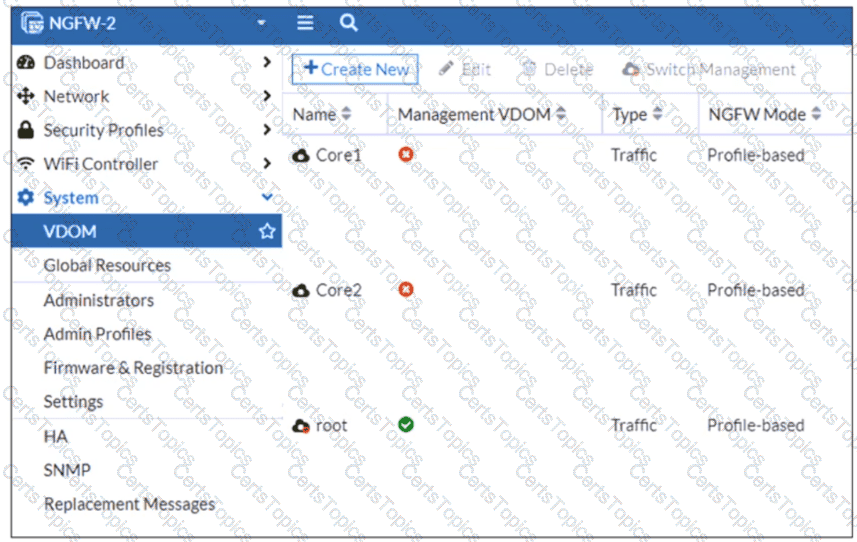
The VDOM configuration on a FortiGate device is shown. You discover that web filtering stopped working in Core1 and Core2 after a maintenance window.
What are two reasons why web filtering stopped working? (Choose two answers.)
Refer to the exhibit, which shows a partial output of the fssod daemon real-time debug command.

What two conclusions can you draw from the output? (Choose two.)
Copyright © 2021-2026 CertsTopics. All Rights Reserved
