
R1 has the following configurations:
[R1] nat address-group test 1
[R1-address-group-test] section 1 100.1.23.1 100.1.23.254
[R1-address-group-test] mode pat
[R1-address-group-test] quit
[R1] nat-policy
[R1-policy-nat] rule name test
[R1-policy-nat-rule-test] source-address range 192.168.0.0 192.168.255.255
[R1-policy-nat-rule-test] action source-nat address-group test
[R1-policy-nat-rule-test] quit
[R1-policy-nat] quit
[R1] interface GE 0/0/2
[R1-GE0/0/2] nat enable
[R1-GE0/0/2] quit
Which of the following statements is false ?
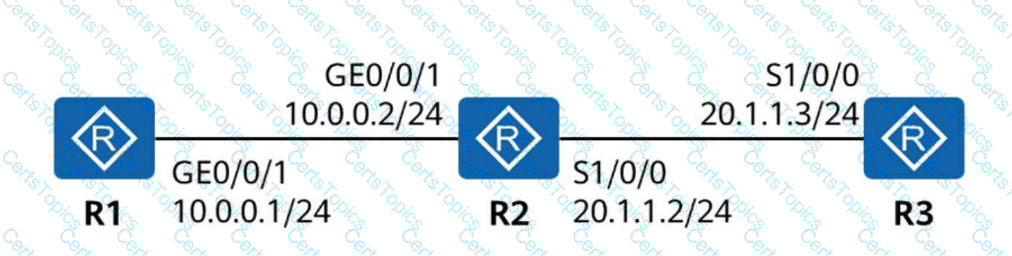
Which of the following configurations can enable connectivity between interfaces on R1 and R3? (Select all that apply)
With the development of data centers, a large number of services are deployed on virtual machines (VMs). The original VLAN isolation solution cannot achieve isolation between so many VMs. VXLAN uses VXLAN Network Identifiers (VNIs) to provide a larger range than VLAN IDs, so that a larger number of VMs can be isolated.
Assume that you cannot configure an IP address for GE1/0/1 on a Huawei switch. Which of the following commands can you run in the interface view to resolve this problem?
Copyright © 2021-2026 CertsTopics. All Rights Reserved
