
Refer to the exhibits.
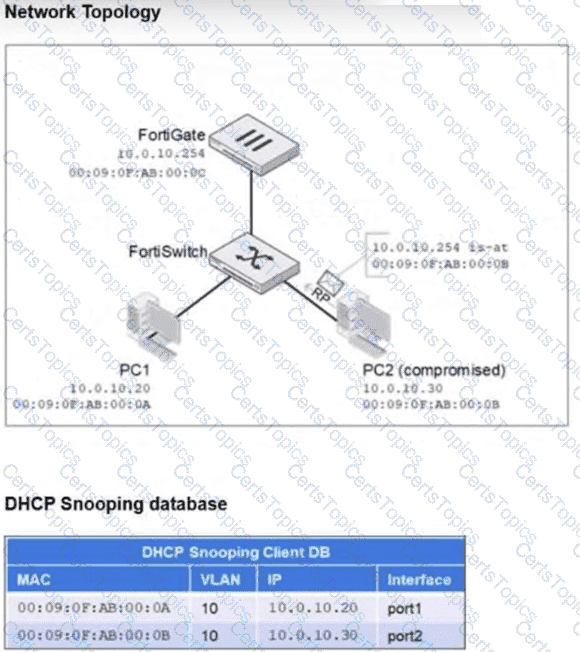
All three FortiSwitch-connected ports are configured in VLAN 10. FortiGate acts as the Dynamic Host Configuration Protocol (DHCP) server and is connected to a DHCP snooping trusted trunk port. PC1 and PC2 are connected to ports configured as untrusted for Dynamic ARP Inspection (DAI), and no static bindings are configured in the IP source guard (IPSG) database. PC2 is compromised and attempts to spoof the FortiGate IP address by sending forged Address Resolution Protocol (ARP) replies with its own MAC address. What will FortiSwitch do with the ARP packets from PC2? (Choose one answer)
Refer to the exhibit.
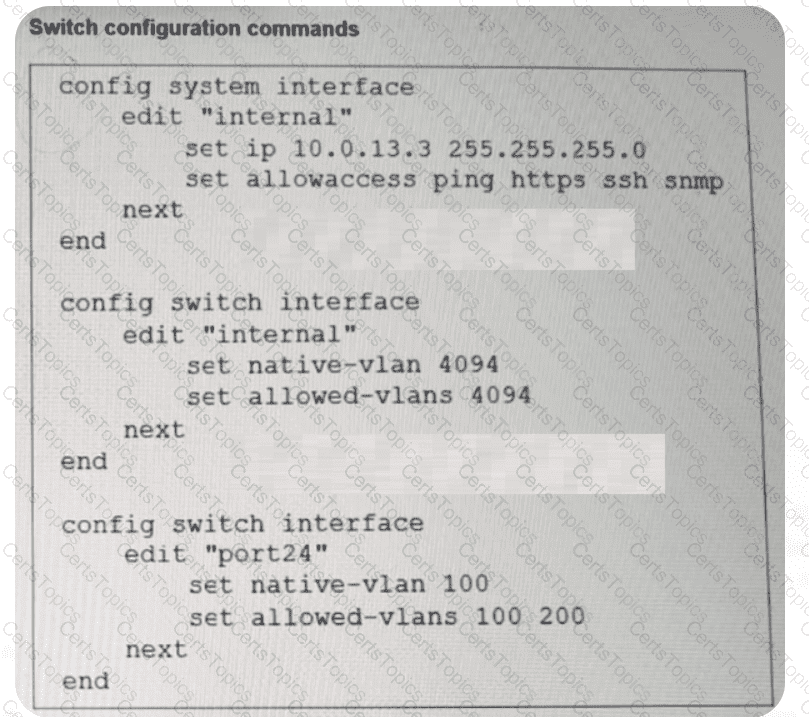
Port24 is the only uplink port connected to the network where you need access to FortiSwitch management services. However, FortiSwitch is not accessible on its management interface with IP address 10.0.13.3. Based on the configuration shown in the exhibit, which two actions should you take to fix the issue and access FortiSwitch? (Choose two answers)
(Full question statement start from here)
You are deploying a FortiSwitch virtual stack in a network that contains Cisco devices. You want the Cisco devices toautomatically discover the FortiSwitch devices and exchange device information. Which two protocols must be enabled on the FortiSwitch devices to achieve this? (Choose two answers)
Refer to the exhibit.
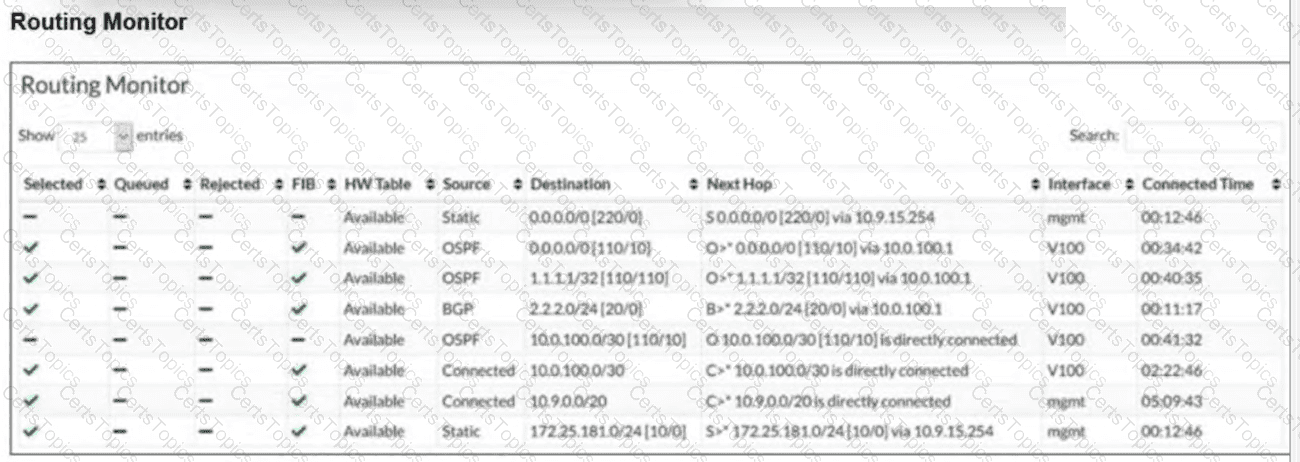
and an OSPF route with destination 0.0.0.0/0 [110/10]. The OSPF route is marked with a checkmark in the FIB column, while the Static route has a dash.]
The routing monitor displays multiple route entries, but only some are installed in the forwarding information base (FIB). After analyzing the two route entries with the destination 0.0.0.0/0, which statement correctly describe why one of these routes is not installed in the FIB? (Choose one answer)
Copyright © 2021-2026 CertsTopics. All Rights Reserved
