New Year Sale 70% Discount Offer - Ends in 0d 00h 00m 00s - Coupon code: save70

FCSS_SDW_AR-7.6 Fortinet Exam Lab Questions

FCSS - SD-WAN 7.6 Architect Questions and Answers

Question 9

(In which order does FortiGate consider the following elements during the route lookup process? Choose one answer.)

Options:

A.

SD-WAN rules, ISDB routes, policy routes, BGP routes

B.

Policy routes, SD-WAN rules, Internet Service Database (ISDB) routes, BGP routes

C.

SD-WAN rules, policy routes, static routes, ISDB routes

D.

Policy routes, ISDB routes, SD-WAN rules, static routes

Question 10

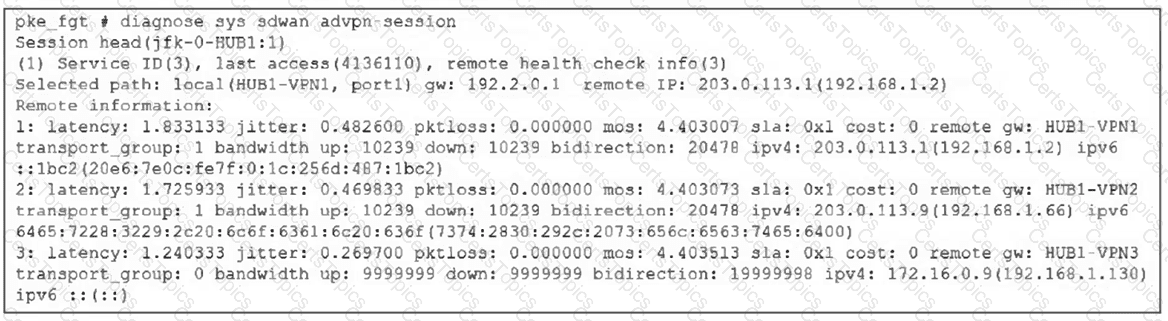
(Refer to the exhibit.

Based on the output shown in the exhibit, what can you conclude about the device role and how it handles health checks? Choose one answer.)

Options:

A.

The device is a spoke and it provides embedded health-check measures for each tunnel to the hub.

B.

The device is a spoke and it receives health-check measures for the tunnels of another spoke.

C.

The device is a hub and it receives embedded health-check measures for each tunnel from the spoke.

D.

The device is a hub and it receives health-check measures for the tunnels of a spoke.

Question 11

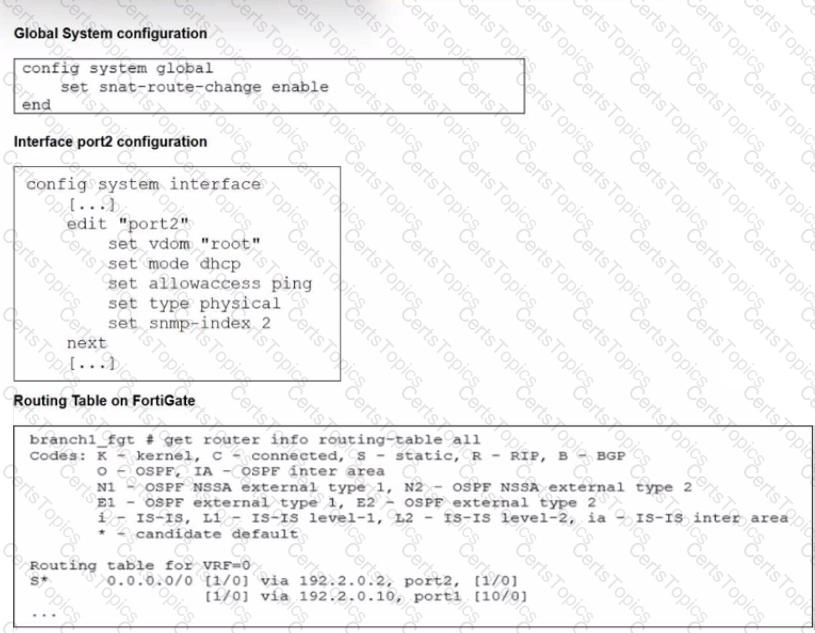
Refer to the exhibits.

The exhibits show the source NAT (SNAT) global setting. port2 interface settings, and the routing table on FortiGate.

The administrator increases the member priority on port2 to 20.

Upon configuration changes and the receipt of new packets, which two actions does FortiGate perform on existing sessions established over port2? (Choose two.)

Options:

A.

FortiGate continues routing all existing sessions over port2.

B.

FortiGate routes only new sessions over port2.

C.

FortiGate flags the SNAT session as dirty only if the administrator has assigned an IP pool to the firewall policies with NAT.

D.

FortiGate flags the sessions as dirty.

E.

FortiGate updates the gateway information of the sessions with SNAT so that they use port1 instead of port2.

Question 12

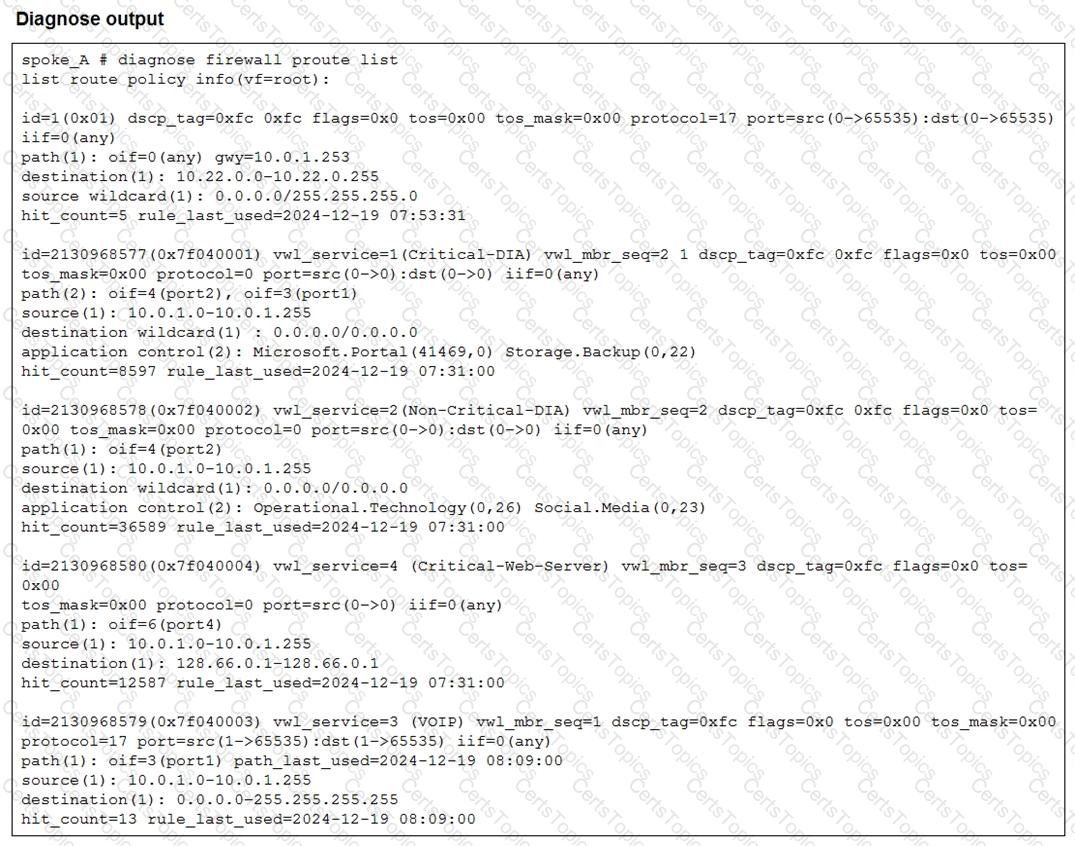
Refer to the exhibit.

Which two conclusions can you draw from the output shown? (Choose two.)

Options:

A.

One SD-WAN rule is defined with application categories as the destination.

B.

UDP traffic destined to the subnet 10.22.0.0/24 matches a manual SD-WAN rule.

C.

One SD-WAN rule allows traffic load balancing.

D.

UDP traffic destined to the subnet 10.22.0.0/24 matches a policy route.