Weekend Sale Special - 75% Discount Offer - Ends in 0d 00h 00m 00s - Coupon code: big75certs

Free and Premium Fortinet NSE7_CDS_AR-7.6 Dumps Questions Answers

Fortinet NSE 7 - Public Cloud Security 7.6.4 Architect Questions and Answers

Question 1

Refer to the exhibit.
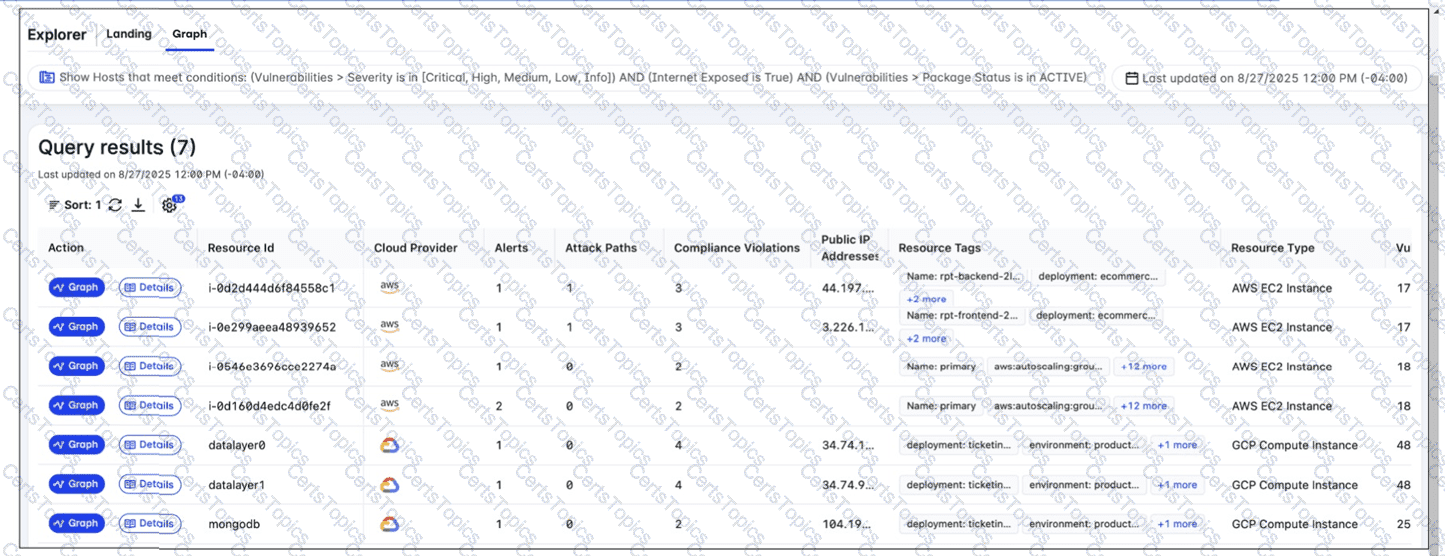
A FortiCNAPP administrator used the FortiCNAPP Explorer to reveal all hosts exposed to the internet that are running active packages with vulnerabilities of all severity levels. Why do only the first two results have an attack path? (Choose one answer)

Options:

A.

Attack paths are available only for AWS resources with public IP addresses.

B.

Attack paths are available only for AWS resources with high impact scores.

C.

Attack paths are available only for resources with potential multi-hop exposure.

D.

Attack paths are available only for resources that have critical vulnerabilities.

Buy Now
Question 2

An administrator is relying on an Azure Bicep linter to find possible issues in Bicep files.

Which problem can the administrator expect to find?

Options:

A.

The resources to be deployed exceed the quota for a region.

B.

Some resources are missing dependsOn statements.

C.

There are output statements that contain passwords.

D.

One or more modules are not using runtime values as parameters.

Question 3

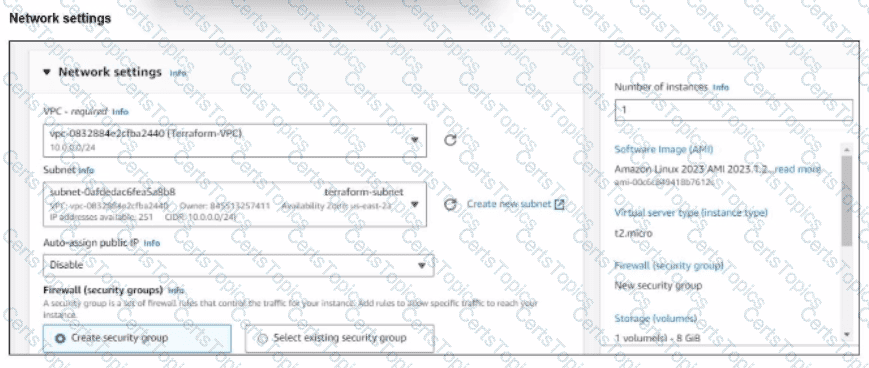
Refer to the exhibit.

You have deployed a Linux EC2 instance in Amazon Web Services (AWS) with the settings shown on the exhibit.

What next step must the administrator take to access this instance from the internet?

Options:

A.

Allocate an Elastic IP address and assign it to the instance.

B.

Create a VIP on FortiGate to allow access.

C.

Enable SSH and allocate it to the device.

D.

Configure the user name and password.

Question 4

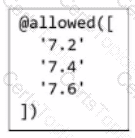
Refer to the exhibit.

What is the purpose of this section of an Azure Bicep file?

Options:

A.

To restrict which FortiOS versions are accepted for deployment

B.

To indicate the correct FortiOS upgrade path after deployment

C.

To add a comment with the permitted FortiOS versions that can be deployed

D.

To document the FortiOS versions in the resulting topology

Question 5

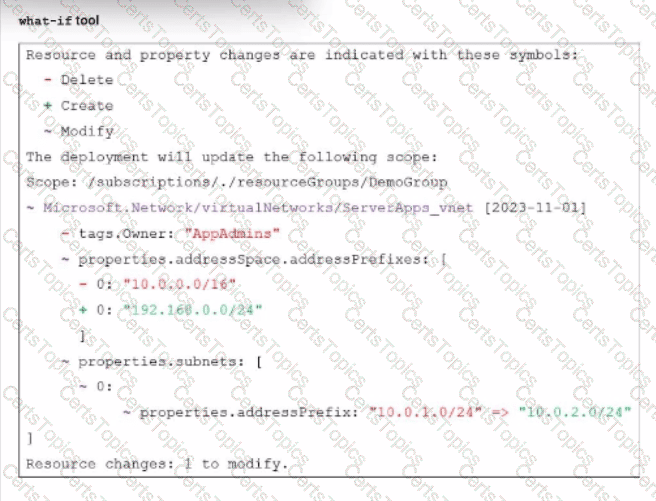
Refer to the exhibit.

An administrator used the what-if tool to preview changes to an Azure Bicep file.

What will happen if the administrator decides to apply these changes in Azure?

Options:

A.

Subnet 10.0.1.0/24 will replace subnet 10.0.2.0/24.

B.

This deployment will fail and no changes will be applied.

C.

A new subnet will be added to ServerApps.

D.

The ServerApps VNet will be renamed.

Question 6

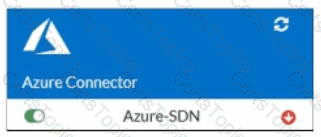
Refer to the exhibit.

You are troubleshooting a Microsoft Azure SDN connector issue on your FortiGate VM in Azure.

Which command can you use to examine details about API calls sent by the connector?

Options:

A.

diag debug application cloud-connector -1

B.

diag test application azd 1

C.

diag debug application azd -1

D.

get system sdn-connector

Question 7

Refer to the exhibit.

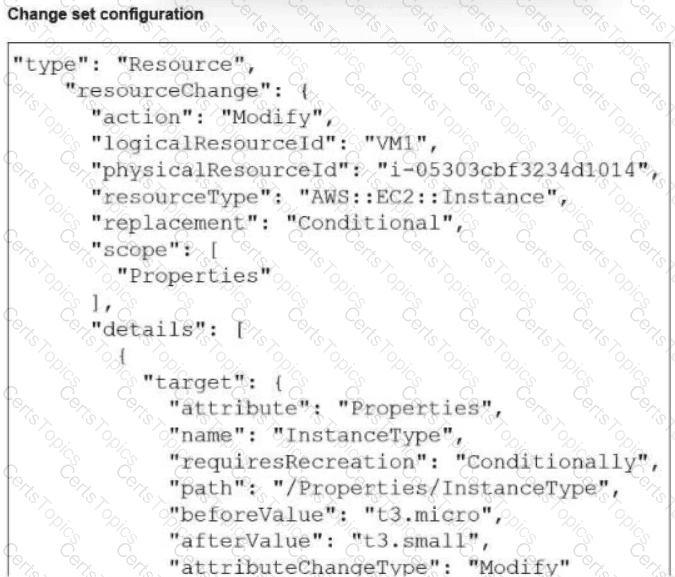
The exhibit shows partial output of changes that AWS found after you created a new change set.

What can you conclude from this output if you decide to execute this change set?

Options:

A.

Executing this change set will create a new VM, unless you do not have proper permissions.

B.

CloudFormation will check your account quota before executing the change set, to prevent errors.

C.

You should refer to the AWS documentation to prevent unplanned service interruptions.

D.

Resources deployed successfully will remain, even if other resources fail during execution.

Question 8

Refer to the exhibit.

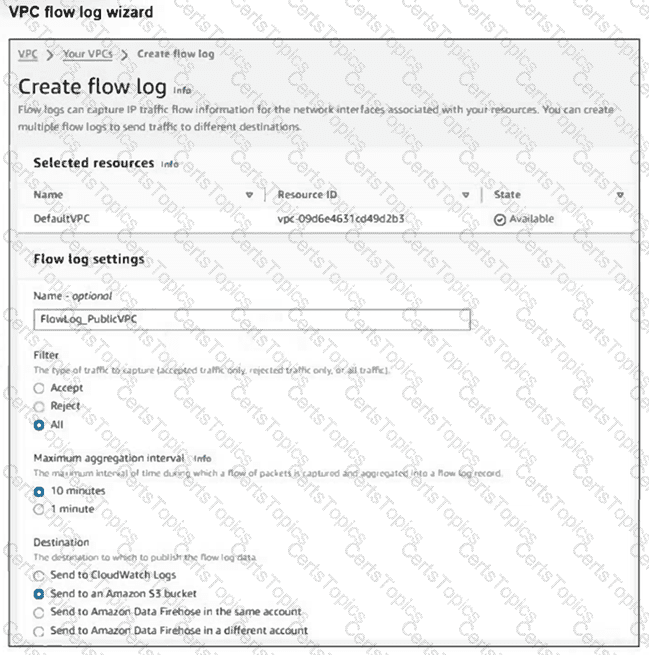
Your team notices an unusually high volume of traffic sourced at one of the organizations FortiGate EC2 instances. They create a flow log to obtain and analyze detailed information about this traffic. However, when they checked the log, they found that it included traffic that was not associated with the FortiGate instance in question.

What can they do to obtain the correct logs? (Choose one answer)

Options:

A.

Create a new flow log at the interface level.

B.

Change the maximum aggregation time to 1 minute.

C.

Ensure that the flow log data is not mixed with the rest of the traffic.

D.

Send the logs to Amazon Data Firehose instead to get more granular information.

Question 9

Refer to the exhibit.

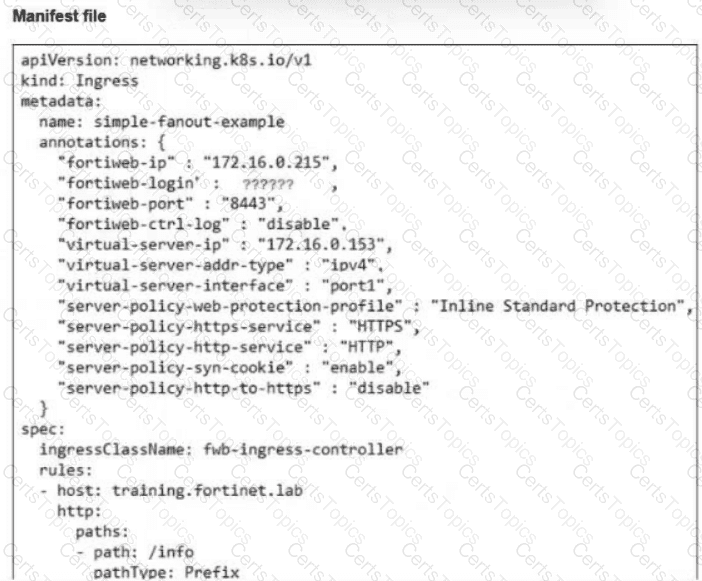
A team of AWS administrators is in the process of installing a FortiWeb ingress controller to protect containerized web applications in an Amazon Elastic Kubernetes Service (EKS) cluster. While customizing the manifest file shown in the exhibit, they realize that they do not know the correct value to enter in the fortiweb-login field.

How can they determine the correct value for this field?

Options:

A.

The correct value is the password of the FortiWeb admin account.

B.

They can find the expected value in the manifest file used to deploy the pods.

C.

They must create a Kubernetes secret with the kubectl command.

D.

They can refer to the output of the EKS cluster deployment.

Question 10

Refer to the exhibit.

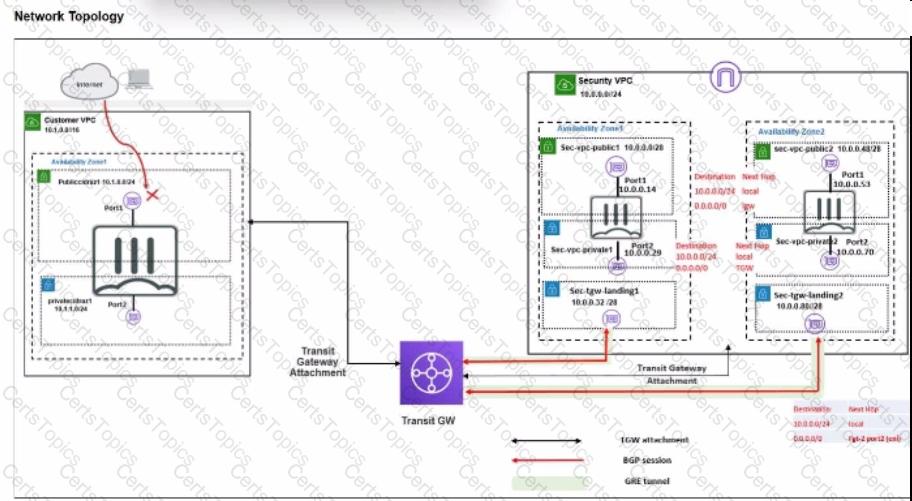
In your Amazon Web Services (AWS), you must allow inbound HTTPS access to the Customer VPC FortiGate VM from the internet. However, your HTTPS connection to the FortiGate VM in the Customer VPC is not successful.

Also, you must ensure that the Customer VPC FortiGate VM sends all the outbound Internet traffic through the Security VPC.

How do you correct this issue with minimal configuration changes? (Choose three.)

Options:

A.

Add a route with your local internet public IP address as the destination and the internet gateway as the target.

B.

Add a route with your local internet public IP address as the destination and the transit gateway as the target.

C.

Add a route to the destination 0.0.0.0/0 with the transit gateway as the target.

D.

Deploy an internet gateway, associate an EIP with the Customer VPC private subnet, and then add a new route with destination 0.0.0.0/0 with the internet gateway as the target.

E.

Deploy an internet gateway, attach it to the Customer VPC, and then associate an EIP with the port1 of the FortiGate in the Customer VPC.

Question 11

As part of your organization ' s monitoring plan, you have been tasked with obtaining and analyzing detailed information about the traffic sourced at one of your FortiGate EC2 instances.

What can you do to achieve this goal?

Options:

A.

Use AWS CloudTrail to capture and then examine traffic from the EC2 instance.

B.

Create a virtual public cloud (VPC) flow log at the network interface level for the EC2 instance.

C.

Add the EC2 instance as a target in CloudWatch to collect its traffic logs.

D.

Configure a network access analyzer scope with the EC2 instance as a match finding.

Question 12

An administrator is trying to implement FortiCNP with Microsoft Azure Security integration. However, FortiCNP is not able to extract any cloud integration data from Azure; therefore, real-time cloud security monitoring is not possible.

What is causing this issue?

Options:

A.

The organization is using a free Azure AD license.

B.

The Azure account doesn ' t have the global administrator role.

C.

The administrator enabled the wrong defender plan for servers.

D.

The FortiCNP account in Azure has the Storage Blob Data Reader role.

Question 13

Refer to the exhibit.

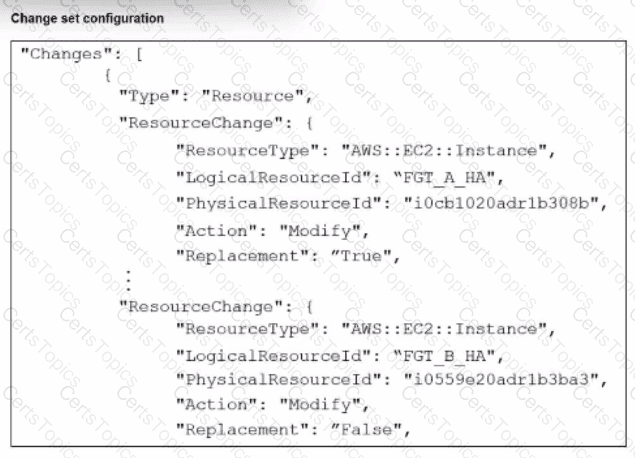
You are managing an active-passive FortiGate HA cluster in AWS that was deployed using CloudFormation. You have created a change set to examine the effects of some proposed changes to the current infrastructure. The exhibit shows some sections of the change set.

What will happen if you apply these changes?

Options:

A.

This deployment can be done without any traffic interruption.

B.

Both FortiGate VMs will get a new PhysicalResourceId.

C.

The updated FortiGate VMs will not have the latest configuration changes.

D.

CloudFormation checks if you will surpass your account quota.

Question 14

Refer to the exhibit.

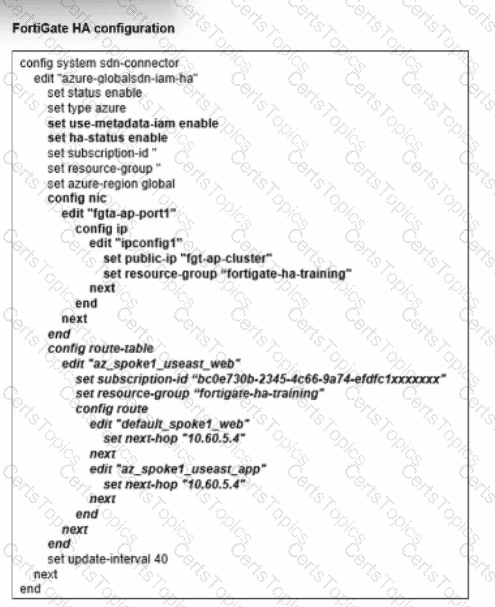
You deployed a FortiGate HA active-passive cluster in Microsoft Azure.

Which two statements regarding this particular deployment are true? (Choose two.)

Options:

A.

You can use the vdom-exception command to synchronize the configuration.

B.

During a failover, all existing sessions are transferred to the new active FortiGate.

C.

The configuration does not synchronize between the primary and secondary devices.

D.

There is no SLA for API calls from Microsoft Azure.

Question 15

An Azure administrator is trying to optimize the Azure Bicep files currently used for cloud deployments.

Which technique can Azure administrators use to improve the code in Azure Bicep files?

Options:

A.

Avoid nesting related resources to improve readability.

B.

Always use parameter files with the .json extension.

C.

Limit the allowed parameters with the use of decorators.

D.

Use the what-if operation before deploying new resources.

Question 16

Refer to the exhibit.

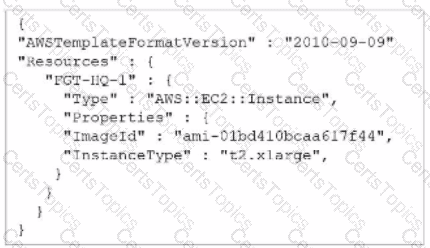
A senior administrator in a multinational organization needs to include a comment in the template shown in the exhibit to ensure that administrators from other regions change the Amazon Machine Image (AMI) ID to one that is valid in their location.

How can the administrator add the required comment in that section of the file?

Options:

A.

The administrator can include the comment with the aws cloudformation update-stack command.

B.

The administrator must convert the template file to YAML format to add a comment.

C.

The administrator can add the comment starting with the # character next to the " Resources " section.

D.

The administrator must update the AWSTemplateFormatVersion to the latest version.

Question 17

Refer to the exhibit.

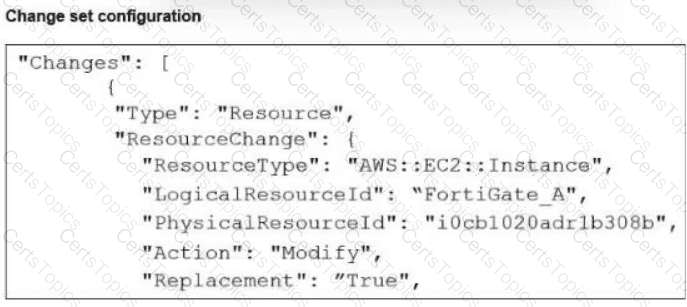
An AWS administrator created a change set to examine the effects of proposed changes to the current infrastructure.

Based only on the output shown in the exhibit, what will happen if the administrator applies these changes?

Options:

A.

The resulting FortiGate instance will lose its current local users.

B.

The deployment will take place without any service interruption.

C.

The PhysicalResourceId will remain the same.

D.

CloudFormation will roll back the current stack before updating it.

Question 18

You are experiencing intermittent connectivity issues in a FortiGate HA cluster deployed with Azure gateway load balancer. Traffic is being dropped when it passes through the cluster. What is the cause of the issue? (Choose one answer)1

Options:

A.

The FortiGate firewalls are using the default maximum transmission unit (M2TU) size supported by Azure.

B.

The Azure gateway load balancer is configured with an incorrect health probe port.

C.

The Azure gateway load balancer is blocking large packets, causing traffic failures.

D.

The protected VMs are running an application that fragments packets.

Question 19

Which statement about Transit Gateway (TGW) in Amazon Web Services (AWS) is true?

Options:

A.

Both the TGW attachment and propagation must be in the same TGW route table.

B.

TGW can have multiple TGW route tables.

C.

A TGW attachment can be associated with multiple TGW route tables.

D.

The TGW default route table cannot be disabled.

Question 20

You must add an Amazon Web Services (AWS) network access list (NACL) rule to allow SSH traffic to a subnet for temporary testing purposes. When you review the current inbound and outbound NACL rules, you notice that the rules with number 5 deny SSH and telnet traffic to the subnet.

What can you do to allow SSH traffic?

Options:

A.

You do not have to create any NACL rules because the default security group rule automatically allows SSH traffic to the subnet.

B.

You must create a new allow SSH rule anywhere in the network ACL rule base to allow SSH traffic.

C.

You must create two new allow SSH rules, each with a number bigger than 5.

D.

You must create two new allow SSH rules, each with a number smaller than 5.