Summer Certification Sale 70% Discount Offer - Ends in 0d 00h 00m 00s - Coupon code: save70

PDF NSE7_SOC_AR-7.6 Study Guide

Fortinet NSE 7 - Security Operations 7.6 Architect Questions and Answers

Question 9

Refer to the exhibit,

which shows the partial output of the MITRE ATT & CK Enterprise matrix on FortiAnalyzer.

Which two statements are true? (Choose two.)

Options:

A.

There are four techniques that fall under tactic T1071.

B.

There are four subtechniques that fall under technique T1071.

C.

There are event handlers that cover tactic T1071.

D.

There are 15 events associated with the tactic.

Question 10

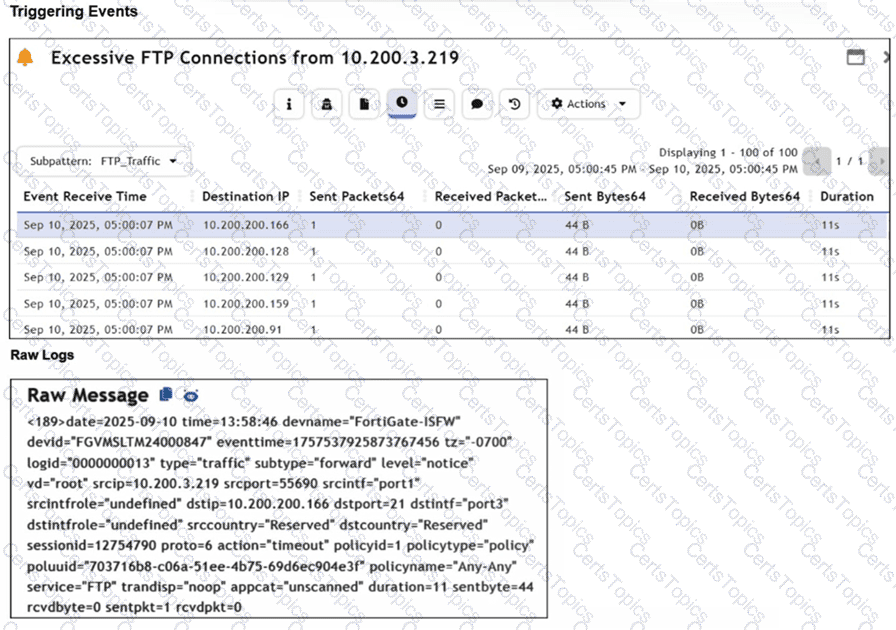
Refer to the exhibits.

Assume that the traffic flows are identical, except for the destination IP address. There is only one FortiGate in network address translation (NAT) mode in this environment.

Based on the exhibits, which two conclusions can you make about this FortiSIEM incident? (Choose two answers)

Options:

A.

The client 10.200.3.219 is conducting active reconnaissance.

B.

FortiGate is not routing the packets to the destination hosts.

C.

The destination hosts are not responding.

D.

FortiGate is blocking the return flows.

Question 11

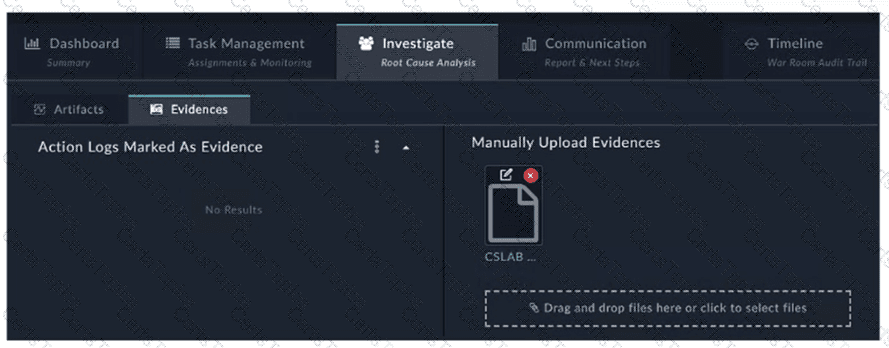
Refer to the exhibit.

How do you add a piece of evidence to the Action Logs Marked As Evidence area? (Choose one answer)

Options:

A.

By tagging output or a workspace comment with the keyword Evidence

B.

By linking an indicator to the war room

C.

By creating an evidence collection task and attaching a file

D.

By executing a playbook with the Save Execution Logs option enabled

Question 12

A FortiSOAR playbook includes a Wait step that is configured to pause execution after initiating a reputation lookup on an indicator. Which two configurations of the Wait step are valid? Choose two answers.

Options:

A.

The playbook resumes when a specified amount of time has elapsed.

B.

The playbook resumes when the indicator record is updated.

C.

The Wait step can retry a specific step in the playbook at scheduled intervals until it succeeds.

D.

The Wait step, during the AWAITING state, can execute child playbooks.