
A data engineer has developed a Python notebook in a Databricks workspace and configured it to run as a scheduled job to process daily sales data.
How are the storage and execution of this notebook managed within the Databricks architecture?
A data engineer is working with two tables. Each of these tables is displayed below in its entirety.
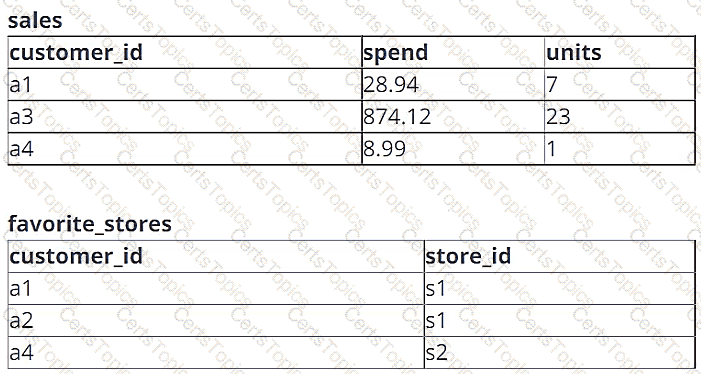
The data engineer runs the following query to join these tables together:
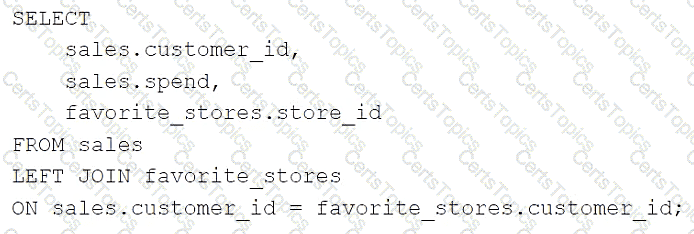
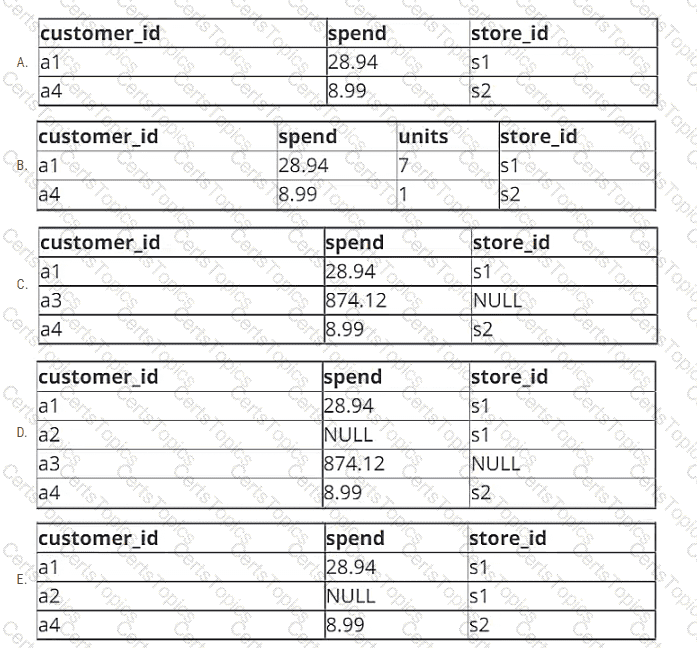
Which of the following will be returned by the above query?
A data engineer is migrating pipeline tasks to reduce operational toil. The workspace uses Unity Catalog and is in a region that supports serverless. The engineer wants Databricks to auto-select instance types, manage scaling, apply Photon, and handle runtime upgrades automatically for job runs.
How should the data engineer meet this requirement while adhering to Databricks constraints?
A data engineer wants to create an external table in Databricks that references data stored in an Azure Data Lake Storage (ADLS) location. The goal is to enable Databricks to access and query this external data without moving it into Databricks-managed storage.
Which step should the data engineer take to successfully create the external table?
Copyright © 2021-2026 CertsTopics. All Rights Reserved
