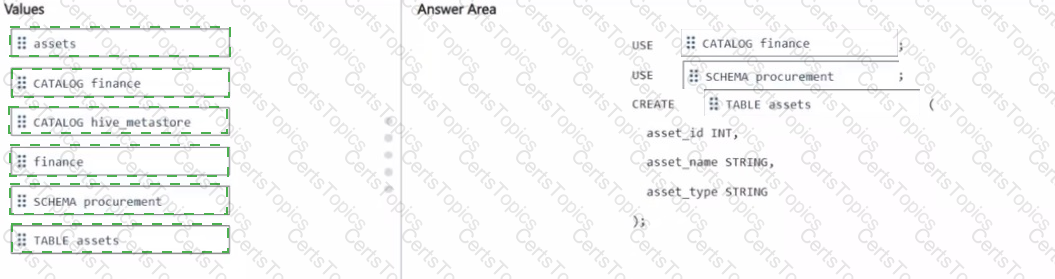
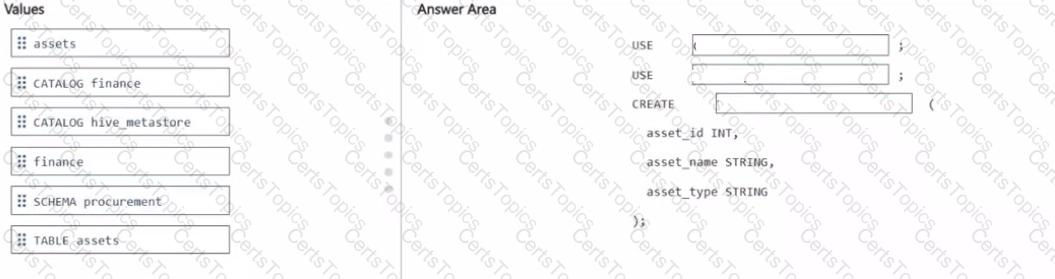
You have an Azure Databricks workspace that is enabled for Unity Catalog and contains a catalog named finance, finance contains two schemas named default and procurement.
You need to create a table named assets in the procurement schema, assets must contain the following columns:
• asset.id
• asset, type
• asset_name
How should you complete the SQL statement? To answer, drag the appropriate values to the correct targets. Each value may be used once, more than once, or not at all You may need to drag the split bar between panes or scroll to view content
NOTE: Each correct selection is worth one point.
You have an Azure Databricks workspace that is enabled for Unity Catalog and contains a managed Delta table named Sales. Sales stores transaction data and contains the following columns:
• transactionjd (string)
• transaction date (date)
• amount (decimal)
You need to implement the following data quality requirements by using table-level data quality enforcement:
• amount must be greater than 0.
• transaction id must never be null.
• Invalid records must be rejected when data is written to the Sales table.
What should you do?
You have an Azure Databricks workspace that is enabled for Unity Catalog.
You need to share curated data with an external organization. The solution must meet the following requirements:
The organization will use its own compute platform to query the data.
Access to the data must be centrally governed by using Unity Catalog.
Administrative effort must be minimized.
What should you do?
You have an Azure Databricks workspace named Workspace1 that contains a Git folder linked to a remote Git repository. The Git folder contains a Databricks notebook named Notebook1.
From the main branch, you create a feature branch named Branch1 and commit changes to Notebook1.
Another user commits changes to Notebook1 in main.
When you attempt to merge Branch1 into main, a merge conflict occurs.
You need to ensure that Notebook1 in main includes the changes from both branches.
What should you do?
You have an Azure Databricks workspace that is enabled for Unity Catalog
You have an Apache Spark Structured Streaming job that writes data to a Delta table.
After the cluster restarts, the streaming job reprocesses previously ingested data
You need to prevent the streaming job from reprocessing the data after the cluster restarts.
What should you do?
You have an Azure Databricks workspace that is enabled for Unity Catalog and contains a Delta table named Orders.
You load the Orders table into an Apache Spark DataFrame named df.
You need to create a DataFrame that excludes rows where the order amount is null.
Solution: You run the following expression.
df.filter(df.order_amount.isNotNull())
Does this meet the goal?
You have an Azure Databricks workspace that contains a job in Lakeflow Jobs named Job1.
Job1 processes raw data files stored in Azure Storage.
New files arrive at unpredictable intervals.
You need to ensure that Job1 starts automatically when new files arrive and does NOT consume compute resources when no data is available.
Which type of job trigger should you use?
You have an Azure Databricks workspace that is enabled for Unity Catalog and contains a catalog named Catalog 1. Catalog 1 contains a table named Transactions. Transactions contains the following columns:
• transaction_id
• customet_name
• email address
• credit_card_number
• transaction_amount
You need to ensure that business analysts can query all the tows in the Transactions table. The solution must meet the following requirements:
• Prevent the analysts from seeing the full values in the email_address and credit_catd_number columns.
• Ensure that the analysts can see only the values after the @ character in each email address.
• Ensure that the analysts can see only the last four digits of each credit card number.
• Enable the analysts to query the table without errors.
• Follow the principle of least privilege.
What should you do?
You have an Azure Databricks workspace that is enabled for Unity Catalog.
You need to profile a table to meet the following requirements:
The count of null values per column must be evaluated repeatedly as new records are added to the table.
Changes in the count of null values must be observable over the progression of the dataset.
Which type of profile should you create?
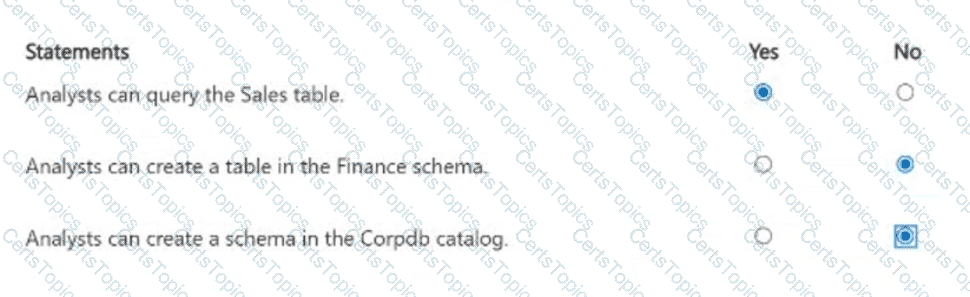
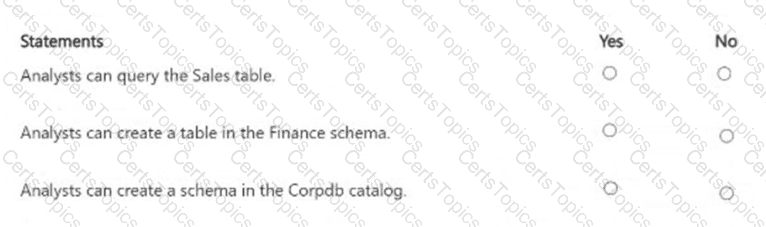
You have an Azure Databricks workspace that is enabled for Unity Catalog and contains:
A catalog named Corpdb
A schema named Finance in the Corpdb catalog
A table named Sales in the Finance schema
You have a group named Analysts.
You assign the following permissions to Analysts:
USE CATALOG on the Corpdb catalog
USE SCHEMA on the Finance schema
SELECT on the Sales table
For each of the following statements, select Yes if the statement is true. Otherwise, select No.
NOTE: Each correct selection is worth one point.
You have a Lakeflow Spark Declarative Pipelines {SDP) pipeline in Azure Databricks. The pipeline ingests transaction data into a table named Table1.
You need to ensure that in the event of an invalid record, the pipeline continues to run. The solution must meet the following requirements:
• Invalid records must NOT be written to Table 1.
• Invalid records must be preserved for review.
• Minimize development effort
What should you do?
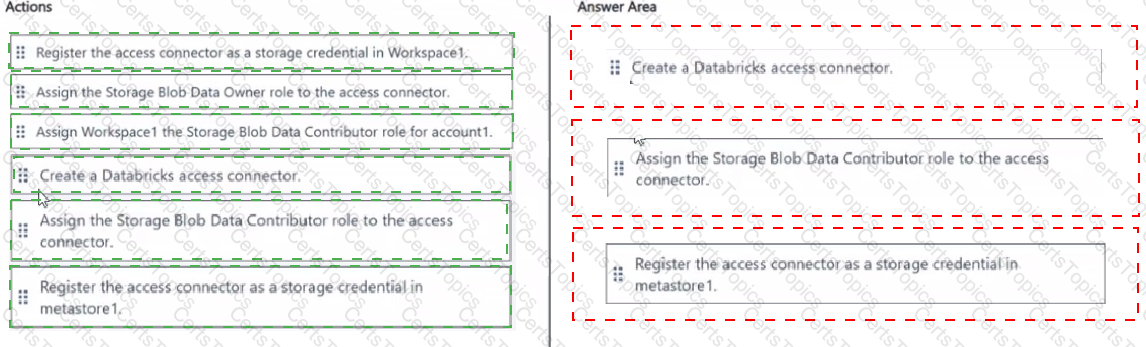
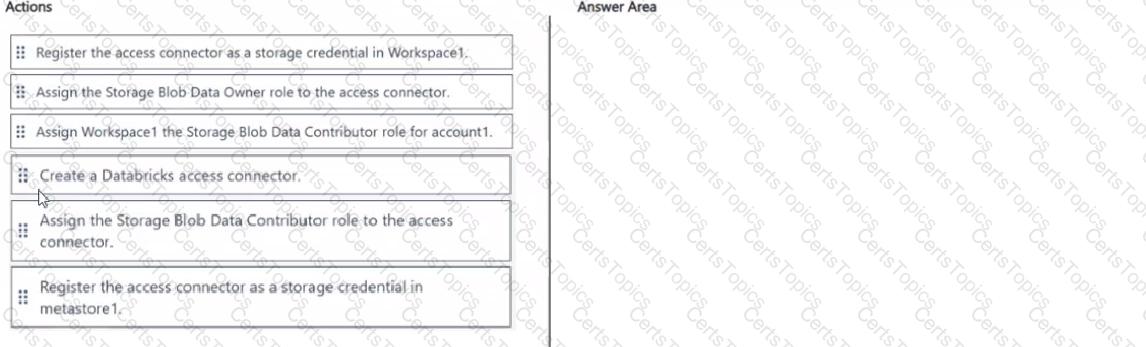
You have an Azure Databricks workspace named Workspace1 that is attached to a Unity Catalog metastore named metastore1
You need to register an Azure Storage account named account1 that has a hierarchical namespace enabled as an external location The external location must use a managed identity to authenticate to account1 and the solution must follow the principle of least privilege.
Which three actions should you perform in sequence ' To answer, move the appropriate actions from the list of actions to the answer area and arrange them in the correct order.
You need to curate Unity Catalog objects that reference the ERP data. The solution must meet the governance requirements.
What should you do?
You have an Azure Databricks workspace
You are creating a Lakeflow Spark Declarative Pipelines (SDP) pipeline that scales automatically. You need to configure compute for the pipeline. The solution must minimize operational costs and effort. What should you use?
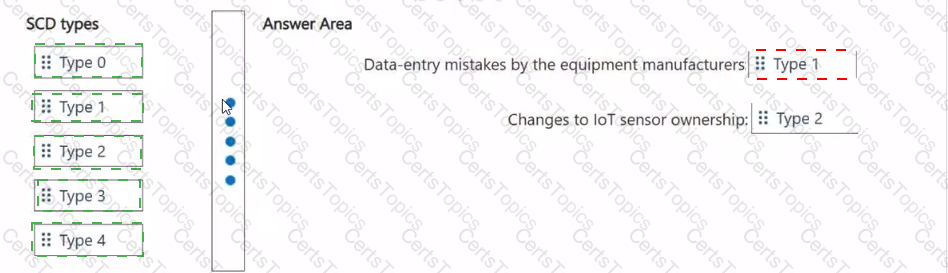
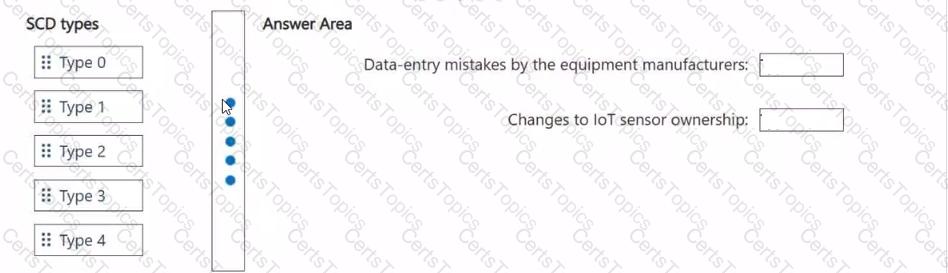
Which SCD type should you use to support the planned data modeling changes? To answer, drag the appropriate types to the correct issues. Each type may be used once, more than once, or not at all. You may need to drag the split bar between panes or scroll to view content.
NOTE: Each correct selection is worth one point.
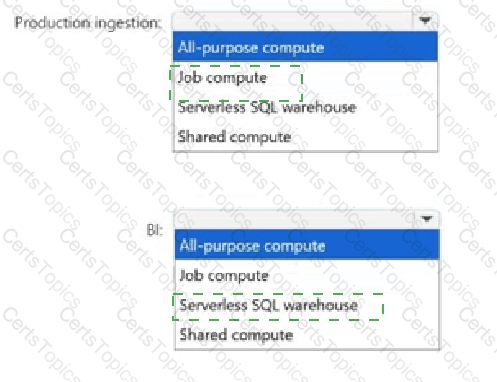
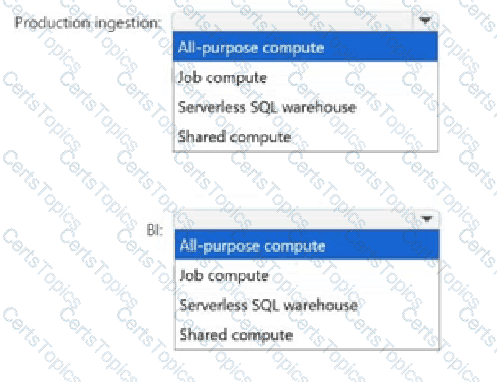
You need to recommend a compute type for the production ingestion workloads and BI workloads. The solution must meet the environment and compute requirements.
What should you recommend for each type of workload? To answer, select the appropriate options in the answer area.
NOTE: Each correct selection is worth one point.
You need to configure compute for the ingestion of telemetry data. The solution must meet the data ingestion and processing requirements.
What should you do?
You need to develop the task logic for a new job in Lakeflow Jobs that processes telemetry data.
Each task must contain only the appropriate logic for its step in the pipeline. The solution must support the planned changes and meet the data ingestion and processing requirements.
What should you do?
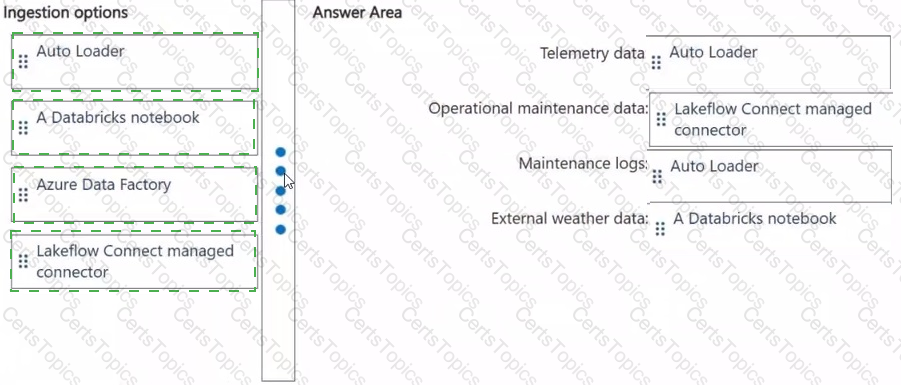
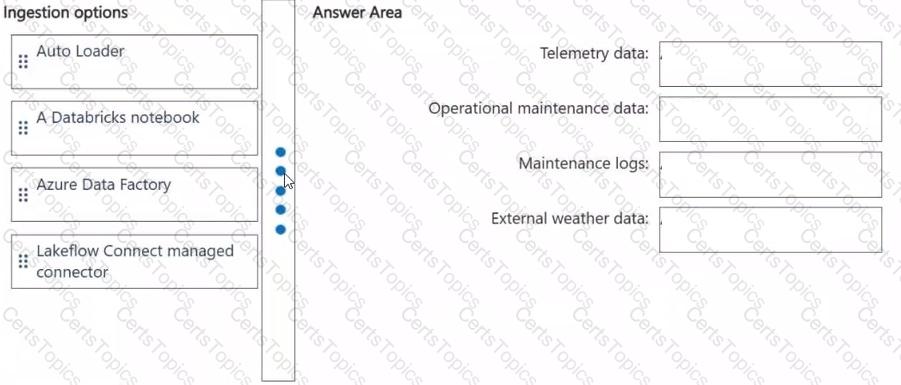
Which ingestion option should you recommend for each data source? To answer, drag the appropriate options to the correct data sources. Each option may be used once, more than once, or not at all. You may need to drag the split bar between panes or scroll to view content.
NOTE: Each correct selection is worth one point.
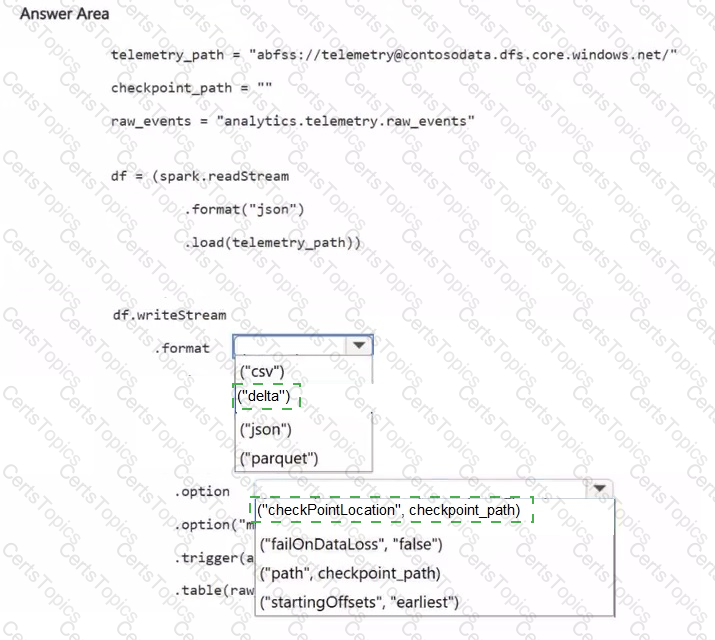
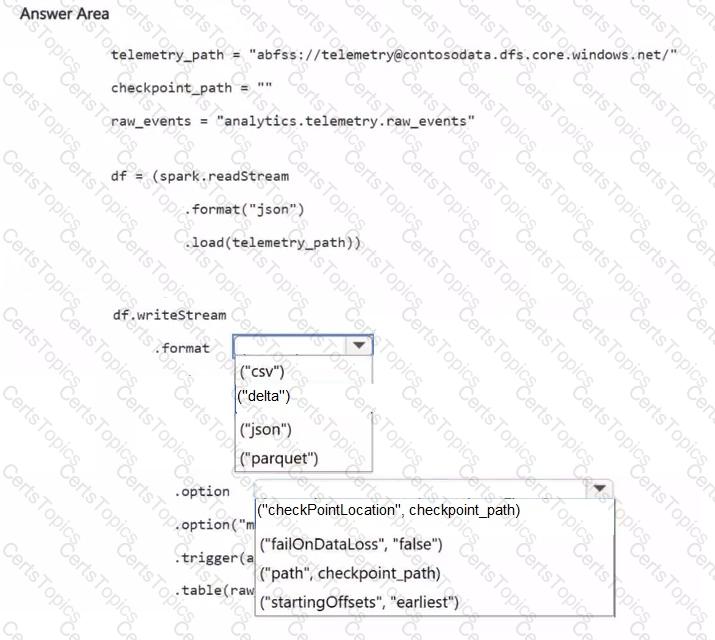
You need to complete the PySpark code for the Spark Structured Streaming pipelines. The solution must meet the data ingestion and processing requirements.
How should you complete the code segment? To answer, select the appropriate options in the answer area.
NOTE: Each correct selection is worth one point.
Copyright © 2021-2026 CertsTopics. All Rights Reserved