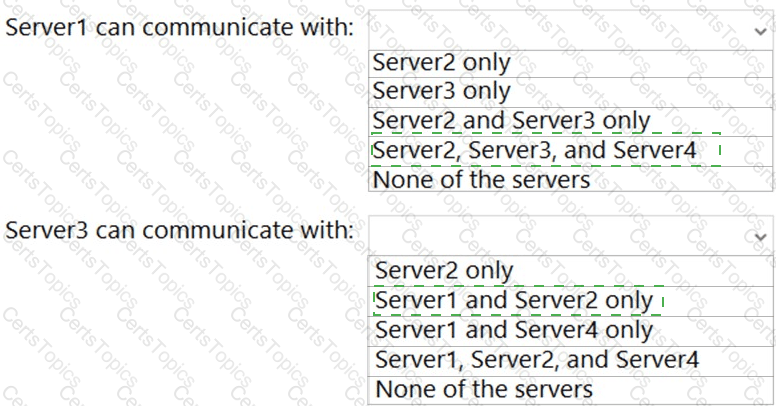
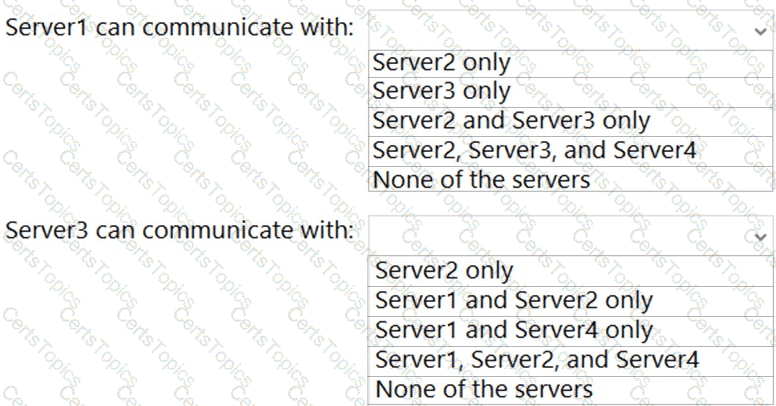
With which servers can Server1 and Server3 communicate? To answer, select the appropriate options in the answer area.
NOTE: Each correct selection is worth one point.
Which domain controller should be online to meet the technical requirements for DC4?
You need to back up Server 4 to meet the technical requirements.
What should you do first?
You need to meet the technical requirements for Cluster3.
What should you include in the solution?
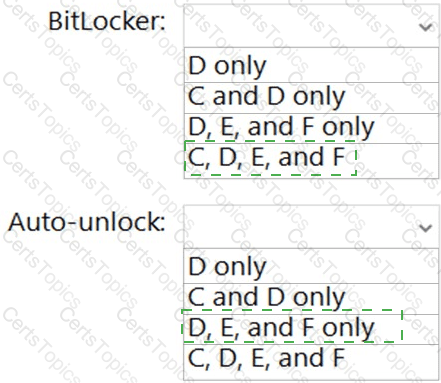
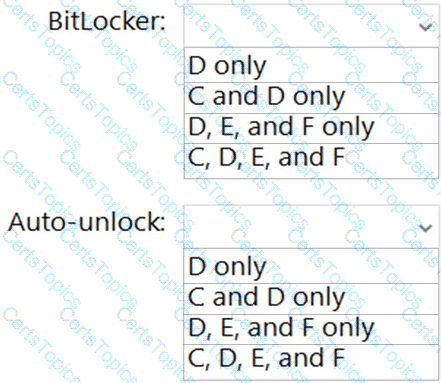
You need to configure BitLocker on Server4.
On which volumes can you turn on BitLocker, and on which volumes can you turn on auto-unlock? To answer, select the appropriate options in the answer area.
NOTE: Each correct selection is worth one point.
You need to meet the technical requirements for User1.
To which group in contoso.com should you add User1?
You need to meet technical requirements for Share1.
What should you use?
You are evaluating the technical requirements tor Cluster2.
What is the minimum number of Azure Site Recovery Providers that you should install?
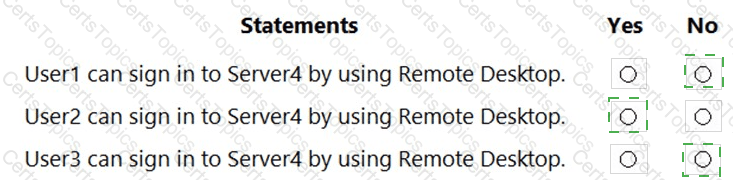
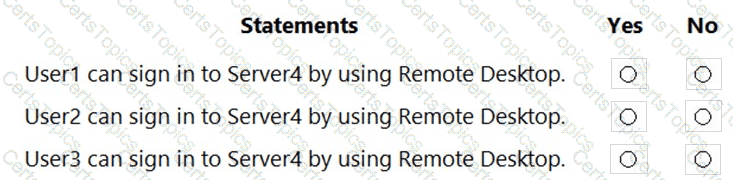
For each of the following statements, select Yes if the statement is true. Otherwise, select No.
NOTE: Each correct selection is worth one point.
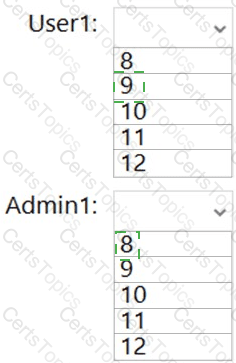
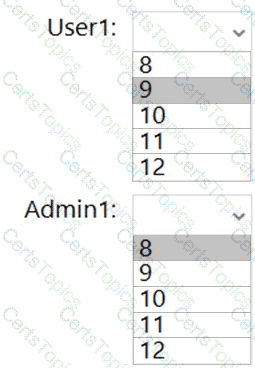
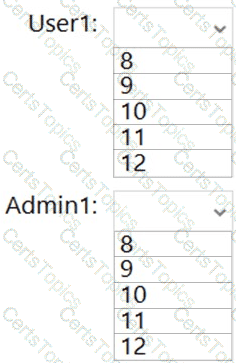
What is the effective minimum password length for User1 and Admin1? To answer, select the appropriate options in the answer area.
NOTE: Each correct selection is worth one point.
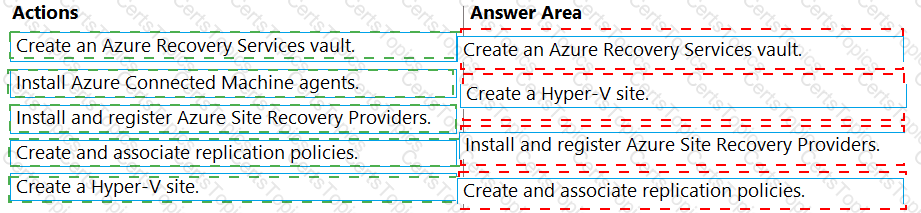
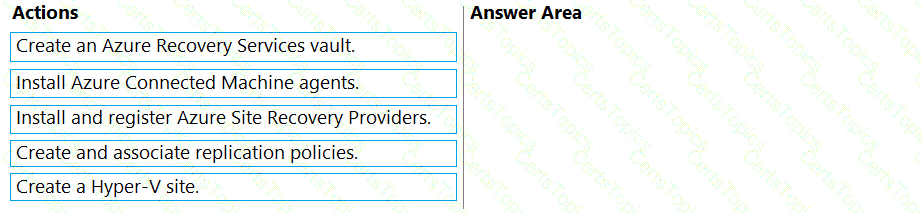
You need to meet the technical requirements for Cluster2.
Which four actions should you perform in sequence before you can enable replication? To answer, move the appropriate actions from the list of actions to the answer area and arrange them in the correct order.
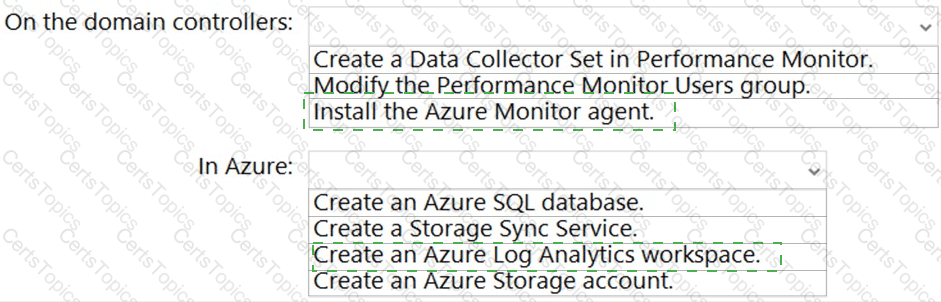
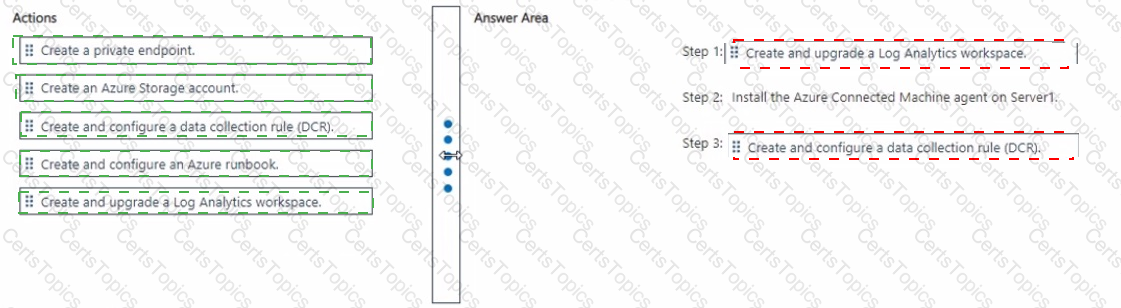
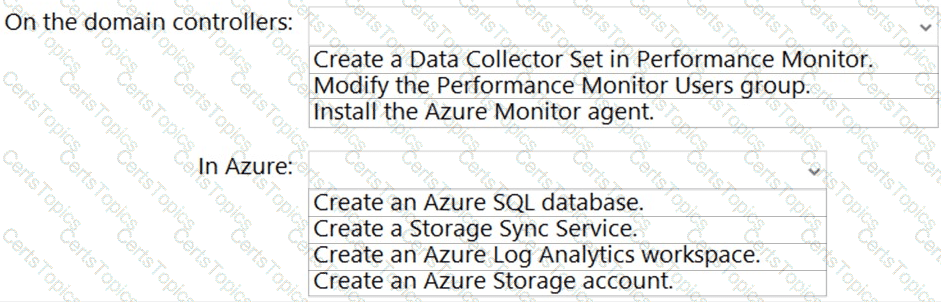
You need to implement alerts for the domain controllers. The solution must meet the technical requirements.
What should you do on the domain controllers, and what should you create on Azure? To answer, select the appropriate options in the answer area.
NOTE: Each correct selection is worth one point.
You have an Azure subscription. The subscription contains a virtual machine named VM1 that runs Windows Server and uses Azure Disk Encryption.
You need to identify which Azure key vault stores the encryption keys for VM1. The solution must minimize administrative effort.
Which PowerShell cmdlet should you run?
You have two servers named Host1 and Host2 that run Windows Server 2022 and are members of a workgroup named Contoso. Both servers have the Hyper-V server role installed and are identical in hardware and configuration.
Host1 contains three virtual machines. Each server is located in a separate site that connect by using a high-speed WAN link.
You need to replicate the virtual machines from Host1 to Host2 for a disaster recovery solution.
Which three actions should you perform? Each correct answer presents part of the solution.
NOTE: Each correct selection is worth one point.
You have 200 Azure virtual machines.
You create a recovery plan in Azure Site Recovery to fail over all the virtual machines to an Azure region. The plan has three manual actions.
You need to replace one of the manual actions with an automated process.
What should you use?
Your network contains an Active Directory Domain Services (AD DS) domain. You need to deploy a Storage Spaces Direct cluster that has nested resiliency. What is the maximum number of nodes you can deploy to the cluster?
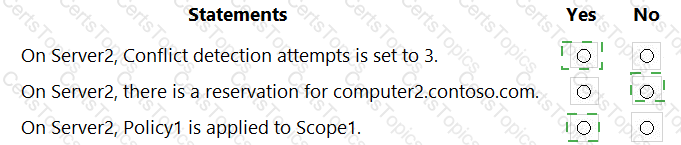
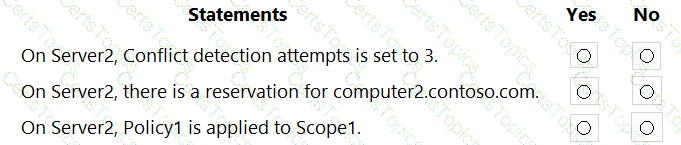
Your network contains an Active Directory Domain Services (AD DS) domain. The domain contains the servers shown in the following table.

Server3 contains a share named Share1.
On Server1, DHCP has the following configurations:
Conflict detection attempts: 3
An IPv4 scope named Scope1 that has the following settings:
1. Address Pool: 172.16.10.100 - 172.16.10.130
2. Address Leases:
- 172.16.10.100 computer1.contoso.com
- 172.16.10.101 computer2.contoso.com
Reservations: 172.16.10.101 computer2.contoso.com
Policies: Policy1
You perform the following actions:
On Server1, you run
Export-DhcpServer -File \\Server3\Share1\File1.xml .
On Server2, you run
Import-DhcpServer -File \\Server3\Share1\File1.xml
-BackupPath \\Server3\Share1 .
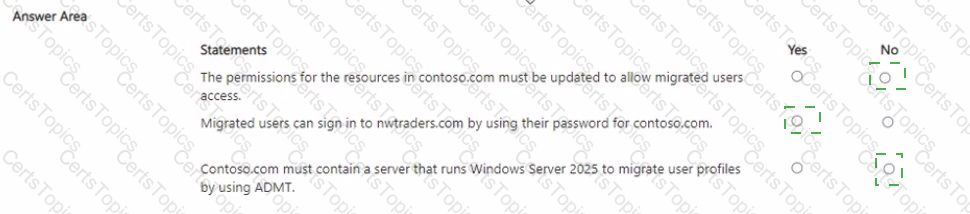
For each of the following statements, select Yes if the statement is true. Otherwise, select No.
NOTE: Each correct selection is worth one point.
You have an Azure subscription. The subscription contains a Log Analytics workspace named Workspace1 and 100 virtual machines that run Windows Server.
You enable Microsoft Defender for Servers Plan 2 and configure Defender for Servers to monitor for Windows file and registry changes on the virtual machines.
You need to query the detected file and registry changes. Which table should you query?
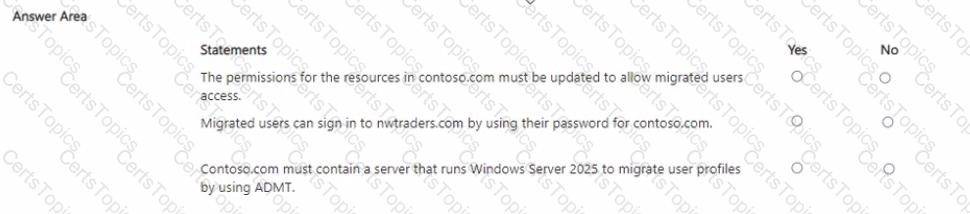
Your network contains an Active Directory Domain Services (AD DS) domain named contoso.com. The domain contains domain controllers that run Windows Server 2016.
Vou build a new AD DS forest named nwtraders.com. The forest contains domain controllers that run Windows Server 2025.
You plan to perform a phased migration from contoso.com to nwtraders.com.
You perform the following actions:
• Migrate the users in contoso.com to nwtraders.com and enable slDHistory.
• Establish a two-way forest trust between contoso.com and nwtraders.com.
• Install the Active Directory Migration Tool (ADMT) in nwtraders.com.
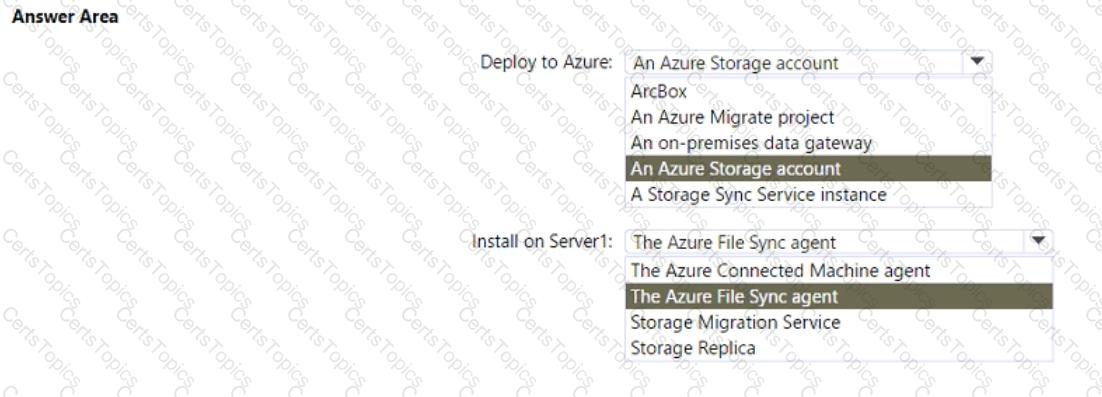
You have an on-premises server that runs Windows Server and contains a folder named Folder1. Folder1 contains 50 GB of files.
You have an Azure subscription that contains an Azure Files share named share1.
You need to migrate the data in Folder1 to share1.
What should you do? To answer, select the appropriate options in the answer area.
NOTE: Each correct selection is worth one point.
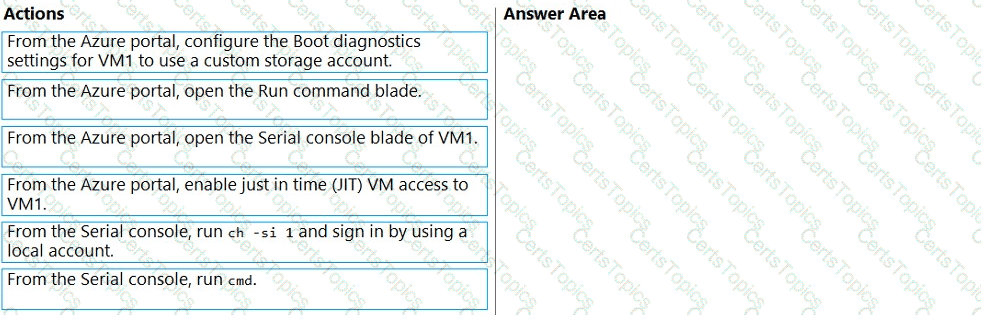
You have an Azure virtual machine named VM1 that runs Windows Server. VM1 has boot diagnostics configured to use a managed storage account.
You are troubleshooting connectivity issue on VM1.
You need to run a PowerShell cmdlet on VM1 by using the Azure Serial Console.
Which four actions should you perform in sequence? To answer, move the appropriate actions from the list of actions to the answer area and arrange them in the correct order.
Note: This question is part of a series of questions that present the same scenario. Each question in the series contains a unique solution that might meet the stated goals. Some question sets might have more than one correct solution, while others might not have a correct solution.
After you answer a question in this section, you will NOT be able to return to it. As a result, these questions will not appear in the review screen.
Your network contains a single-domain Active Directory Domain Services (AD DS) forest named contoso.com. The functional level of the forest is Windows Server 2012 R2. All domain controllers run Windows Server 2012 R2.
Sysvol replicates by using the File Replication Service (FRS).
You plan to replace the existing domain controllers with new domain controllers that will run Windows Server 2022.
You need to ensure that you can add the first domain controller that runs Windows Server 2022.
Solution: You run the Active Directory Migration Tool (ADMT).
Does this meet the goal?
Your network contains an Active Directory Domain Services (AD DS) forest that has a Windows Server 2008 R2 forest functional level. The forest contains the domains shown in the following table.
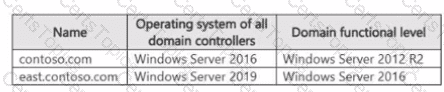
You need to perform an in-place upgrade of the domain controllers in east.contoso.com to Windows Server 2025. The solution must minimize administrative effort.
What should you do first?
You have 50 on-premises servers that run Windows Server.
You have an Azure subscription that contains a Recovery Services vault named Vaultl.
You plan to back up the on-premises servers to Vault1 by using Microsoft Azure Backup Server (MABS).
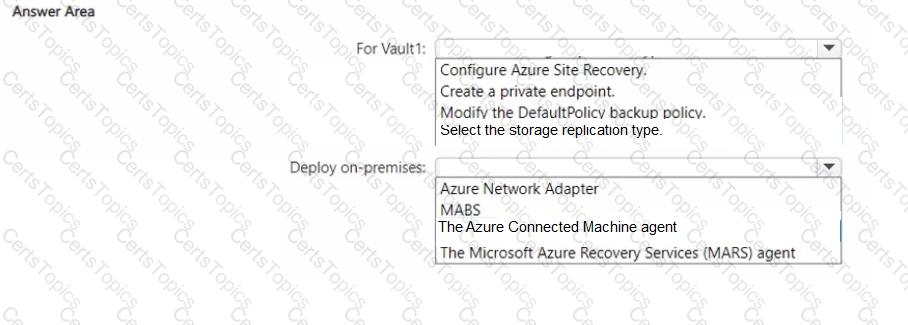
You need to configure prerequisites to support MABS. The solution must minimize costs.
What should you do for Vault1, and what should you deploy on-premises? To answer, select the appropriate options in the answer area.
NOTE: Each correct selection is worth one point.
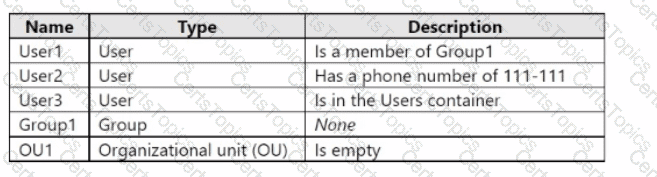
You have an on-premises Active Directory Domain Services (AD DS) domain that contains the resources shown in the following table.
The domain contains the domain controllers shown in the following table.
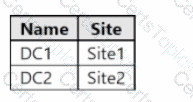
You configure a site link between Site1 and Site2 and set the replication interval to 20 minutes.
At 10:00 AM, connectivity between Site1 and Site2 fails.
Administrators perform the actions shown in the following table.
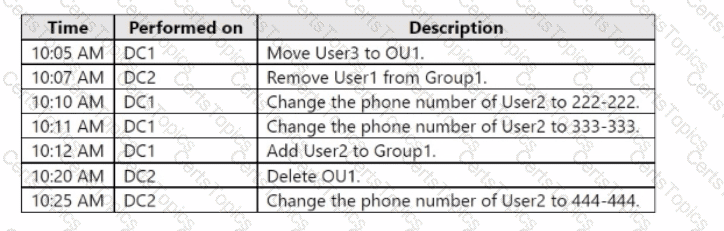
At 10:30 AM, connectivity between Site1 and Site2 is restored.
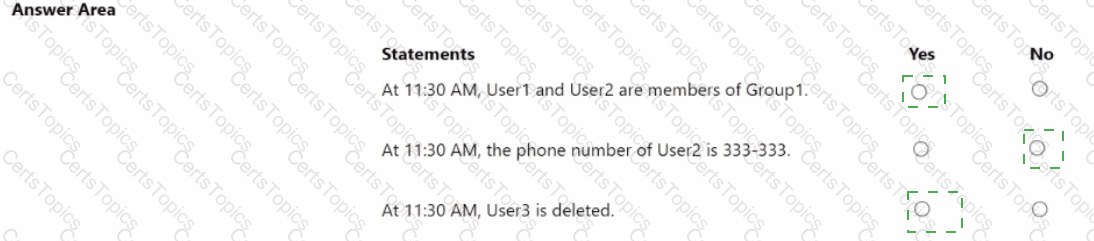
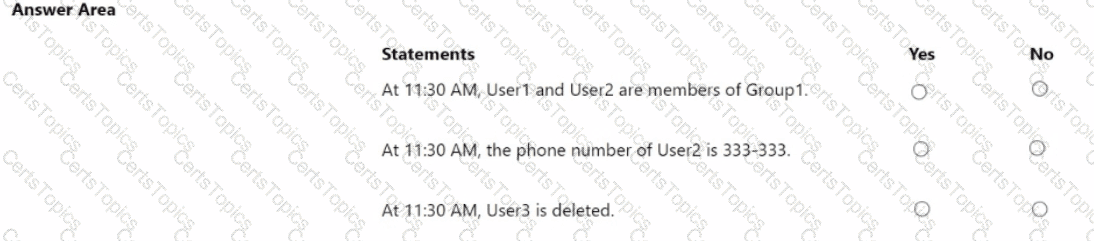
For each of the following statements, select Yes if the statement is true. Otherwise, select No.
NOTE: Each correct selection is worth dim point
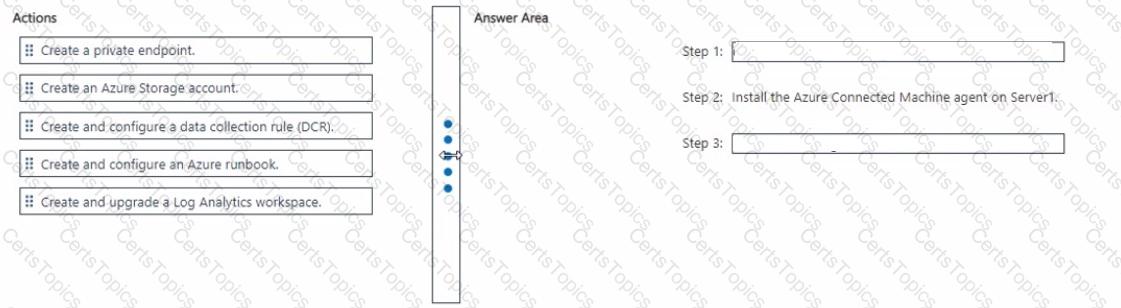
You have an on-premises server named Server1 that runs Windows Server.
You have an Azure subscription that uses Microsoft Defender for Cloud.
You need to onboard Server1 to Defender for Cloud.
Which actions should you perform in sequence? To answer, drag the appropriate actions to the correct order. Each action may be used once, more than once, or not at all. You may need to drag the split bar between panes or scroll to view content.
NOTE: Each correct selection is worth one point.
You have a Microsoft Sentinel deployment and 100 Azure Arc-enabled on-premises servers. All the Azure Arc-enabled resources are in the same resource group.
You need to onboard the servers to Microsoft Sentinel. The solution must minimize administrative effort.
What should you use to onboard the servers to Microsoft Sentinel?
Your company uses Storage Spaces Direct.
You need to view the available storage in a Storage Space Direct storage pool.
What should you use?
You have a Site-to-Site VPN between an on-premises network and an Azure VPN gateway. BGP is disabled for the Site-to-Site VPN.
You have an Azure virtual network named Vnet1 that contains a subnet named Subnet1. Subnet1 contains a virtual machine named Server1.
You can connect to Server1 from the on-premises network.
You extend the address space of Vnet1. You add a subnet named Subnet2 to Vnet1. Subnet2 uses the extended address space. You deploy an Azure virtual machine named Server2 to Subnet2.
You cannot connect to Server2 from the on-premises network. Server1 can connect to Server2.
You need to ensure that you can connect to Subnet2 from the on-premises network.
What should you do?
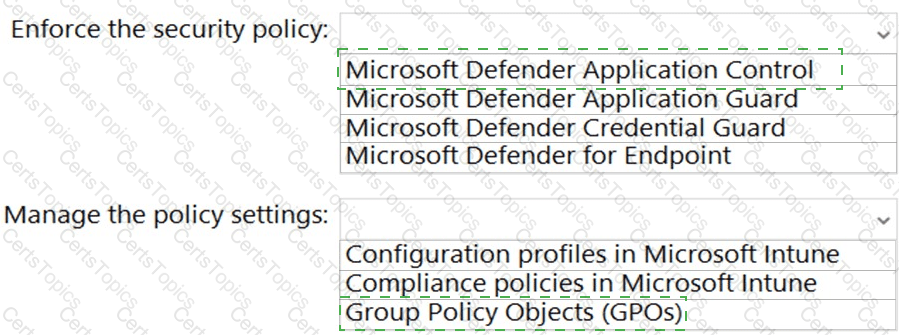
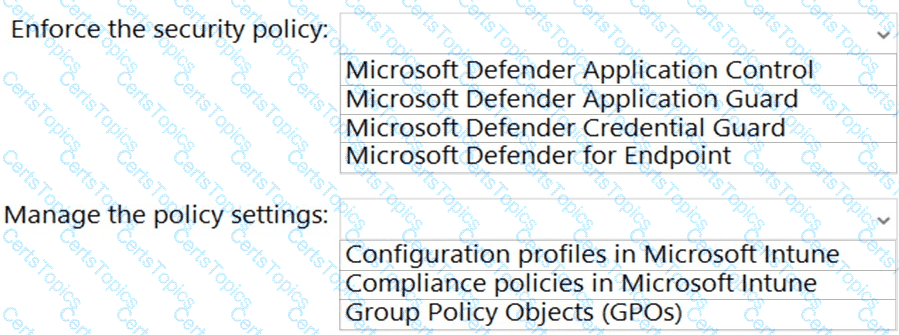
You need to implement a security policy solution to authorize the applications. The solution must meet the security requirements.
Which service should you use to enforce the security policy, and what should you use to manage the policy settings? To answer, select the appropriate options in the answer area.
NOTE: Each correct selection is worth one point.
You are planning the migration of Archive1 to support the on-premises migration plan.
What is the minimum number of IP addresses required for the node and cluster roles on Cluster3?
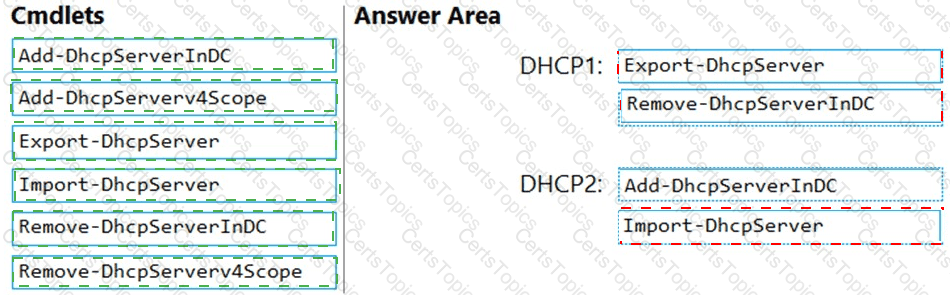
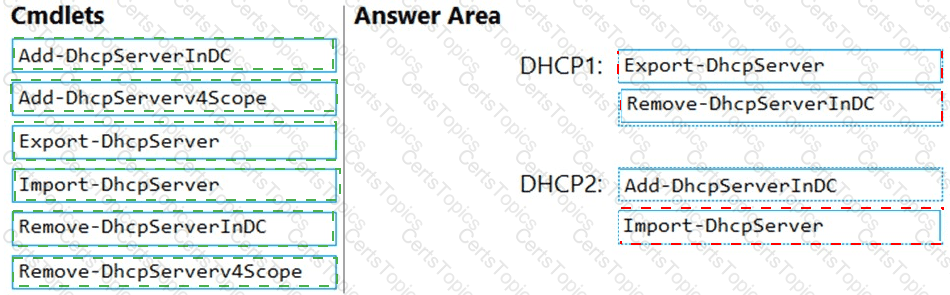
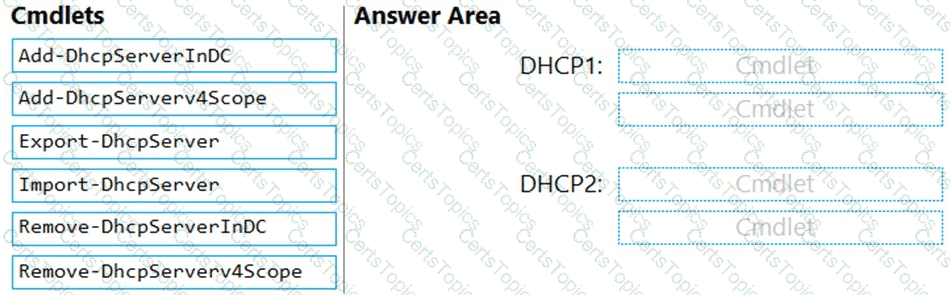
You are planning the DHCP1 migration to support the DHCP migration plan.
Which two PowerShell cmdlets should you run on DHCP1, and which two PowerShell cmdlets should you run on DHCP2? To answer, drag the appropriate cmdlets to the correct servers. Each cmdlet may be used once, more than once, or not at all. You may need to drag the split bar between panes or scroll to view content.
NOTE: Each correct selection is worth one point.
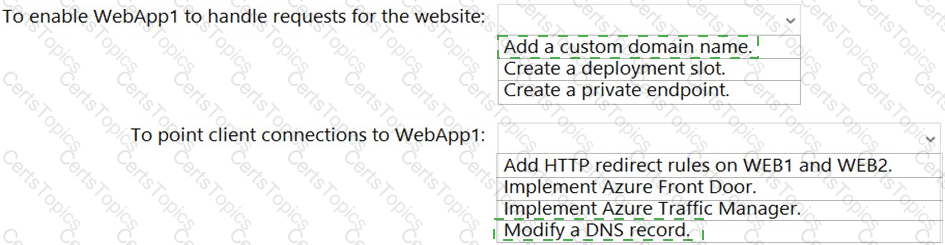
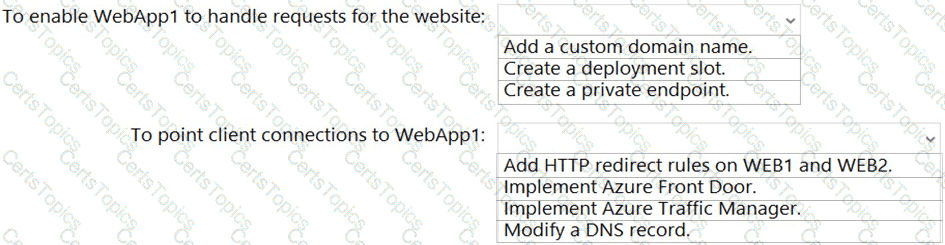
You are planning the website migration to support the Azure migration plan.
How should you configure WebApp1? To answer, select the appropriate options in the answer area.
NOTE: Each correct selection is worth one point.
You are remediating the firewall security risks to meet the security requirements.
What should you configure to reduce the risks?
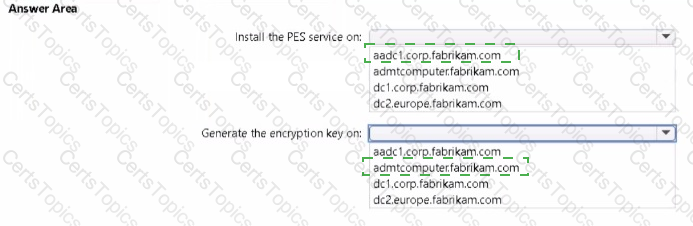
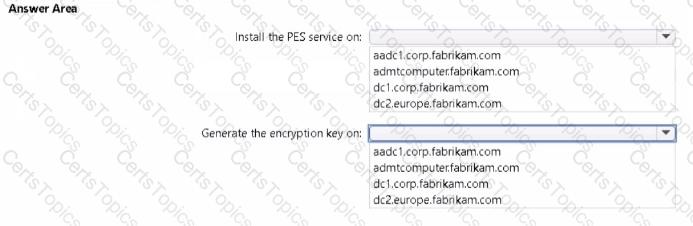
You are planning the europe.fabrikam.com migration to support the on-premises migration plan-Where should you install the Password Export Server (PES) service, where should you generate the encryption key? To answer, select the appropriate options in the answer area.
NOTE: Each correct selection is worth one point.
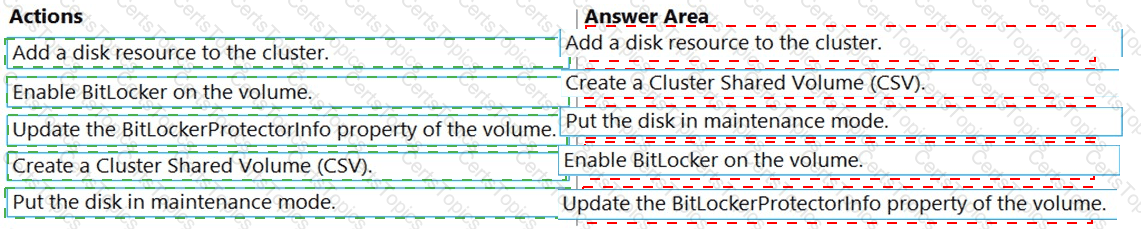
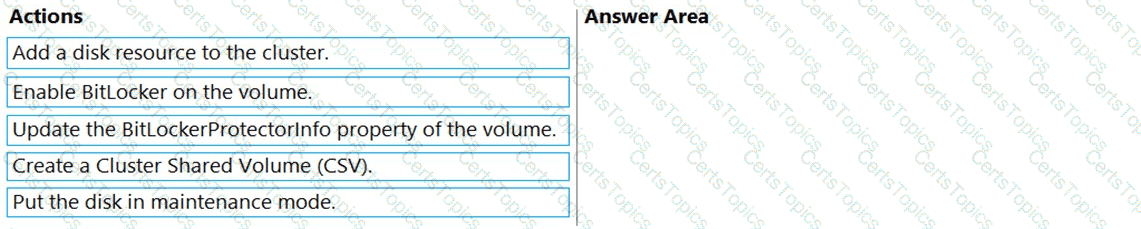
You are planning the implementation of Cluster2 to support the on-premises migration plan.
You need to ensure that the disks on Cluster2 meet the security requirements.
In which order should you perform the actions? To answer, move all actions from the list of actions to the answer area and arrange them in the correct order.
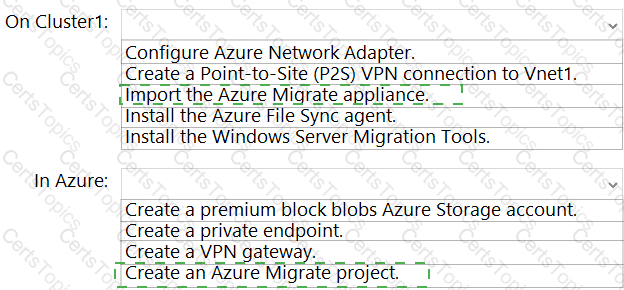
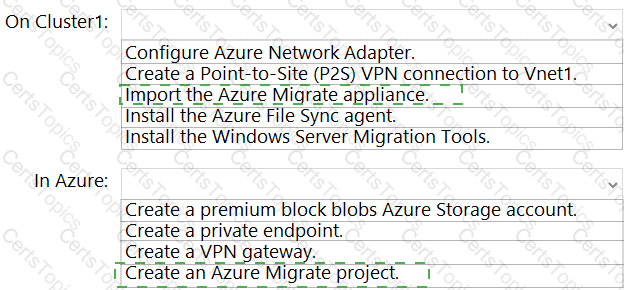
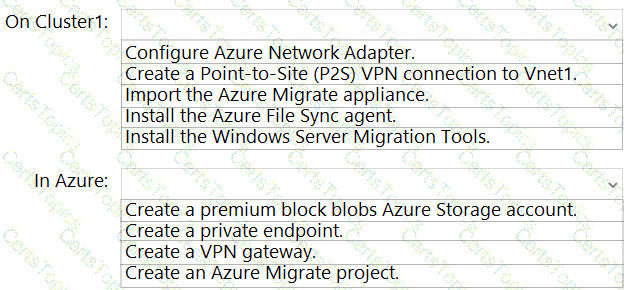
You are planning the migration of APP3 and APP4 to support the Azure migration plan.
What should you do on Cluster1 and in Azure before you perform the migration? To answer, select the appropriate options in the answer area.
NOTE: Each correct selection is worth one point.
You are planning the data share migration to support the on-premises migration plan.
What should you use to perform the migration?
You are planning the deployment of Microsoft Sentinel.
Which type of Microsoft Sentinel data connector should you use to meet the security requirements?
Copyright © 2021-2026 CertsTopics. All Rights Reserved