You have a Site-to-Site VPN between an on-premises network and an Azure VPN gateway. BGP is disabled for the Site-to-Site VPN.
You have an Azure virtual network named Vnet1 that contains a subnet named Subnet1. Subnet1 contains a virtual machine named Server1.
You can connect to Server1 from the on-premises network.
You extend the address space of Vnet1. You add a subnet named Subnet2 to Vnet1. Subnet2 uses the extended address space. You deploy an Azure virtual machine named Server2 to Subnet2.
You cannot connect to Server2 from the on-premises network. Server1 can connect to Server2.
You need to ensure that you can connect to Subnet2 from the on-premises network.
What should you do?
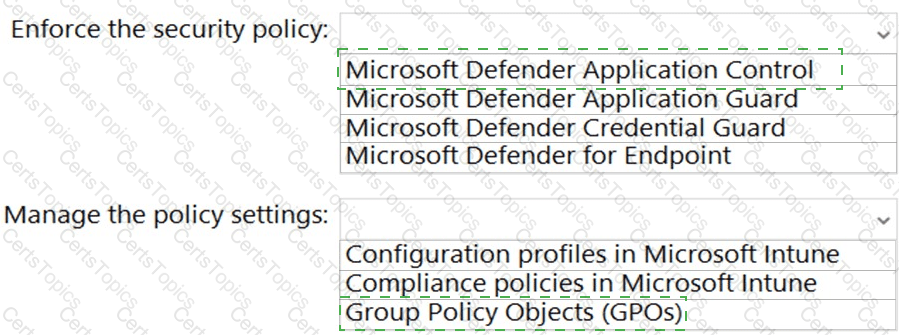
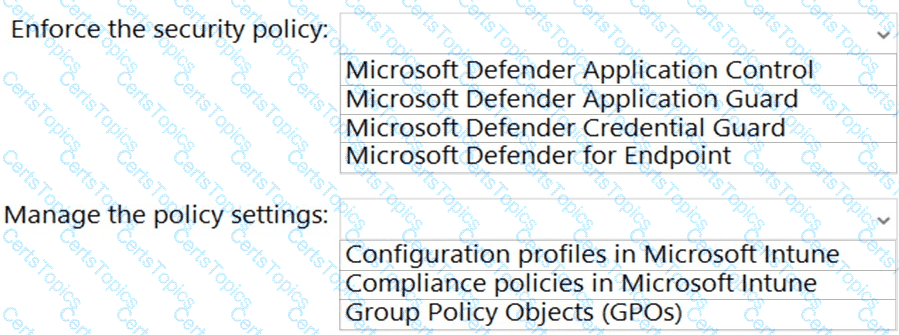
You need to implement a security policy solution to authorize the applications. The solution must meet the security requirements.
Which service should you use to enforce the security policy, and what should you use to manage the policy settings? To answer, select the appropriate options in the answer area.
NOTE: Each correct selection is worth one point.
You are planning the migration of Archive1 to support the on-premises migration plan.
What is the minimum number of IP addresses required for the node and cluster roles on Cluster3?
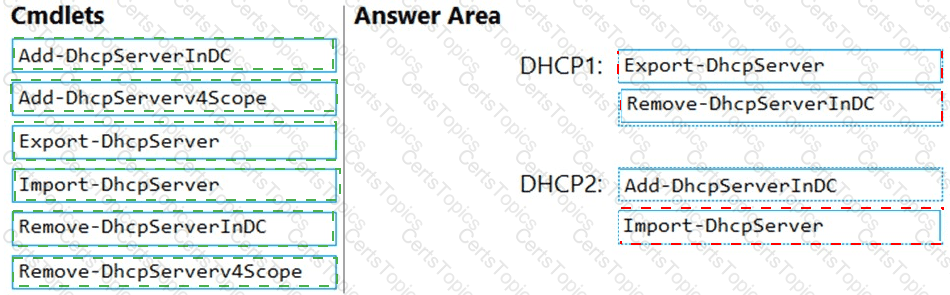
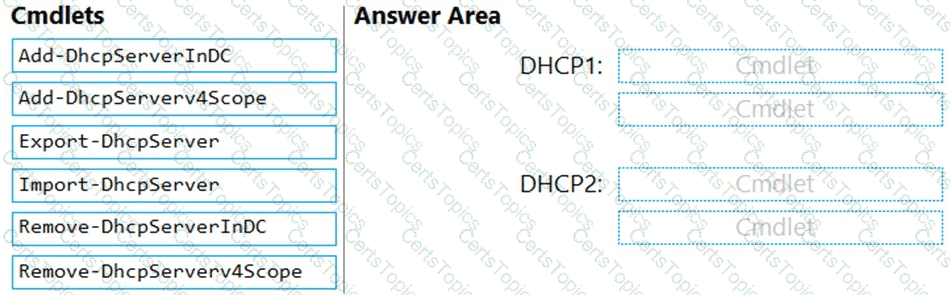
You are planning the DHCP1 migration to support the DHCP migration plan.
Which two PowerShell cmdlets should you run on DHCP1, and which two PowerShell cmdlets should you run on DHCP2? To answer, drag the appropriate cmdlets to the correct servers. Each cmdlet may be used once, more than once, or not at all. You may need to drag the split bar between panes or scroll to view content.
NOTE: Each correct selection is worth one point.
Copyright © 2021-2026 CertsTopics. All Rights Reserved