
A device group is currently in theChanges Pendingsync status. How can the BIG-IP Administrator determine which member of the device group has the most recent configuration? (Choose one answer)
Where should the BIG-IP Administrator go in the GUI to verify the status of pool members of a pool?
A BIG-IP Administrator makes a configuration change to the BIG-IP device. Which file logs the message regarding the configuration change?
The BIG-IP appliance fails to boot. The BIG-IP Administrator needs to run the End User Diagnostics (EUD) utility to collect data to send to F5 Support. Where can the BIG-IP Administrator access this utility?
Which two methods should the BIG-IP Administrator troubleshoot a Pool-member that's been marked "DOWN" by its Health Monitor? (Pick the 2 correct responses below)
Exhibit:
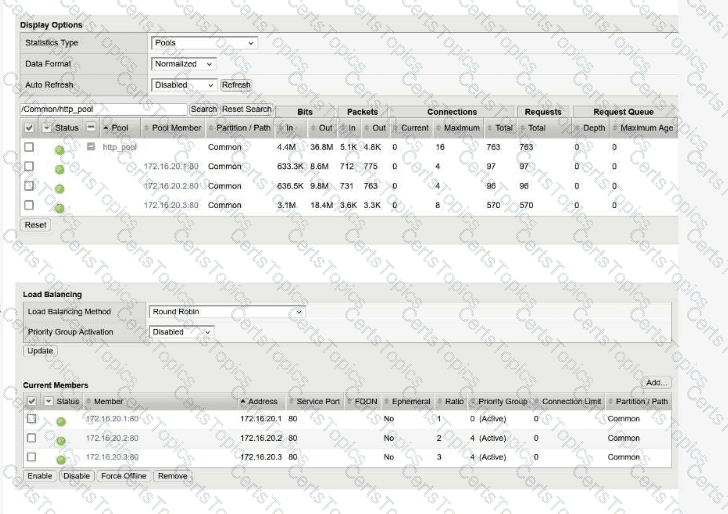
A BIG-IP Administrator configured a virtual server with a pool of 3 members and selected the Round Robin load balancing method to evenly distribute traffic across the pool members. During initial testing, traffic was not evenly distributed and the pool member 172.16.20.3 received more traffic than the other pool members.
Refer to the exhibit and the virtual server configuration provided below:
Plaintext
ltm virtual http.vs {
destination 10.10.1.100:http
ip-protocol tcp
mask 255.255.255.255
persist {
source_addr { default yes }
}
pool http.pool
profiles {
tcp{}
}
serverssl-use-sni disabled
source 0.0.0.0/0
source-address-translation {
type automap
}
translate-address enabled
}
What is the most likely cause of this behavior?
Refer to the exhibit.
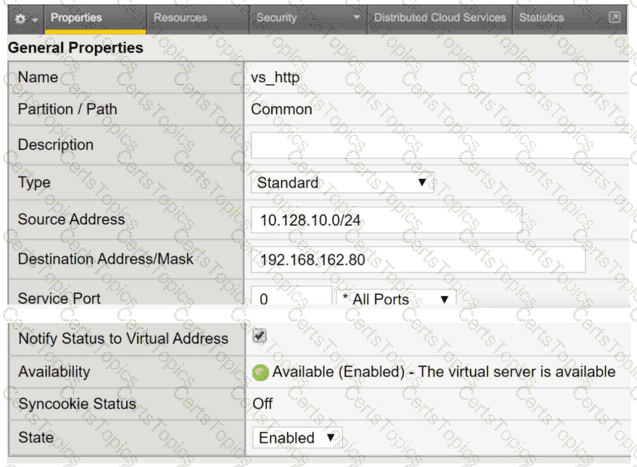
A user with IP address 192.168.162.70 is unable to connect to an HTTP application. What is a possible cause within the Virtual Server configuration?
A Virtual Server uses an iRule to send traffic to pool members depending on the URI. The BIG-IP Administrator needs to modify the pool member in the iRule. Which event declaration does the BIG-IP Administrator need to change to accomplish this?
Pool /Common/testpool member /Common/10.120.0.5:8090 monitor status down. [ /Common/http: up, /Common/http2: down; last error: ] [ was up for lhr:0min:43sec ]
Why is this pool member being marked down?
A BIG-IP Administrator adds new Pool Members into an existing, highly utilized pool. Soon after, there are reports that the application is failing to load for some users. What pool level setting should the BIG-IP Administrator check?
A user needs to determine known security vulnerabilities on an existing BIG-IP appliance and how to remediate these vulnerabilities. Which action should the BIG-IP Administrator recommend?
A set of servers is used for an FTP application as well as an HTTP website via separate BIG-IP Pools. The server support team reports that some servers are receiving a lot more traffic than others. Which Load Balancing Method should the BIG-IP Administrator apply to even out the connection count?
Users are unable to reach an application. The BIG-IP Administrator checks the Configuration Utility and observes that the Virtual Server has a red diamond in front of the status. What is causing this issue?
A BIG-IP Administrator is informed that traffic on Interface 1.1 is expected to increase over the maximum bandwidth capacity on the link. There is a single VLAN on the Interface. What should the BIG-IP Administrator do to increase the total available bandwidth?
Without decrypting, what portion of an HTTPS session is visible with a packet capture? (Choose one answer)
A BIG-IP Administrator uses backend servers to host multiple services per server. There are multiple virtual servers and pools defined, referencing the same backend servers. Which load balancing algorithm is most appropriate to have an equal number of connections on each backend server?17
A BIG-IP Administrator configured the following virtual server to pass traffic on all addresses and ports. After configuration is completed, the BIG-IP Administrator notices that the virtual server is unable to pass traffic.
ltm virtual forwarding_any_vs {
destination 0.0.0.0:any
ip-forward
mask 255.255.255.255
profiles {
fastL4 { }
}
serverssl-use-sni disabled
source 0.0.0.0/0
translate-address disabled
translate-port disabled
}
Which part of the configuration is the cause of the issue? (Choose one answer)
A BIG-IP Administrator notices that one of the servers that runs an application isNOTreceiving any traffic. The BIG-IP Administrator examines the configuration status of the application and observes the displayed monitor configuration and affected pool member status.
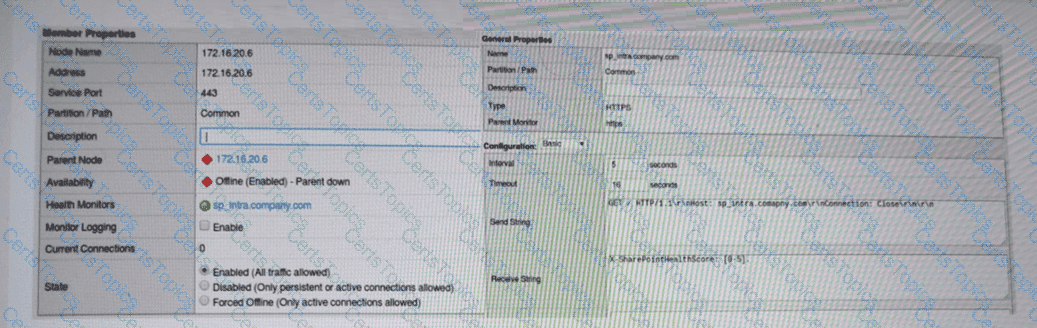
What is the possible cause of this issue? (Choose one answer)
Copyright © 2021-2026 CertsTopics. All Rights Reserved
