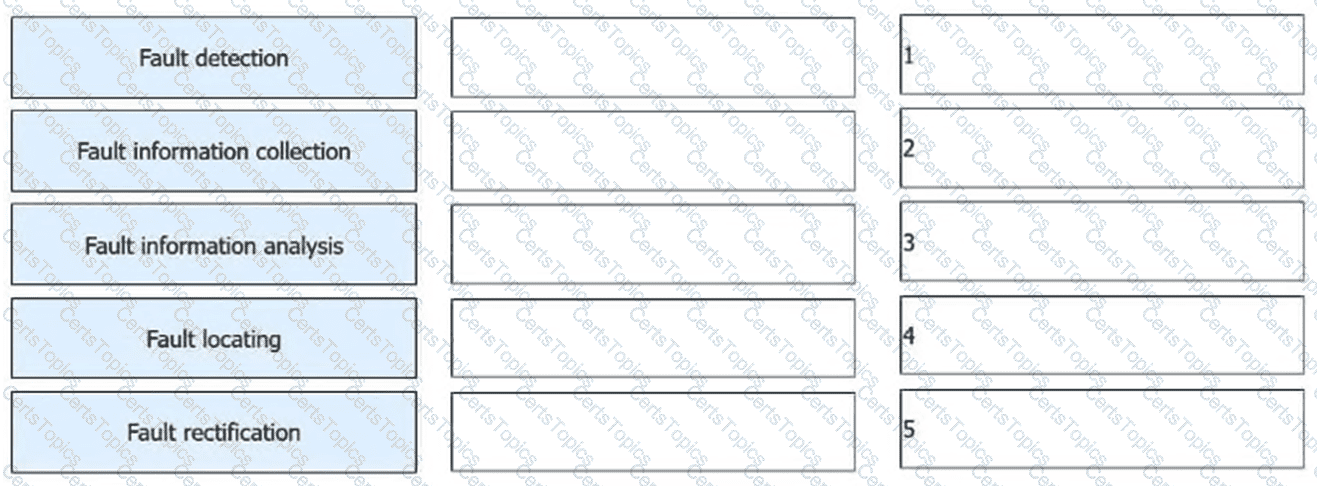
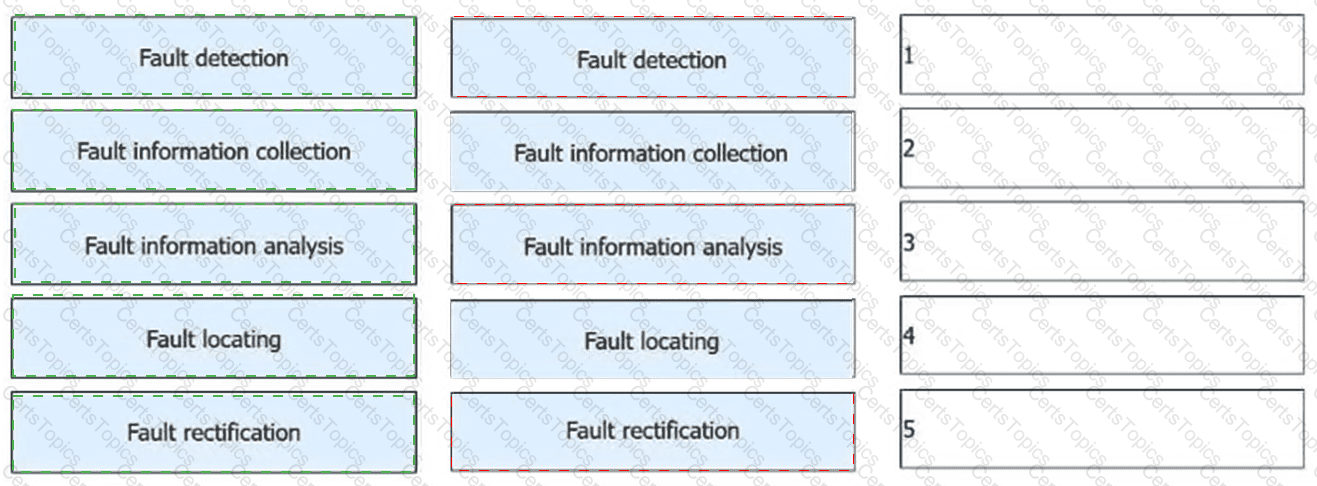
1. Fault detection; 2. Fault information collection; 3. Fault information analysis; 4. Fault locating; 5. Fault rectification
Huawei's WLAN troubleshooting methodology follows a structured progression that separates fault identification, evidence collection, technical analysis, root-cause localization, and corrective action. Performing these activities in the correct sequence reduces unnecessary configuration changes and improves troubleshooting efficiency.
The first phase, fault detection, establishes that an abnormal condition exists. Engineers identify the affected services, observed symptoms, failure severity, and approximate occurrence time.
During fault information collection, engineers gather relevant evidence from the affected devices and network infrastructure. This includes device configurations, system logs, interface information, software versions, alarm records, and diagnostic results.
Fault information analysis follows. Engineers examine the collected data to identify abnormal behavior, correlate events, and formulate hypotheses about the underlying fault.
During fault locating, those hypotheses are tested to isolate the failure to a particular device, interface, configuration, protocol exchange, or network component.
Finally, fault rectification involves implementing the appropriate corrective action. Engineers must consider potential service impact before changing configurations and verify that normal operation has been restored afterward.
The sequence is important because applying corrective actions without adequate diagnosis can obscure the original fault, introduce additional failures, or prolong service interruption.
This five-stage process is explicitly presented in Huawei's WLAN troubleshooting course.
Training Material reference: WLAN Troubleshooting → Overview of WLAN Troubleshooting → Troubleshooting Process.
Lab Guide reference: Lab 12 — Comprehensive Troubleshooting.
────────────────────────────────────────────────────────