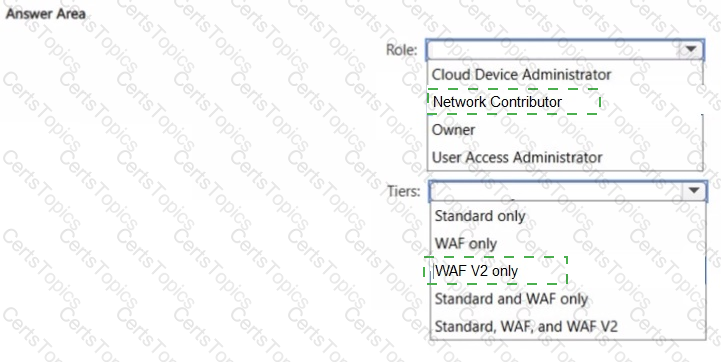
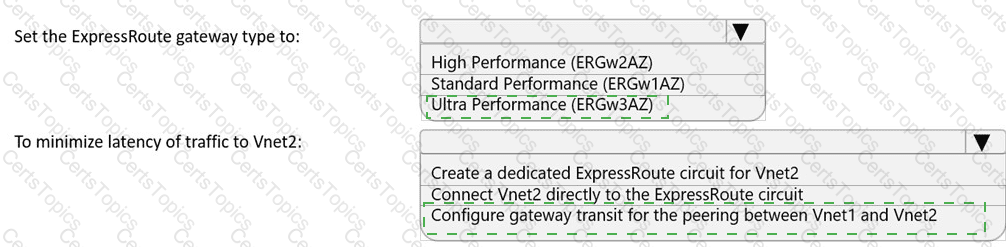
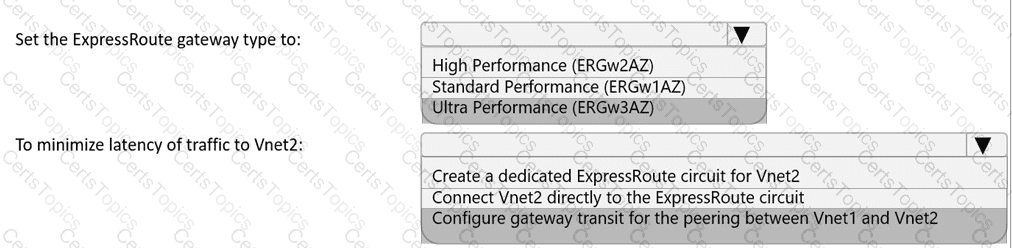
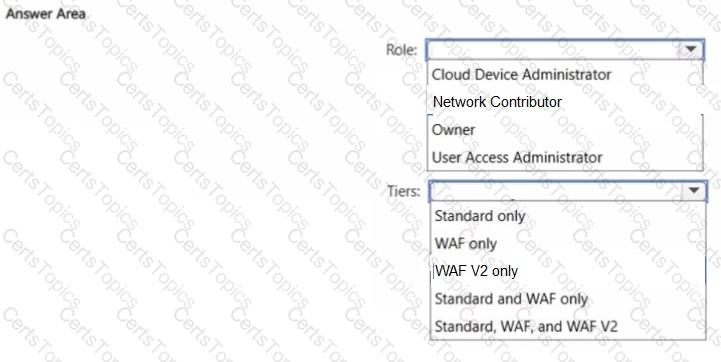
You have an Azure subscription. The subscription contains an Azure application gateway that has the following configurations:
• Name: AppGW1
• Tier Standard V2
• Autoscaling: Disabled
You create a user named User1.
You need to ensure that User1 can change the tier of AppGW1. The solution must use the principle of least privilege.
Which role should you assign to User1. and to which tiers can AppGW1 be changed? To answer, select the appropriate options in the answer area.
NOTE: Each correct selection is worth one point.
Task 11
You need to ensure that only hosts on VNET1 can access the slcnage42150372 storage account. The solution must ensure that access occurs over the Azure backbone network.
Task 4
You need to ensure that connections to the storage34280945 storage account can be made by using an IP address in the 10.1.1.0/24 range and the name storage34280945.pnvatelinlcblob.core.windows.net.
You have an Azure virtual network named Vnet1.
You need to ensure that the virtual machines in Vnet1 can access only the Azure SQL resources in the East US Azure region. The virtual machines must be prevented from accessing any Azure Storage resources.
Which two outbound network security group (NSG) rules should you create? Each correct answer presents part of the solution.
NOTE: Each correct selection is worth one point
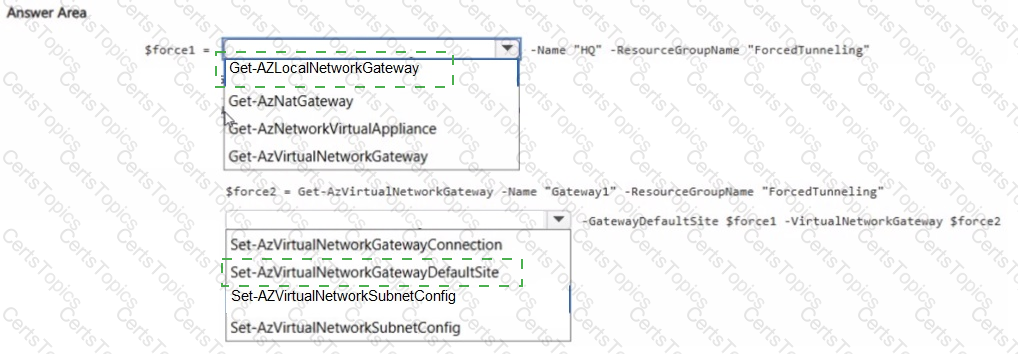
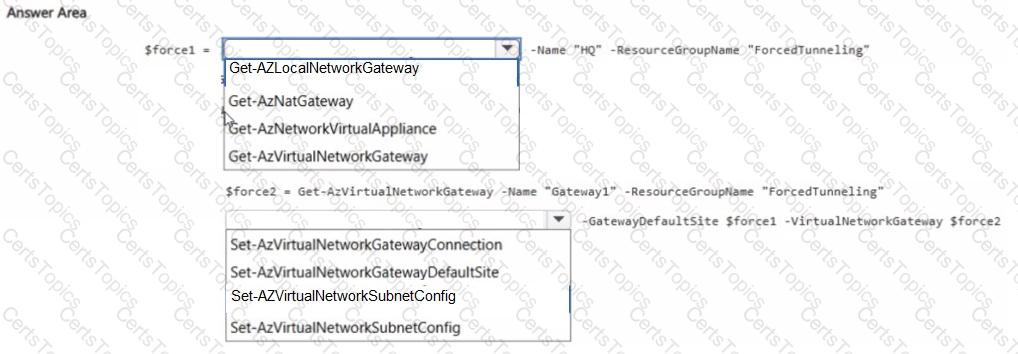
You have an Azure virtual network and an on-premises datacenter that connect by using a Site-to-Site VPN tunnel.
You need to ensure that all traffic from the virtual network to the internet is routed through the datacenter.
How should you complete the PowerShell script to configure forced tunneling? To answer, select the appropriate options in the answer area.
NOTE: Each correct selection is worth one point.
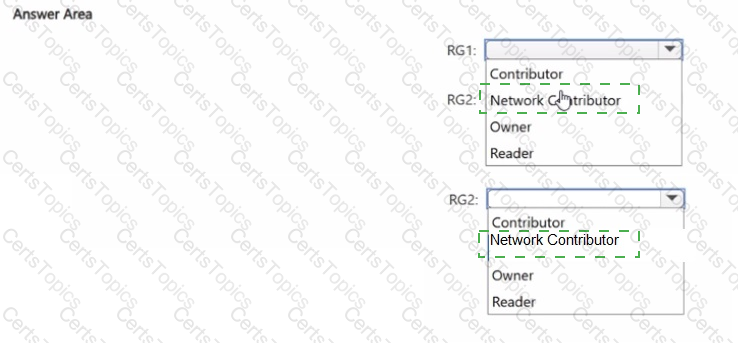
You have an Azure subscription that contains a user named User1 and the resources shown in the following table.
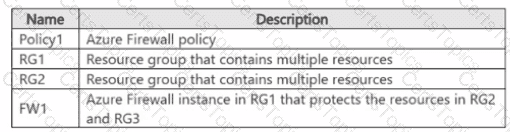
You need to ensure that User1 can associate Policy1 to FW1 by using Azure Firewall Manager. The solution must follow the principle of least privilege.
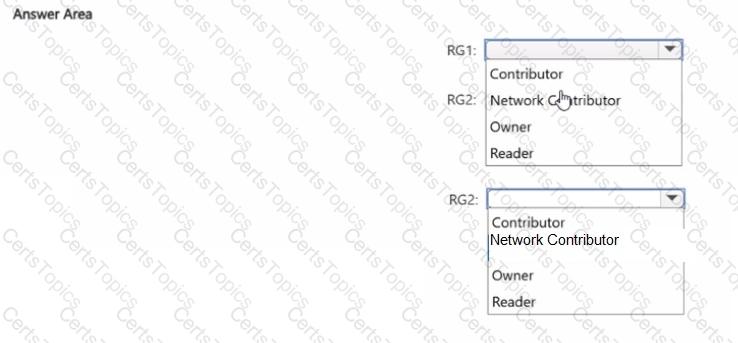
Which role should you assign to User1 for each resource group? To answer, select the appropriate options in the answer area.
NOTE: Each correct selection is worth one point.
Task 2
You need to ensure that you can deploy Azure virtual machines to the France Central Azure region. The solution must ensure that virtual machines in the France Central region are in a network segment that has an IP address range of 10.5.1.0/24.
Task 8
You need to ensure that the storage34280945 storage account will only accept connections from hosts on VNET1
Task 2
You need to create an Azure Firewall instance named FW1 that meets the following requirements:
• Has an IP address from the address range of 10.1.255.0/24
• Uses a new Premium firewall policy named FW-pohcy1
• Routes traffic directly to the internet
Task 9
You plan to use VNET4 for an Azure API Management implementation.
You need to configure a policy that can be used by an Azure application gateway to protect against known web attack vectors. The policy must only allow requests that originate from IP addresses in Canada. You do NOT need to create the application gateway to complete this task.
Task 6
You have two servers that are each hosted by a separate service provider in New York and Germany. The server hosted in New York is accessible by using a host name of ny.contoso.com. The server hosted in Germany is accessible by using a host name of de.contoso.com.
You need to provide a single host name to access both servers. The solution must ensure that traffic originating from Germany is routed to de contoso.com. All other traffic must be routed to ny.contoso.com.
Task 1
You need to ensure that virtual machines on VNET1 and VNET2 are included automatically in a DNS zone named contoso.azure. The solution must ensure that the virtual machines on VNET1 and VNET2 can resolve the names of the virtual machines on either virtual network.
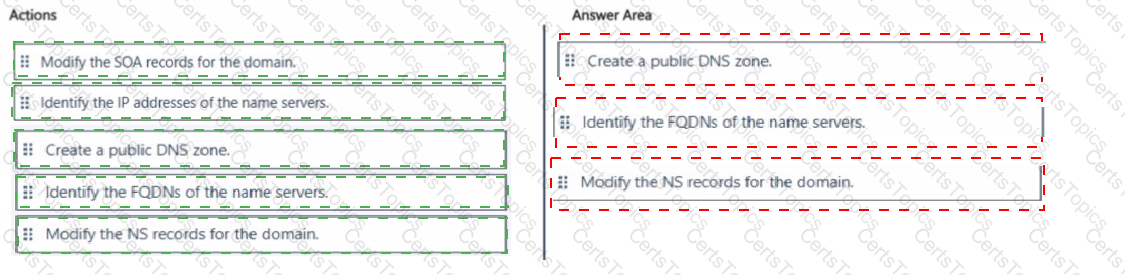
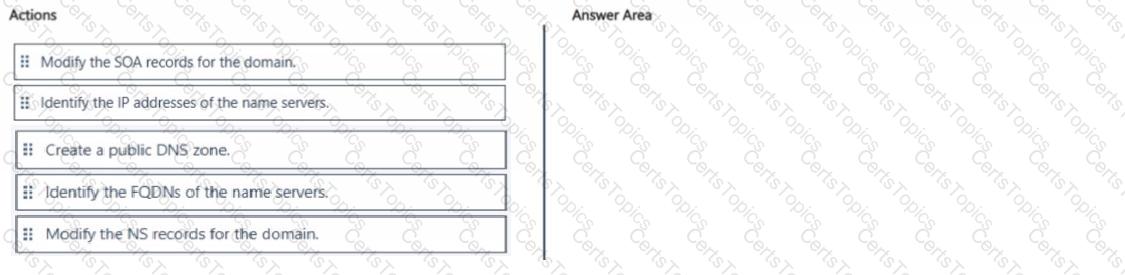
You register a DNS domain with a third-party registrar.
You need to host the DNS zone on Azure.
Which three actions should you perform in sequence? To answer, move the appropriate actions from the list of actions to the answer area and arrange them in the correct order.
You have an Azure subscription that contains a virtual network named VNetl and the resources shown in the following table.
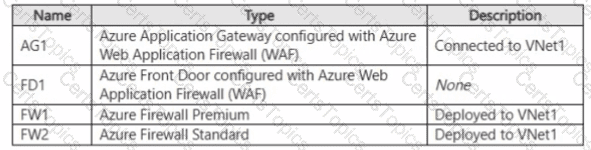
You need to implement a solution for the traffic onginating from VNetl. The solution must meet the following requirements:
• Perform transparent proxying to external web servers.
• Inspect all outbound TLS traffic.
• Minimize costs.
Which resource should you include in the solution?
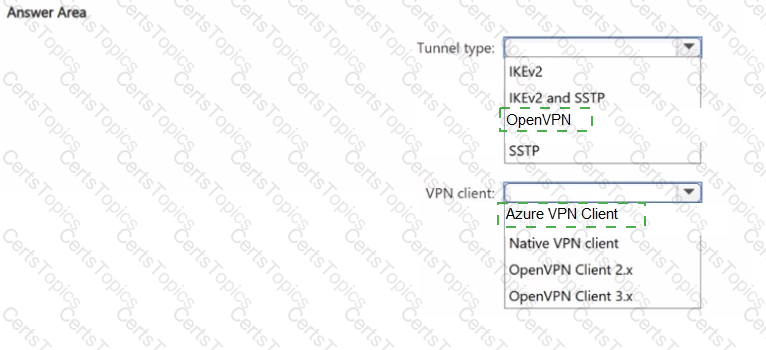
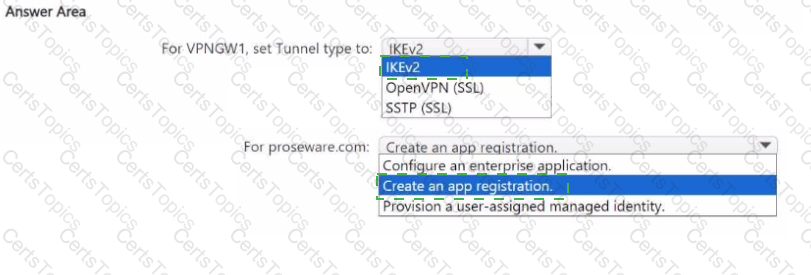
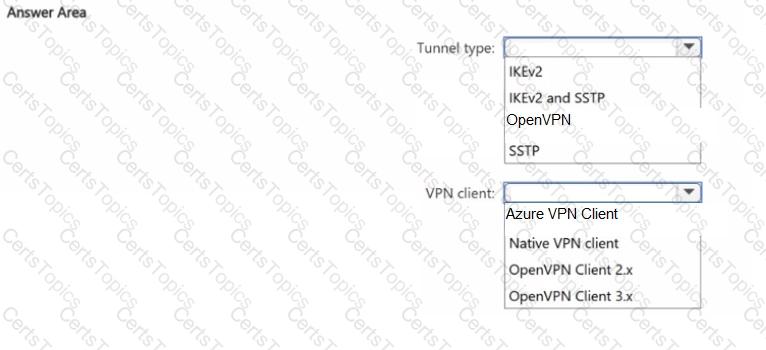
Your company has an Azure subscription that contains a virtual network named VNet1 and an Azure VPN gateway named vGW1. The company has 50 users that have Windows 11 devices.
You need to ensure that the users can access the resources on VNet1. The solution must meet the following requirements:
• Ensure that the users can establish Point-to-Site (P2S) VPN connections to vGW1.
• Ensure that the users can authenticate by using only their Microsoft Entra credentials
Which type of tunnel should you configure, and which VPN client should you configure on the users' devices? To answer, select the appropriate options in the answer area.
NOTE: Each correct selection is worth one point.
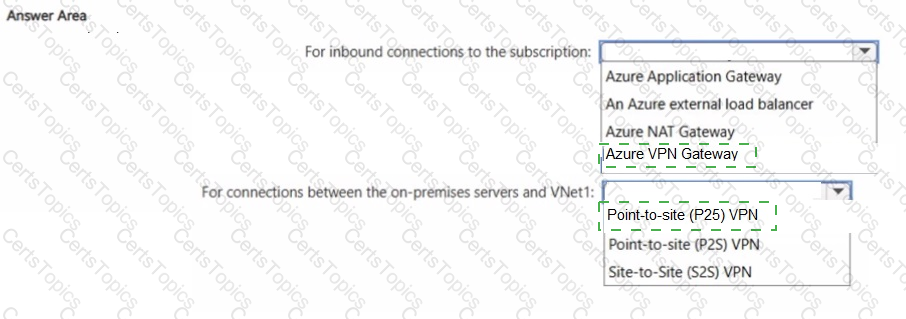
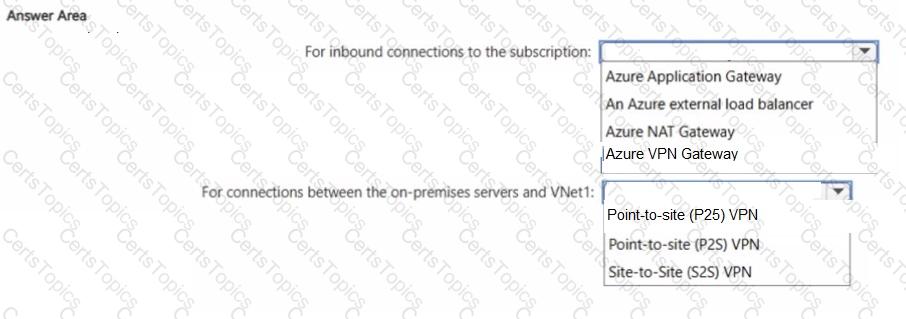
You have 50 on-premises networks. Each network contains a server that runs Windows Server.
You have an Azure subscription that contains a virtual network named VNet1. VNet1 contains a database server named DB1.
You plan to deploy an app named App1 that will be hosted on the on-premises servers and will connect to DB1 by using Azure Network Adapter.
What should you use to support the Azure Network Adapter connections to VNet1? To answer, select the appropriate options in the answer area.
NOTE: Each correct selection is worth one point.
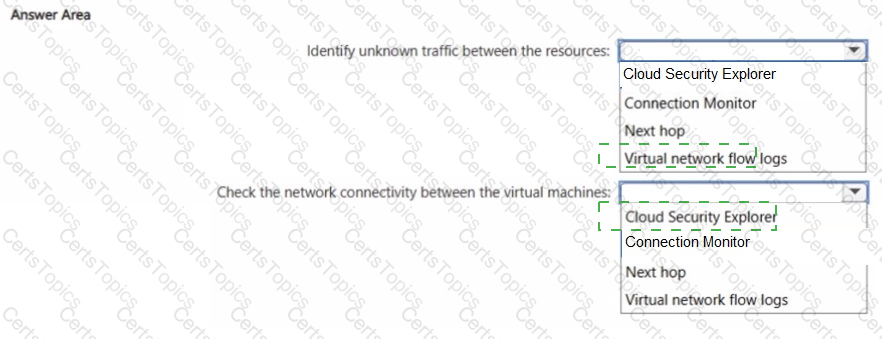
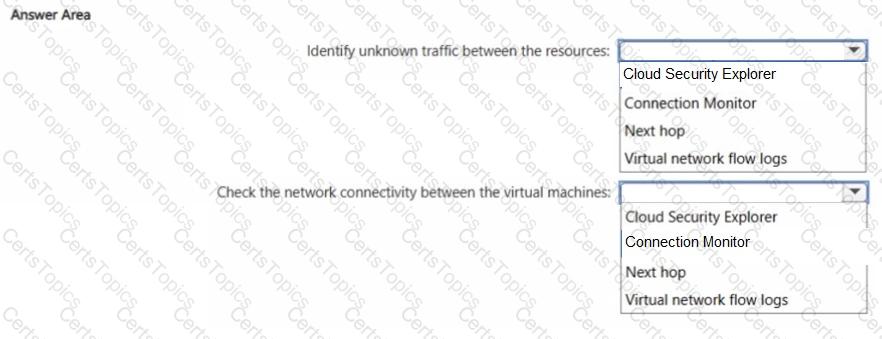
You have an Azure subscription that contains virtual networks, network security groups (NSGs), and virtual machines. You need to perform the following actions:
• Identify unknown traffic between the resources.
• Check the network connectivity between the virtual machines.
What should you use to perform each action? To answer, select the appropriate options in the answer area.
NOTE: Each correct selection is worth one point.
Task 8
You plan to deploy an appliance to subnet3-2- The appliance will perform packet inspection and will have an IP address of 10.3.2.100.
You need to ensure that all traffic to the internet from subnet3-1 is forwarded to the appliance for inspection.
Task 9
You need to ensure that subnet4-3 can accommodate 507 hosts.
You create NSG10 and NSG11 to meet the network security requirements.
For each of the following statements, select Yes it the statement is true. Otherwise, select No.
NOTE: Each correct selection is worth one point.

For each of the following statements, select Yes if the statement is true. Otherwise, select No.
NOTE: Each correct selection is worth one point.

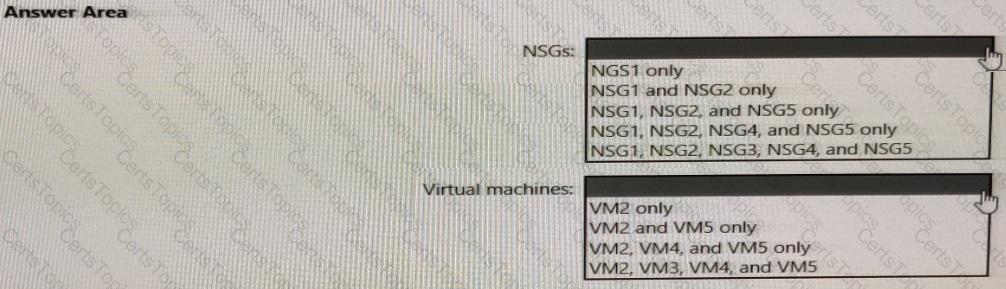
In which NSGs can you use ASG1 and to which virtual machine network interfaces can you associate ASG1? To answer, select the appropriate options in the answer area.
NOTE: Each correct selection is worth one point.
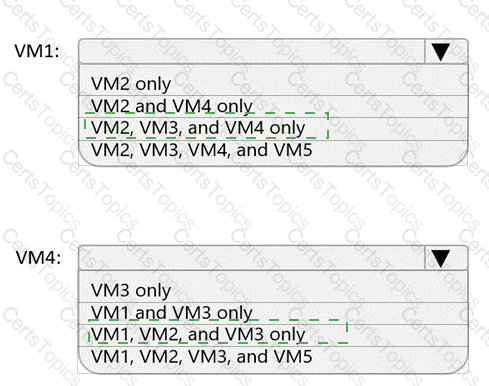
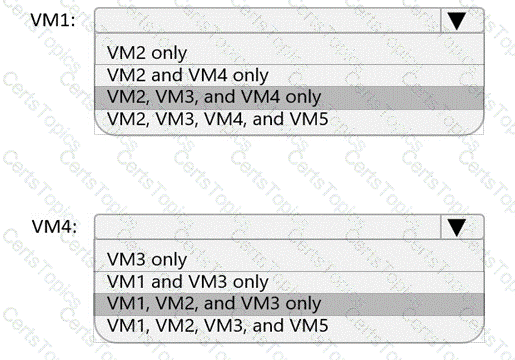
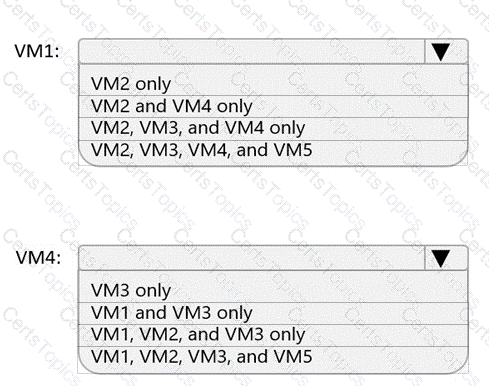
Which virtual machines can VM1 and VM4 ping successfully? To answer, select the appropriate options in the answer area.
NOTE: Each correct selection is worth one point.
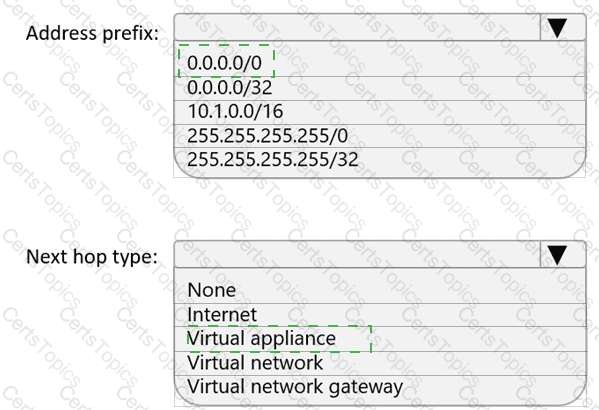
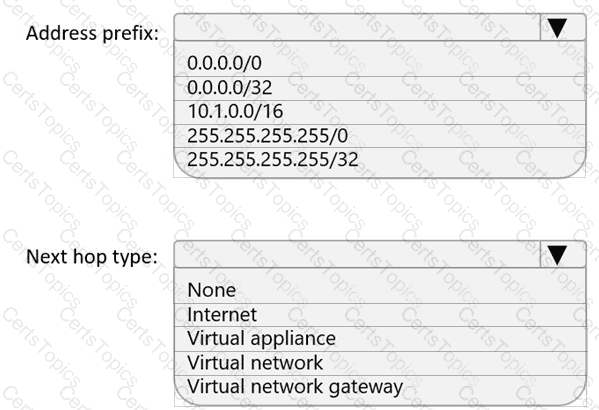
You are implementing the virtual network requirements for VM Analyze.
What should you include in a custom route that is linked to Subnet2? To answer, select the appropriate options in the answer area.
NOTE: Each correct selection is worth one point.
You are implementing the Virtual network requirements for Vnet6.
What is the minimum number of subnets and service endpoints you should create? To answer, select the appropriate options in the answer area.
NOTE: Each correct selection is worth one point.

You need to configure GW1 to meet the network security requirements for the P2S VPN users.
Which Tunnel type should you select in the Point-to-site configuration settings of GW1?
What should you implement to meet the virtual network requirements for the virtual machines that connect to Vnet4 and Vnet5?
You need to meet the network security requirements for the NSG flow logs.
Which type of resource do you need, and how many instances should you create? To answer, select the appropriate options in the answer area.
NOTE: Each correct selection is worth one point.

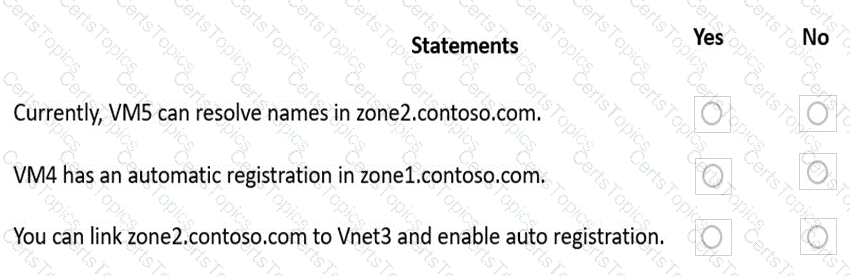
For each of the following statements, select Yes if the statement is true. Otherwise, select No.
NOTE: Each correct selection is worth one point.
You have an Azure subscription that contains a virtual network named VNet1. VNet1 contains the following subnets.
• AzureFirewallSubnet
• GatewaySubnet
• Subnet 1
• Subnet2
• Subnet3
Subnet2 has a delegation to the Microsoft.Web/serverfarms service. The subscription contains the resources shown in the following table.

You need to implement an Azure application gateway named AG1 that will be integrated with an Azure Web Application Firewall (WAF). AG1 will be used to publish VMSS1.
To which subnet should you connect AG1?
You have an Azure virtual network named Vnet1.
You need to ensure that the virtual machines in Vnet1 can access only the Azure SQL resources in the East US Azure region. The virtual machines must be prevented from accessing any Azure Storage resources.
Which two outbound network security group (NSG) rules should you create? Each correct answer presents part of the solution.
NOTE: Each correct selection is worth one point.
You configure a route table named RT1 that has the routes shown in the following table.

You have an Azure virtual network named Vnet1 that has the subnets shown in the following table.

You have the resources shown in the following table.

Vnet1 connects to an ExpressRoute circuit. The on-premises router advertises the following routes:
* 0.0.0.0/0
* 10.0.0.0/16
For each of the following statements, select Yes if the statement is true. Otherwise, select No. NOTE: Each correct selection is worth one point.

You are planning an Azure deployment that will contain three virtual networks in the East US Azure region as shown in the following table.

A Site-to-Site VPN will connect Vnet1 to your company's on-premises network.
You need to recommend a solution that ensures that the virtual machines on all the virtual networks can communicate with the on-premises network- The solution must minimize costs.
What should you recommend for Vnet2 and Vnet3?
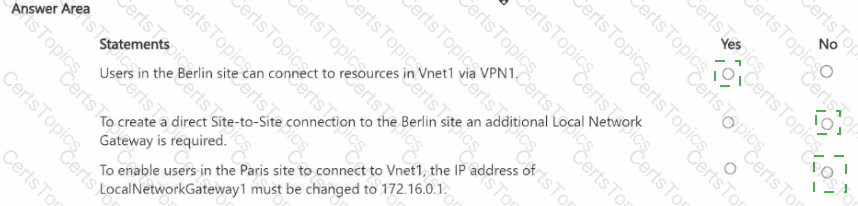
You have an on-premises network that includes the sites shown in the following table.
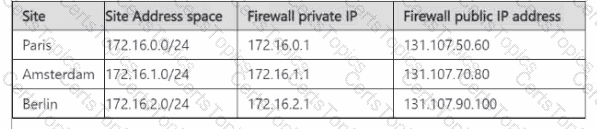
Each site is connected to the Internet by a firewall. All sites are connected to an SD-WAN. Each site is configured to propagate routes by using BGP.
You have an Azure subscription that includes a virtual network named Vnet1 that contains a Virtual Network Gateway named Gateway 1.
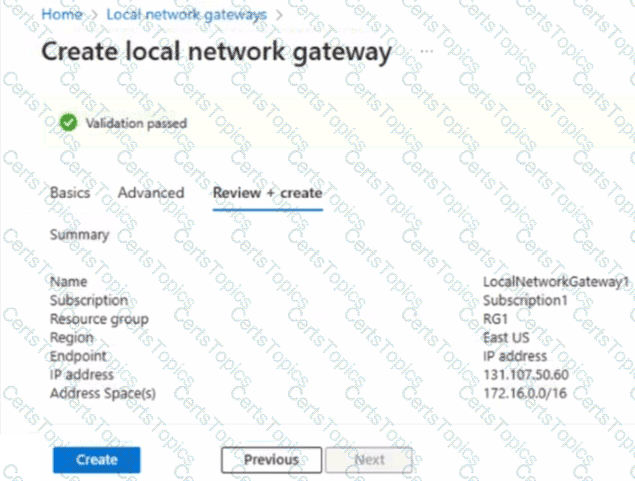
You create a local network gateway with the configuration shown in the gateway exhibit (Click the Gateway tab.)
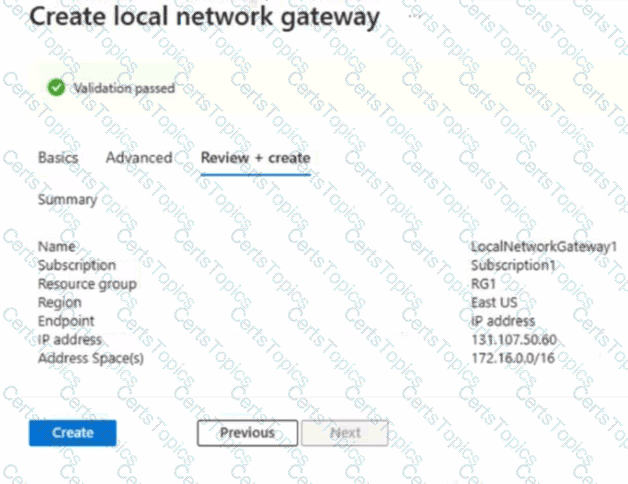
You create a Site-to-Site (S2S) connection with the configuration shown in connection exhibit. (Click the Connection tab)
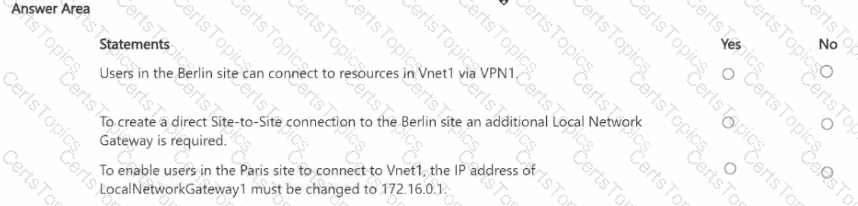
For each of the following statements, select Yes if the statement is true Otherwise, select No.
NOTE: Each correct selection is worth one point.
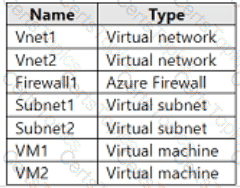
You have an Azure subscription that contains the resources shown in the following table.
The virtual network topology is shown in the following exhibit.

Firewall1 is configured as shown in following exhibit.
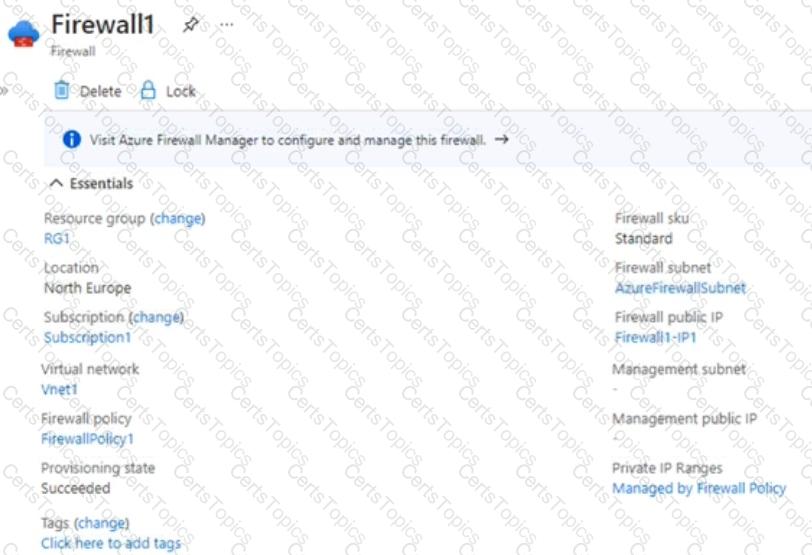
FirewallPolicy1 contains the following rules:
• Allow outbound traffic from Vnet1 and Vnet2 to the internet.
• Allow any traffic between Vnet1 and Vnet2.
No custom private endpoints. service endpoints. routing tables, or network security groups (NSGs) were created. For each of the following statements, select Yes if the statement is true. Otherwise, select No. NOTE: Each correct selection is worth one point.

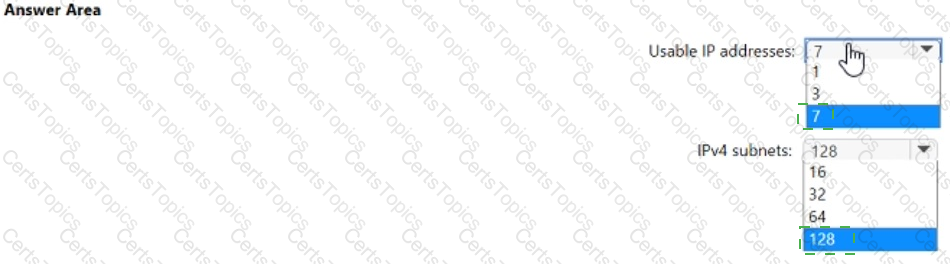
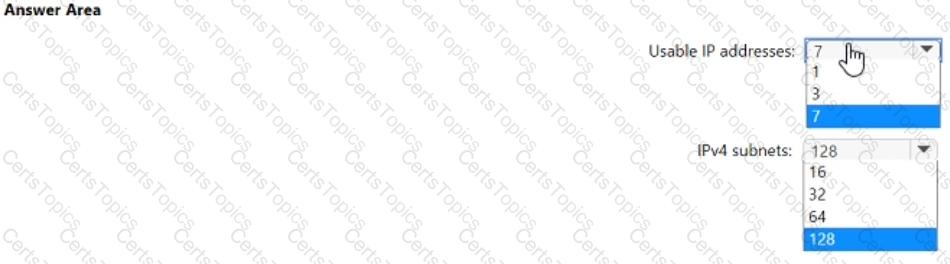
You have an Azure subscription that contains a virtual network named Vnetl. Vnetl has a /24 IPv4 address space.
You need to subdivide Vnet1. The solution must maximize the number of usable subnets.
What is the maximum number of IPv4 subnets you can create, and how many usable IP addresses will be available per subnet? To answer, select the appropriate options in the answer area.
NOTE: Each correct selection is worth one point.
You have an Azure subscription.
You plan to deploy Azure Firewall Premium, enable all the Premium features, and configure both network and application rules.
Which type of rule will the firewall process first?
Your on-premises network contains the subnets shown in the following table.
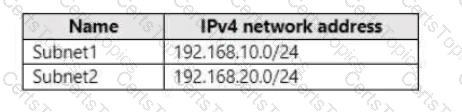
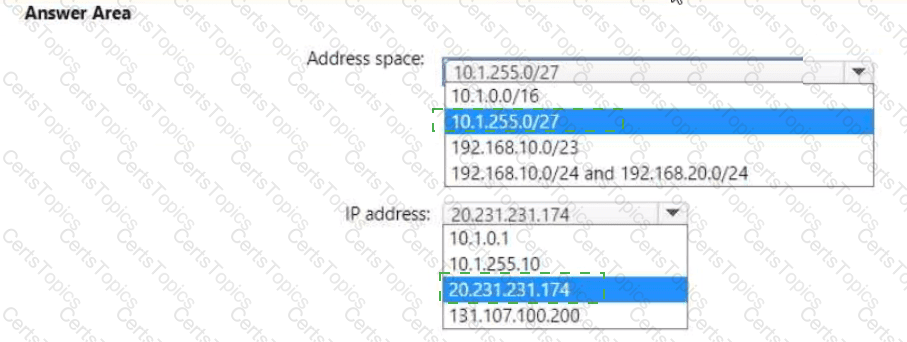
The network contains a firewall named FW1 that uses a public IP address of 131.107.100.200.
You have an Azure subscription that contains the resources shown in the following table.
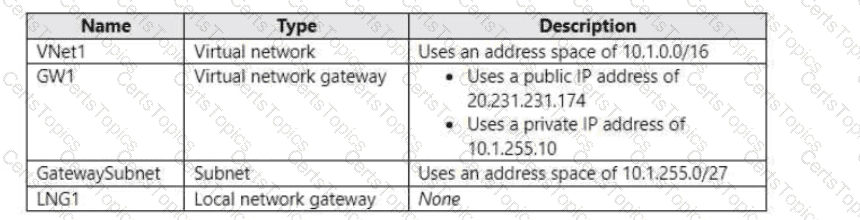
You plan to configure a Site-to-Site (S2S) VPN named VPN1 that will connect GW1 to FW1.
You need to configure LNG1 to support VPN1. The solution must meet the following requirements:
• Ensure that the resources on Subnet1 and Subnet2 can communicate with the resources on VNe1l.
• Minimize administrative effort.
How should you configure LNG1? To answer, select the appropriate options in the answer area. NOTE: Each correct selection is worth one point.
You need to configure FD1 to provide user access to app2.proseware.com. The solution must meet the security requirements and the general requirements.
What should you do first?
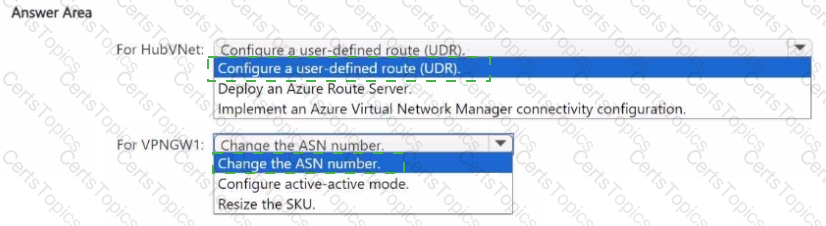
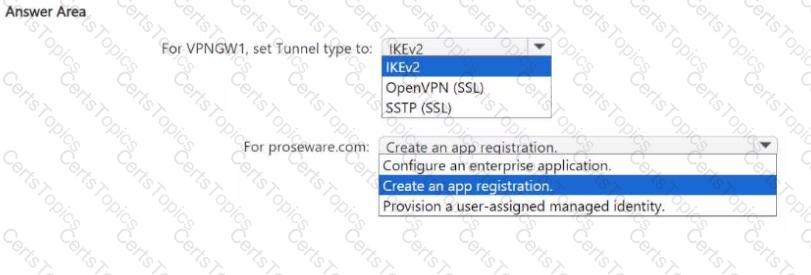
You need to configure the P2S VPN to meet the connectivity requirements.
What should you do? To answer, select the appropriate options in the answer area.
NOTE: Each correct selection is worth one point.
You need to manage connectivity from NYCNet to the Azure services that use private endpoints. The solution must meet the security requirements. What should you do first?
You need to configure connectivity between NYCNet and SFONet. The solution must meet the connectivity requirements. What should you do? To answer, select the appropriate options in the answer area. NOTE: Each correct selection is worth one point.
You need to configure a security rule for APPGW1-NSG1. The solution must support the planned changes. Which service tag should you use?
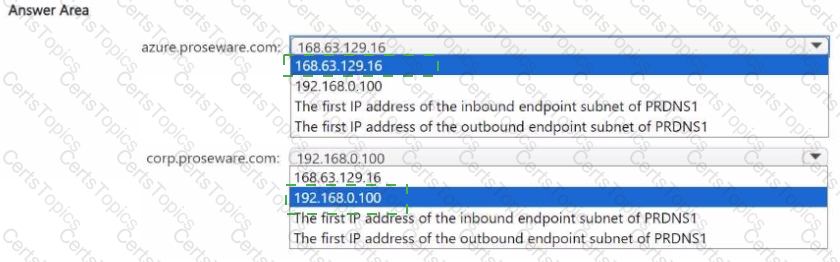
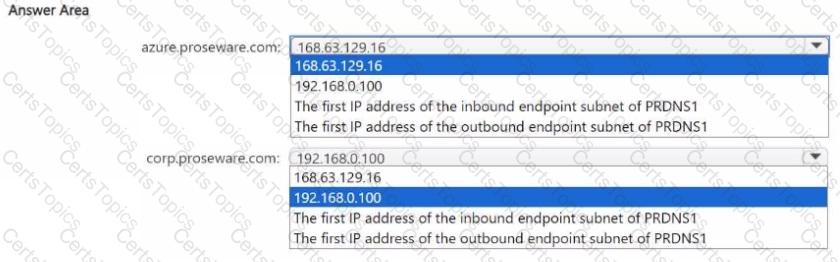
You ate configuring the DNS forwarding luleset for DNSR1
You need to configure the destination IP address for azure.proseware.com and for corp.proseware.com. The solution must meet the general requirements.
Which IP addiesses should you configure for each namespace? To answer, select the appropriate options in the answer area.
NOTE: Each correct selection is worth one point.
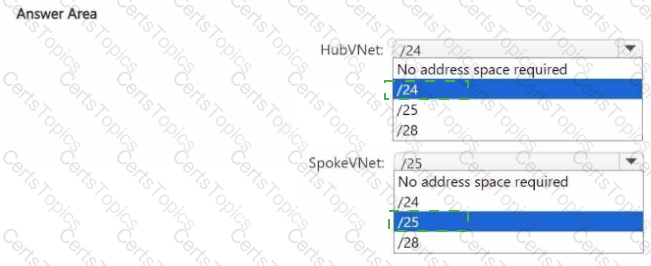
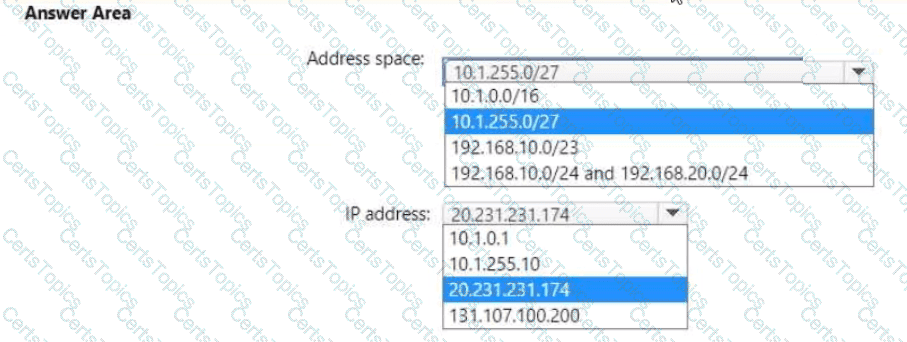
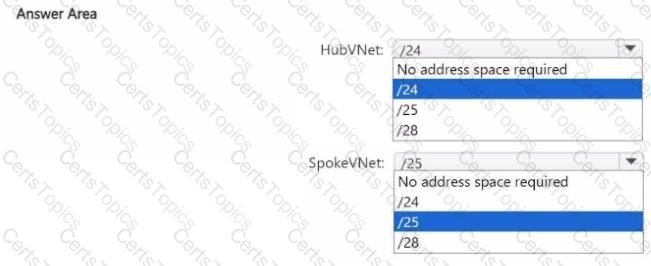
You need to identify which IP address space to allocate for the planned deployment of PRDNS1 to HubVNet and SpokeVNet. The solution must meet the general requirements
What should you identify for each virtual network? To answer, select the appropriate options in the answer area. NOTE: Each correct selection is worth one point.
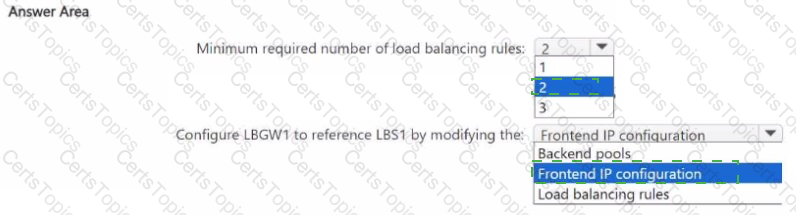
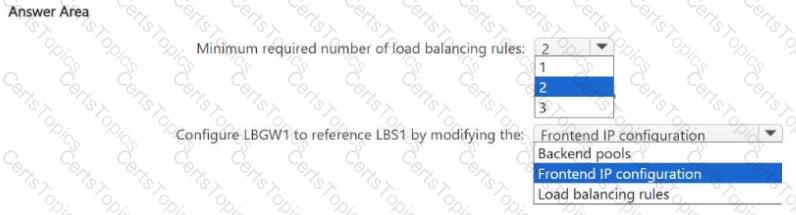
You need to plan the deployment of LBGW1. The solution must support the planned changes.
What should you include in the solution? To answer, select the appropriate options in the answer area.
NOTE: Each correct selection is worth one point.
You need to configure a custom rule for APPGWI-WAFPolicy to allow only connections that originate from FD1. The solution must support the planned changes.
Which Match type and Match variable should you select?
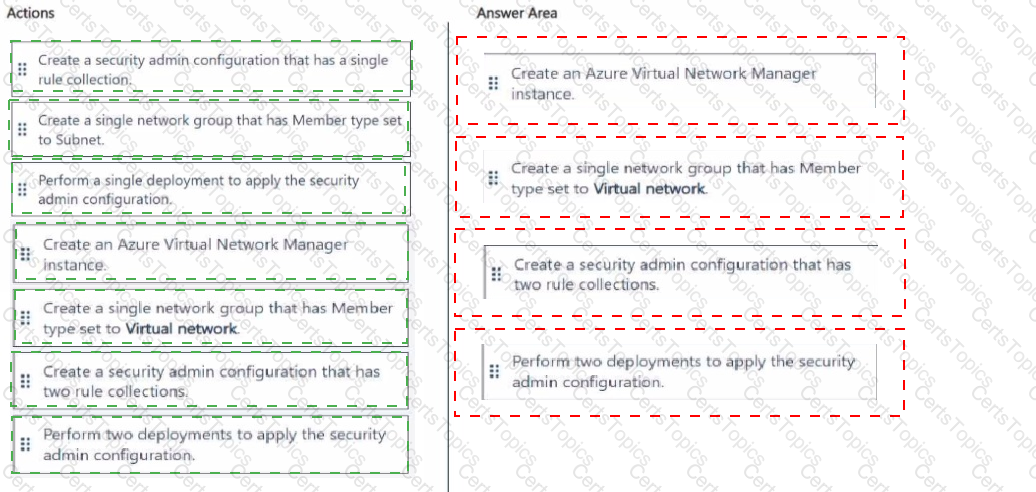
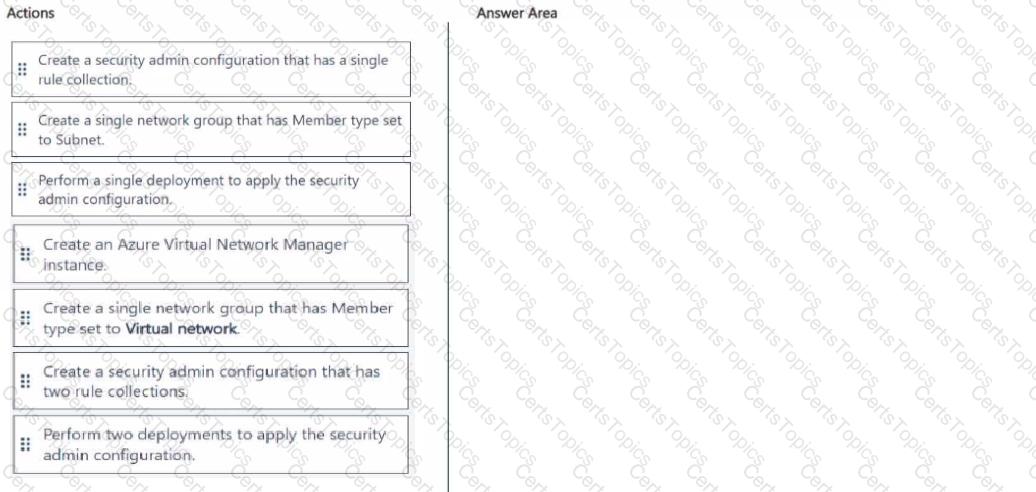
You need to deploy Azure Virtual Network Manager. The solution must support the planned changes and meet the connectivity requirements.
Which four actions should you perform in sequence? To answer, move the appropriate actions from the list of actions to the answer area and arrange them in the correct order.
You need to configure APPGW1 to support end-to-end encryption. The solution must meet the security requirements. What should you do?
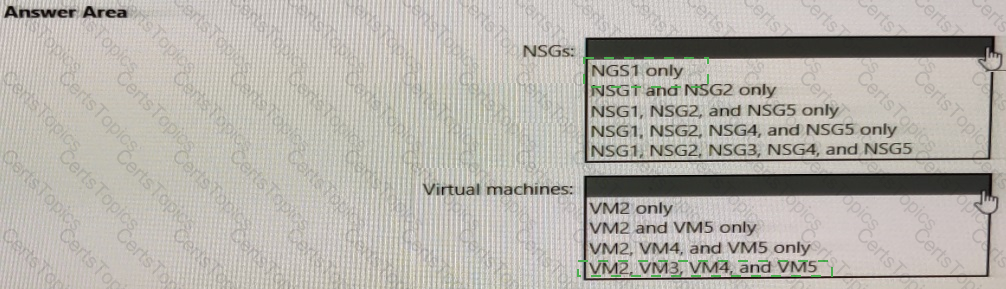
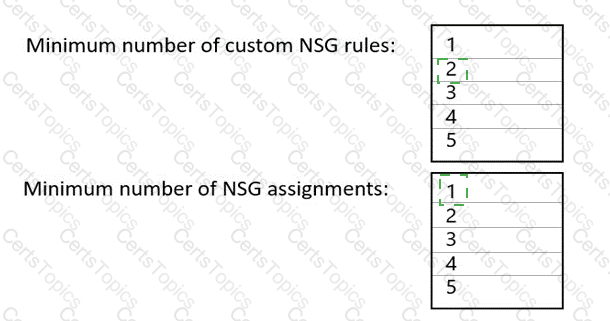
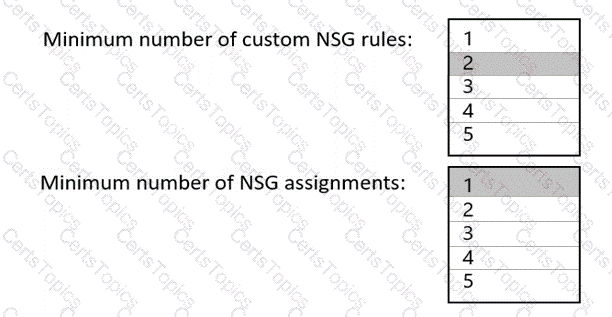
You need to restrict traffic from VMScaleSet1 to VMScaleSet2. The solution must meet the virtual networking requirements.
What is the minimum number of custom NSG rules and NSG assignments required? To answer, select the appropriate options in the answer area.
NOTE: Each correct selection is worth one point.
Ite rule for the 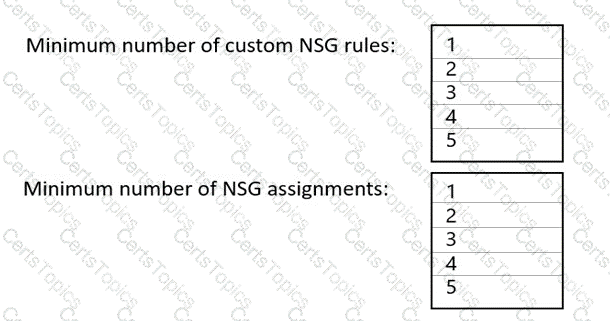
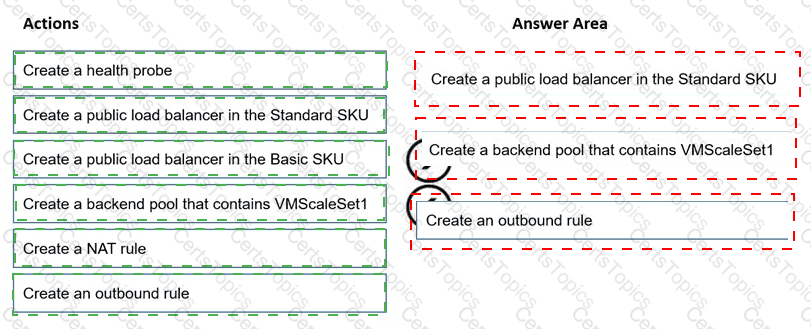
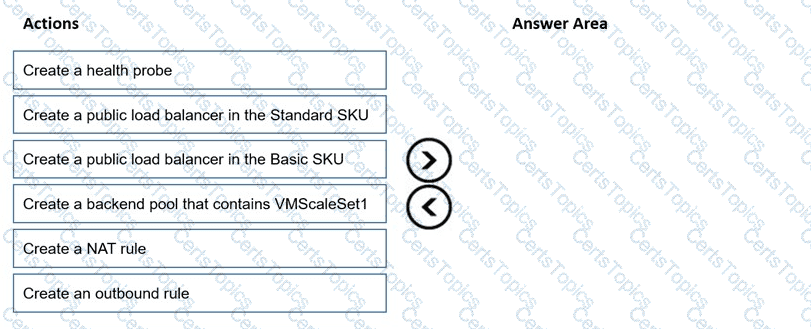
You need to implement outbound connectivity for VMScaleSet1. The solution must meet the virtual networking requirements and the business requirements.
Which three actions should you perform in sequence? To answer, move the appropriate actions from the list of actions to the answer area and arrange them in the correct order.
You need to connect Vnet2 and Vnet3. The solution must meet the virtual networking requirements and the business requirements.
Which two actions should you include in the solution? Each correct answer presents part of the solution.
NOTE: Each correct selection is worth one point.
You need to provide access to storage2. The solution must meet the PaaS networking requirements and the business requirements.
Which connectivity method should you use?
You need to provide connectivity to storage1. The solution must meet the PaaS networking requirements and the business requirements.
What should you include in the solution?
You need to configure the default route in Vnet2 and Vnet3. The solution must meet the virtual networking requirements.
What should you use to configure the default route?
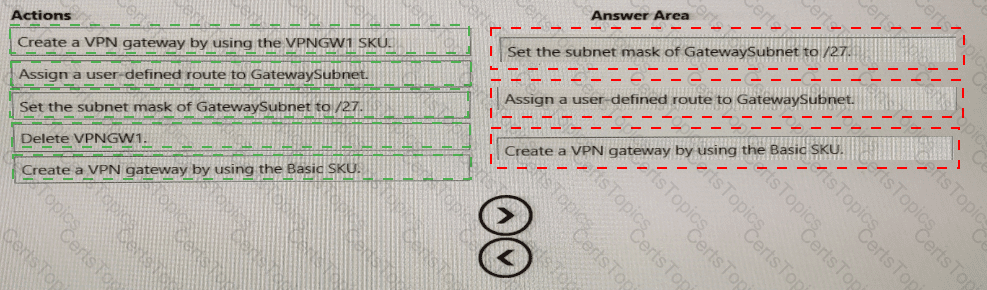
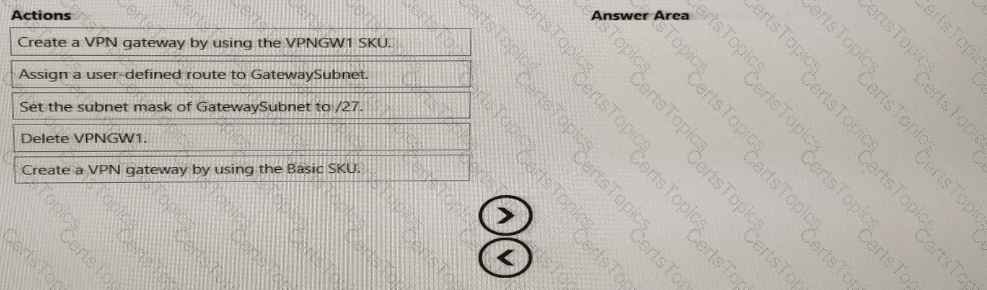
You need to prepare Vnet1 for the deployment of an ExpressRoute gateway. The solution must meet the hybrid connectivity requirements and the business requirements.
Which three actions should you perform in sequence for Vnet1? To answer, move the appropriate actions from the list of actions to the answer area and arrange them in the correct order.
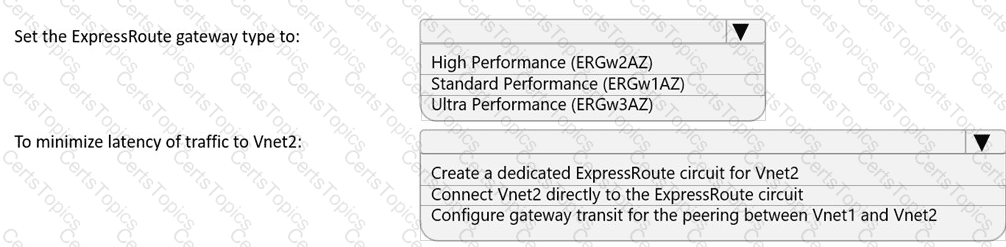
You need to recommend a configuration for the ExpressRoute connection from the Boston datacenter. The solution must meet the hybrid networking requirements and business requirements.
What should you recommend? To answer, select the appropriate options in the answer area.
NOTE: Each correct selection is worth one point.
Copyright © 2021-2026 CertsTopics. All Rights Reserved