
Which three challenges in a work-from-anywhere environment does FortiSASE address? (Choose three.)
Refer to the exhibit.
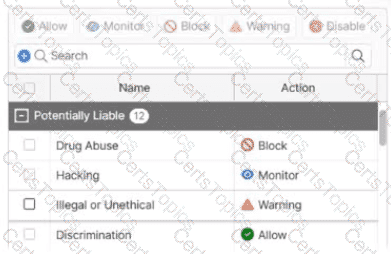
Which web filter category will be denied access and display a replacement message to the user?
Refer to the exhibits.
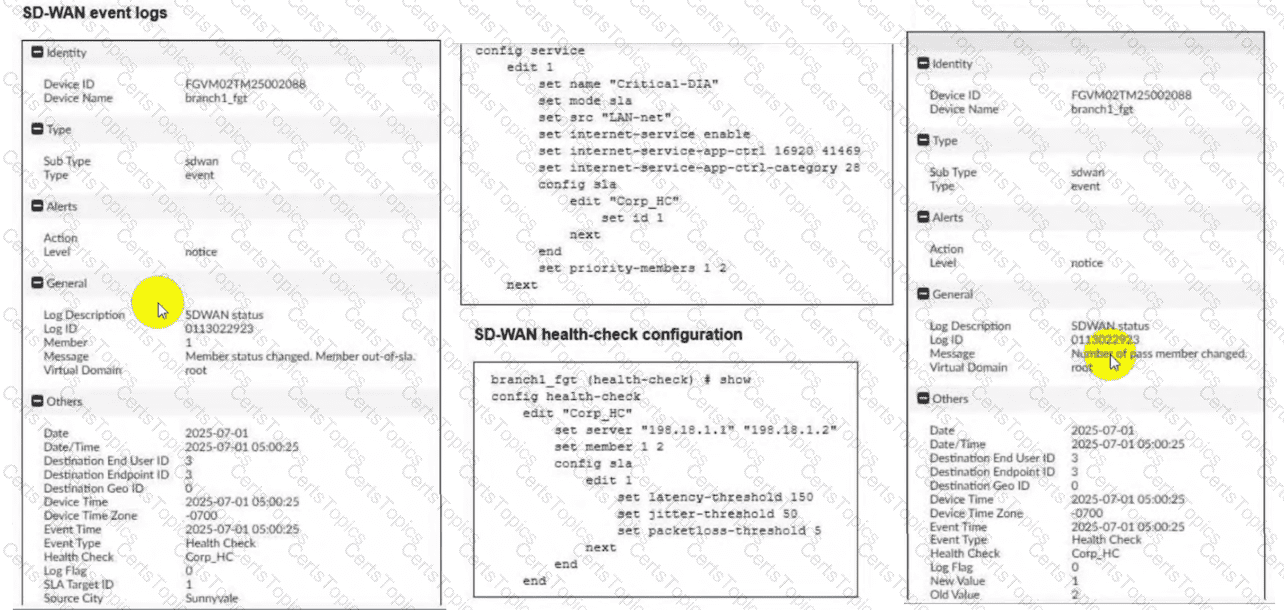
Two SD-WAN event logs, the member status, the SD-WAN rule configuration, and the health-check configuration for a FortiGate device are shown. Immediately after the log messages are displayed, how will the FortiGate steer the traffic based on the information shown in the exhibits? (Choose one answer)
Which authentication method overrides any other previously configured user authentication on FortiSASE?
Which two methods are available for provisioning FortiClient on endpoints using FortiSASE? (Choose two.)
Refer to the exhibit.
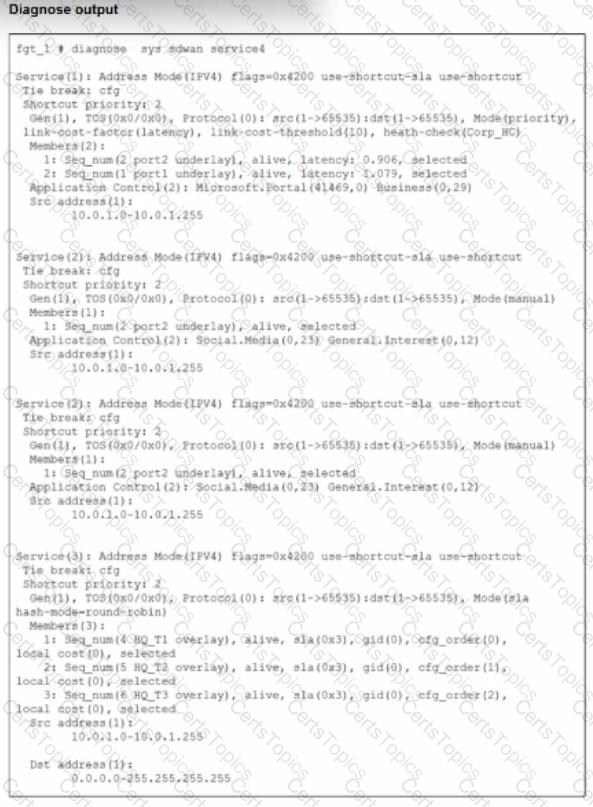
The exhibit shows output of the command diagnose sys sdwan service collected on a FortiGate device.
The administrator wants to know through which interface FortiGate will steer traffic from local users on subnet 10.0.1.0/255.255.255.192 and with a destination of the social media application Facebook.
Based on the exhibits, which two statements are correct? (Choose two.)
Refer to the exhibit.
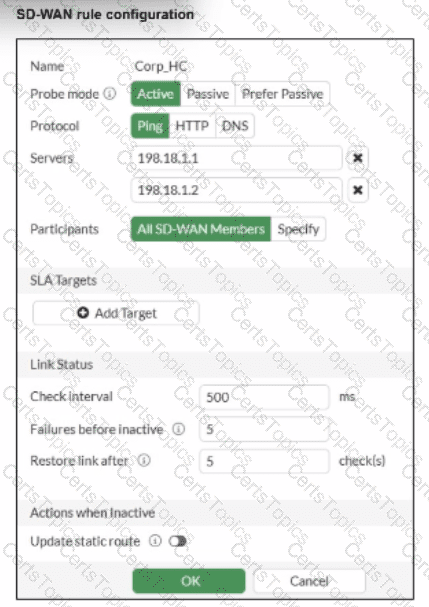
You want the performance service-level agreement (SLA) to measure the jitter of each member. Which configuration change must you make to achieve this result?
You have a FortiGate configuration with three user-defined SD-WAN zones and one or two members in each of these zones. One SD-WAN member is no longer used in health-check and SD-WAN rules. This member is the only member of its zone. You want to delete it.
What happens if you delete the SD-WAN member from the FortiGate GUI?
What is the purpose of the on/off-net rule setting in FortiSASE?
Refer to the exhibit.
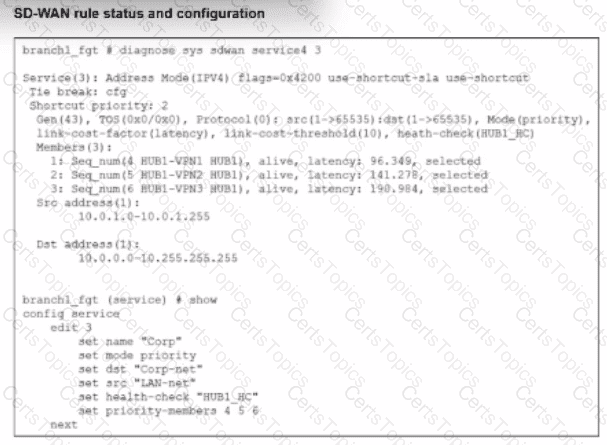
The SD-WAN rule status and configuration is shown. Based on the exhibit, which change in the measured latency will first make HUB1-VPN3 the new preferred member?
The IT team is wondering whether they will need to continue using MDM tools for future FortiClient upgrades.
What options are available for handling future FortiClient upgrades?
Which three reports are valid report types in FortiSASE? (Choose three.)
Refer to the exhibit.
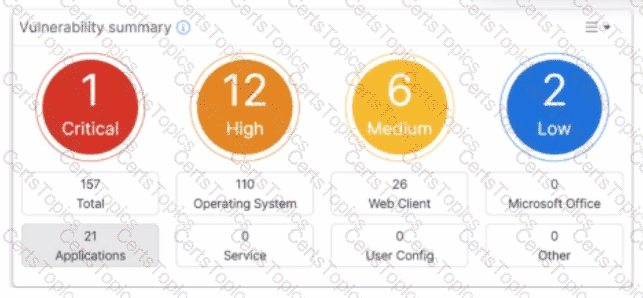
Which two statements about the Vulnerability summary dashboard in FortiSASE are correct? (Choose two.)
Refer to the exhibits.
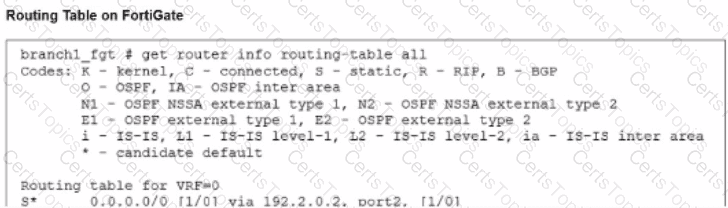
The administrator increases the member priority on port2 to 20. Upon configuration changes and the receipt of new packets, which two actions does FortiGate perform on existing sessions established over port2? (Choose two.)
SD-WAN interacts with many other FortiGate features. Some of them are required to allow SD-WAN to steer the traffic.
Which three configuration elements must you configure before FortiGate can steer traffic according to SD-WAN rules? (Choose three.)
Copyright © 2021-2026 CertsTopics. All Rights Reserved
